on-this-day · january 5
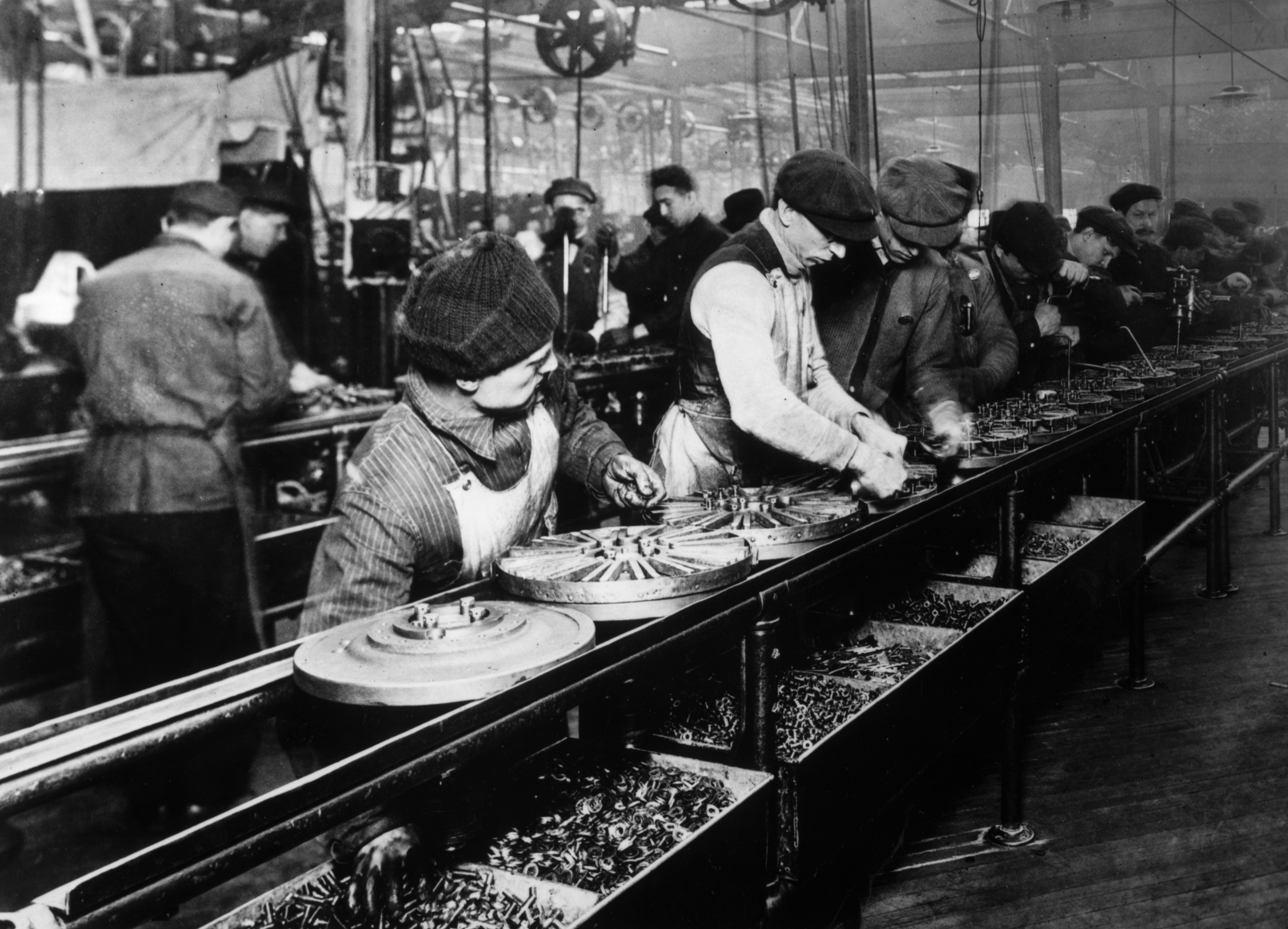
workers on the ford motor company moving assembly line at highland park, michigan, 1913. source: wikimedia commons

Five Dollars a Day
On this day in 1914 — Ford Motor Company introduced the $5 workday, doubling wages and reshaping the relationship between labor and design.
2 min read
On January 5, 1914, Henry Ford announced that Ford Motor Company would pay its workers five dollars for an eight-hour day. Double the prevailing wage. Economists called it reckless. Competitors called it a stunt. Workers called it a miracle.
It wasn't altruism. Ford had a problem. His Highland Park factory had perfected the moving assembly line -- a car that once took 12 hours now took 93 minutes. But the work was mind-numbing. Turnover was catastrophic. In 1913, Ford hired 52,000 people to maintain a workforce of 14,000. The system was efficient in theory but unsustainable in practice.
The five-dollar day fixed that. Overnight, Ford had a waiting list. Workers stopped quitting. Productivity soared. And something else happened: his workers could afford the cars they were building. The Model T cost $490 -- about three months of wages. Ford had accidentally created his own customer base.
But there were conditions. A department called the Sociological Department sent investigators to workers' homes to ensure they weren't drinking, gambling, or sending money overseas. Immigrant workers had to attend English classes. The company wanted to build a certain kind of worker: sober, disciplined, American. The policy was paternalistic and invasive -- and it worked. By 1915, the five-dollar wage actually cost Ford less than the old system.

a 1914 ford model t touring car — the vehicle ford workers built and could now afford to buy. source: wikimedia commons

Other companies resisted, called Ford a traitor to his class. Within years, they had no choice. The five-dollar day demonstrated that mass production required mass consumption, that an economy built on machines needed people who could afford to buy what those machines made. It turned workers into consumers, and in doing so, it designed the modern economy.