on-this-day · october 21
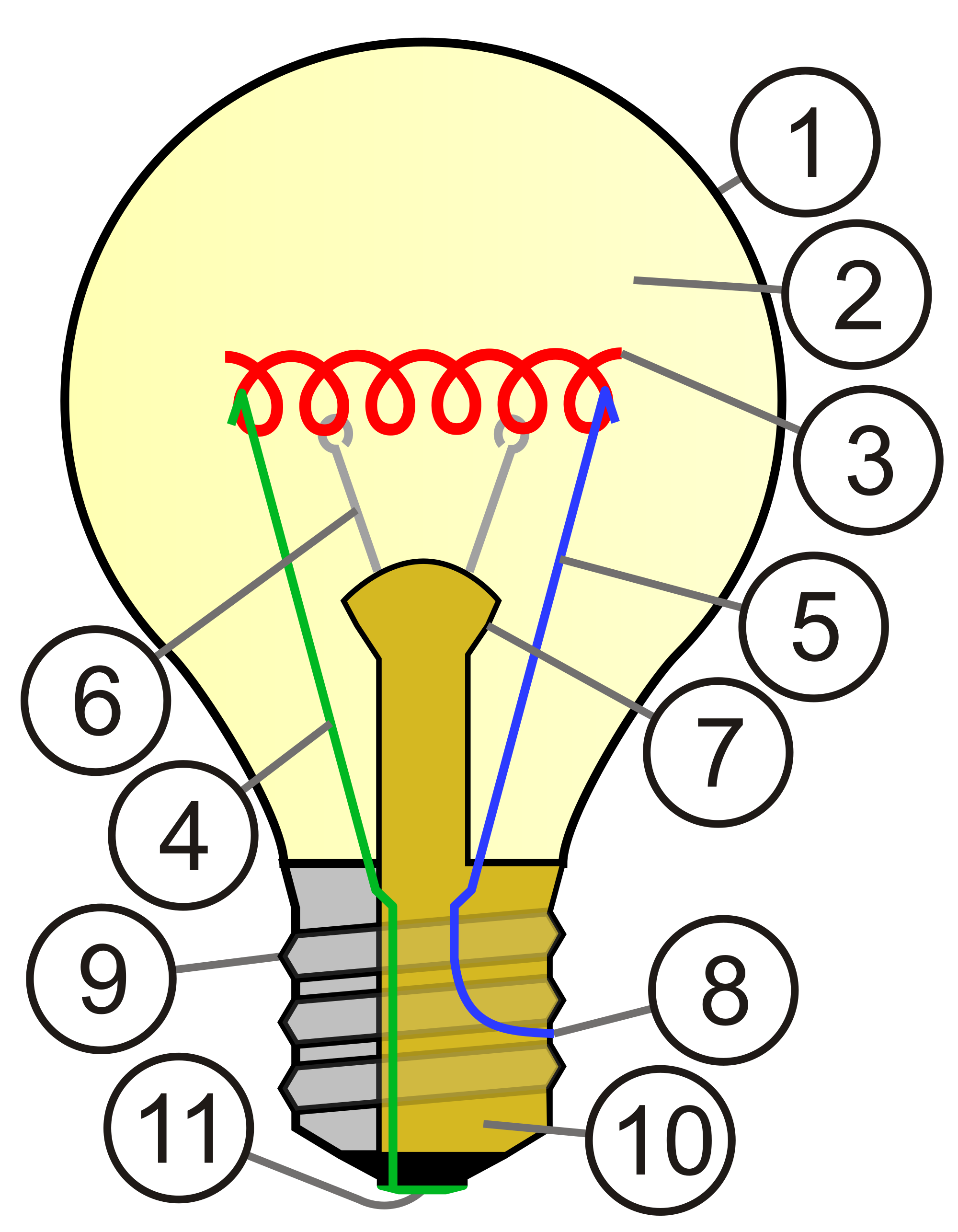
incandescent light bulb diagram. source: wikimedia commons

Thirteen Hours of Light
On this day in 1879 — Thomas Edison successfully tested an electric light bulb that lasted 13.5 hours.
2 min read
On October 21, 1879, Thomas Edison turned on a light bulb at his Menlo Park laboratory and watched it glow for thirteen and a half hours before it burned out. Not the first electric light. Not even the longest-lasting at that point. But it was the first that worked well enough, cheaply enough, and reliably enough to suggest that electric lighting could become practical. Thirteen hours was enough to prove the concept. The rest was engineering.
Edison's key insight was the filament. Previous inventors had tried platinum, paper, and various metals -- all burned out too quickly or required too much current. Edison's team tested thousands of materials before finding that a carbonized cotton thread could glow for hours inside a vacuum bulb. The vacuum was essential: without oxygen, the filament could heat without combusting. The principle was simple. The execution was brutal. Thousands of failed experiments before one success.

thomas alva edison, whose persistence through thousands of experiments led to the practical incandescent light bulb. source: wikimedia commons

Within weeks, Edison improved the design. He switched to carbonized cardboard, then bamboo, extending bulb life to over 1,200 hours. He also understood that the bulb was useless without a system -- generators, wiring, sockets, meters. He designed all of it. The bulb was the visible product; the invisible infrastructure is what made it revolutionary.
The light bulb is often used as a metaphor for ideas -- the sudden flash of insight. But the real story is the opposite. It was patience, systematic testing, and incremental improvement. Edison did not have a eureka moment. He had thirteen hours of glow after thousands of hours of failure. October 21, 1879, is the day persistence became visible. The bulb that burned for thirteen hours lit the way to a world where darkness is optional and night is a choice.