on-this-day · november 21
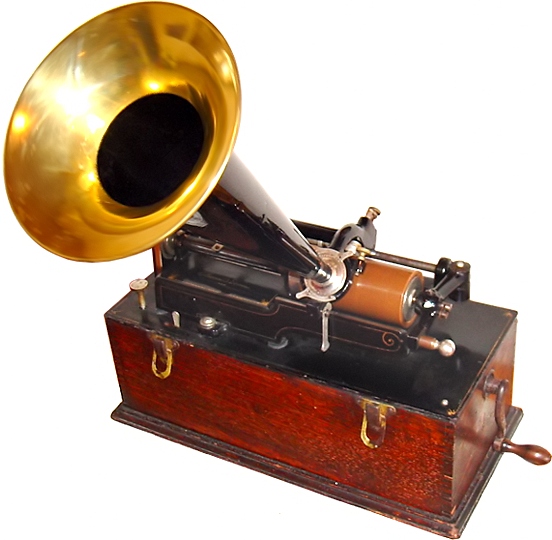
edison's tinfoil phonograph, 1877. source: wikimedia commons

Sound Preserved
On this day in 1877 — Thomas Edison announced the phonograph. A needle tracing grooves in tinfoil played back sound.
2 min read
On November 21, 1877, Thomas Edison announced the phonograph. He had been working on a device to record telegraph messages when he noticed that the vibrations of a diaphragm could leave physical impressions on a moving surface. If impressions could be made, they could be read back. Sound could be captured and replayed. He sketched the design and gave it to his machinist, John Kruesi, who built it in about thirty hours.
The device was brutally simple: a cylinder wrapped in tinfoil, a hand crank, a stylus attached to a diaphragm, and a horn to amplify the sound. Edison turned the crank, leaned into the horn, and recited "Mary had a little lamb." When he moved the stylus back to the start and cranked again, the machine played back his voice. "I was never so taken aback in my life," he later said. The original recording wasn't preserved, but the moment it played back was the first time a human voice had ever been stored and reproduced.
The phonograph created an industry that didn't exist before: recorded sound. Music, which had always been live and ephemeral, became a product that could be manufactured, distributed, and sold. Performances could be frozen in time. A singer could be heard after death. The idea that sound was temporary, that it existed only in the moment of its creation, was suddenly obsolete.
Edison saw the phonograph as a business tool for dictation. He underestimated the entertainment market almost completely. Others saw further. Within decades, the phonograph evolved into the gramophone, then the record player, then a chain of formats stretching to the streaming services of today. Every playlist you've ever made descends from a man shouting a nursery rhyme into a piece of tinfoil.

edison's tinfoil phonograph, 1878, national museum of american history — the device that first recorded and played back sound. source: wikimedia commons
