on-this-day · november 4

howard carter examining tutankhamun's sarcophagus. source: wikimedia commons

Three Thousand Years in the Dark
On this day in 1922 — howard carter discovered the tomb of tutankhamun. 3,000 years of design preserved in sand.
2 min read
On November 4, 1922, a water boy tripped over a stone step cut into bedrock in the Valley of the Kings. Howard Carter arrived that morning to find his workers eerily quiet. They had uncovered a staircase descending into the earth. Sixteen steps led to a sealed door stamped with the cartouche of Tutankhamun, a pharaoh so minor that most Egyptologists had forgotten he existed. Behind that door lay the most intact royal tomb ever found in Egypt.
Carter had been searching for six years, funded by Lord Carnarvon, who was ready to pull the money. This was the last season. Carter wired Carnarvon in England: "At last have made wonderful discovery in Valley." On November 26, they broke through the sealed doorway together. Carnarvon asked, "Can you see anything?" Carter replied: "Yes, wonderful things." Inside were gilded furniture, alabaster jars, chariots, statues, and a nested series of coffins, the innermost made of solid gold, containing the mummified body of a teenage king dead for 3,300 years.
The discovery ignited a global frenzy. "Tutmania" swept the Western world: Egyptian motifs appeared in architecture, fashion, jewelry, and advertising. Art Deco absorbed pharaonic geometry. The press covered every development. Carter spent the next ten years meticulously cataloging more than 5,000 objects. The boy-king who accomplished almost nothing in life became the most famous pharaoh in history because of what he left behind.
Tutankhamun's tomb endures because it proves something about preservation and design. Every object was placed with intention. The canopic jars, the guardian statues, the golden mask -- all were engineered to survive millennia. Carter found them exactly as the priests had left them. A system designed for eternity, discovered by a man on his last chance. That's the archaeology version of a deadline.
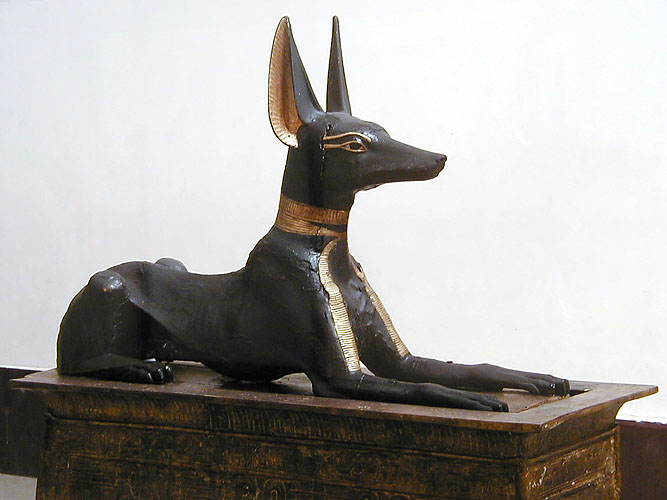
anubis statue guarding the burial chamber. source: wikimedia commons
