on-this-day · december 13
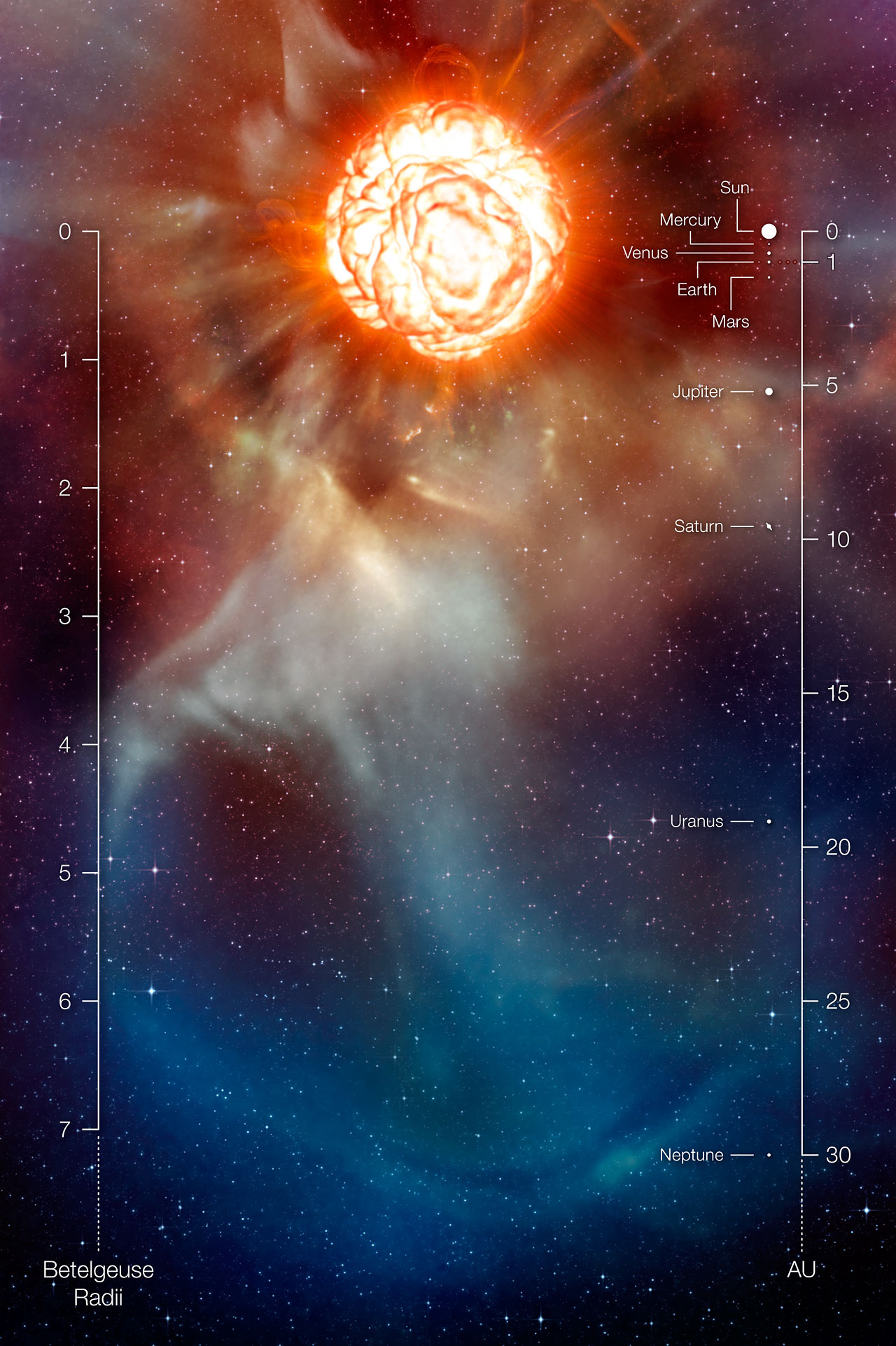
betelgeuse, red supergiant in orion, eso image. source: wikimedia commons

Measuring a Giant Star
On this day in 1920 — The first stellar size was measured. Betelgeuse turned out to be enormous.
2 min read
On December 13, 1920, astronomers Francis Pease and Albert Michelson used an interferometer on the 100-inch Hooker Telescope at Mount Wilson Observatory to measure Betelgeuse's angular diameter. First time anyone measured a star's size other than the Sun. The result: about 0.047 arcseconds, translating to roughly 240 million miles across. If Betelgeuse replaced the Sun, its surface would extend past Mars.
Before 1920, stars were points of light. The interferometer combined light from two widely separated mirrors, creating an interference pattern from which angular diameter could be calculated. Michelson, who won the 1907 Nobel Prize for measuring light's speed, applied the same technique to stars.
The measurement revealed something profound about stellar evolution. Betelgeuse is nearing the end of its life -- core hydrogen exhausted, expanded enormously into a red supergiant. It will eventually explode as a supernova. The 1920 measurement was the first direct evidence that stars evolve, grow, and die.
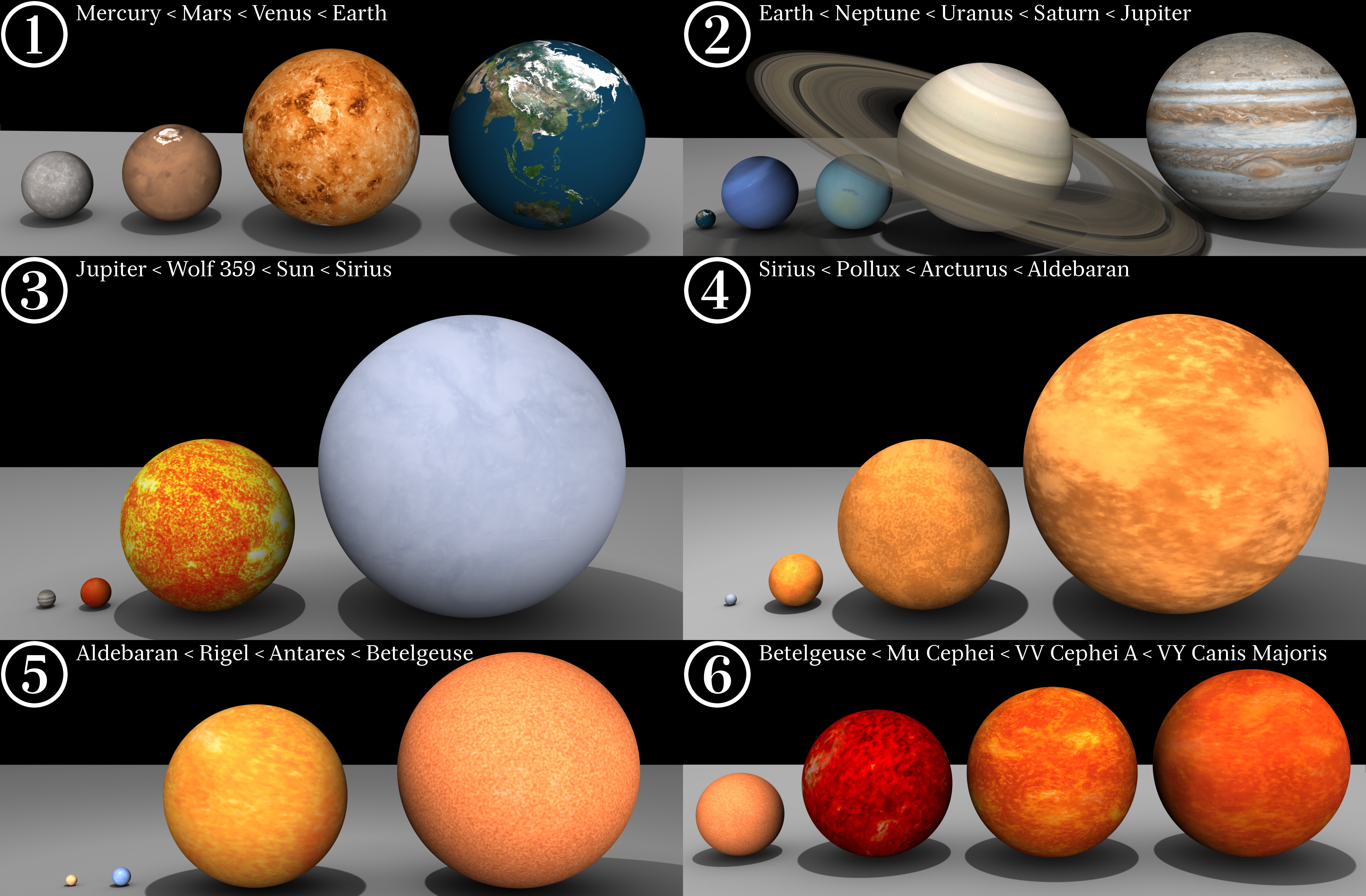
star size comparison: betelgeuse dwarfs our sun. source: wikimedia commons

In late 2019, Betelgeuse dimmed dramatically, sparking supernova speculation. It didn't explode -- likely a massive dust cloud. But Betelgeuse is unstable. When it does go, it will be visible in daylight for weeks. The star doesn't care about human timescales. We'll know its size, distance, and fate because of a measurement made on a December night in 1920.