on-this-day · february 22
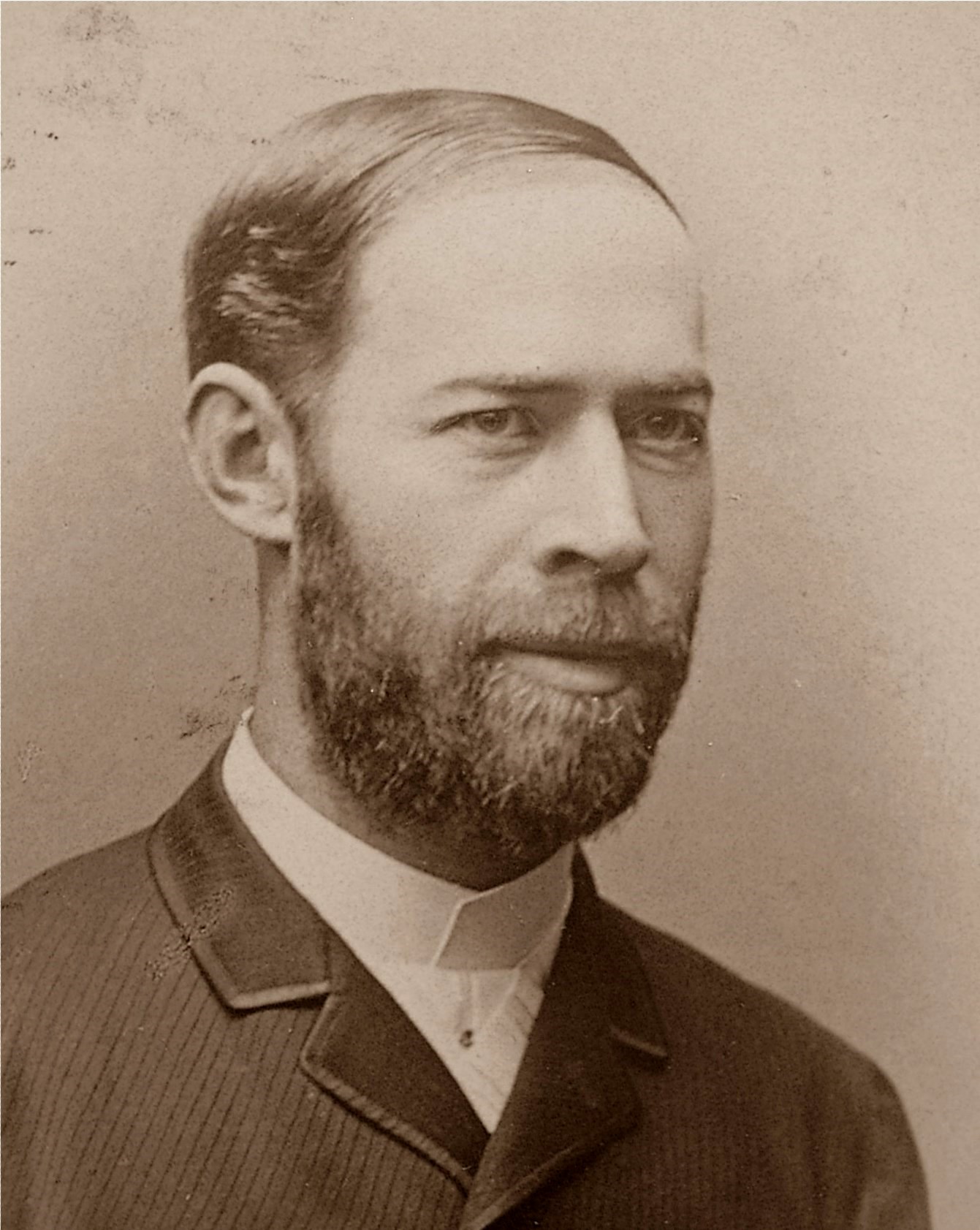
heinrich hertz (1857–1894), the german physicist born on february 22, 1857, who proved the existence of electromagnetic waves and whose name became the unit of frequency used to measure them. source: wikimedia commons

Proving the Invisible
On this day in 1857 — Heinrich Hertz was born. He proved electromagnetic waves exist. WiFi, radio, television — all Hertz.
2 min read
Heinrich Rudolf Hertz was born on February 22, 1857, in Hamburg, Germany. He studied under Hermann von Helmholtz at Berlin, earned his doctorate in 1880, and was appointed professor at Karlsruhe by 1885. He was 28. He had less than nine years to live. What he did with them changed how we communicate.
James Clerk Maxwell had predicted electromagnetic waves in 1865, but no one had produced or detected them. Helmholtz suggested to Hertz that proving Maxwell right would be a worthy problem. Hertz took it and ran.
Between 1886 and 1889, he built an apparatus that generated and detected electromagnetic waves. A spark-gap transmitter produced radiation when voltage jumped between two metal rods. Across the room, a loop antenna with its own gap produced a corresponding spark, proving waves had traveled through space. Hertz measured their wavelength and velocity, and showed they could be reflected, refracted, and polarized, just like light. Maxwell was right.

memorial to heinrich hertz in karlsruhe, germany, where he conducted his landmark electromagnetic wave experiments between 1886 and 1888, proving james clerk maxwell's theoretical predictions. source: wikimedia commons

Hertz also accidentally discovered the photoelectric effect, noticing that ultraviolet light facilitated spark discharges. He reported it but didn't pursue it. Einstein explained it in 1905 and won a Nobel Prize for it.
Hertz died on January 1, 1894, at 36, from a rare blood vessel disease. Asked about practical applications of his discovery, he reportedly said there were none. Within a decade, Marconi was transmitting signals across the Atlantic using Hertzian waves. Radio, television, radar, Wi-Fi, cellular networks -- everything traces back to a lab in Karlsruhe where a young physicist proved invisible waves carry energy through empty space. The unit of frequency bears his name.