on-this-day · february 7
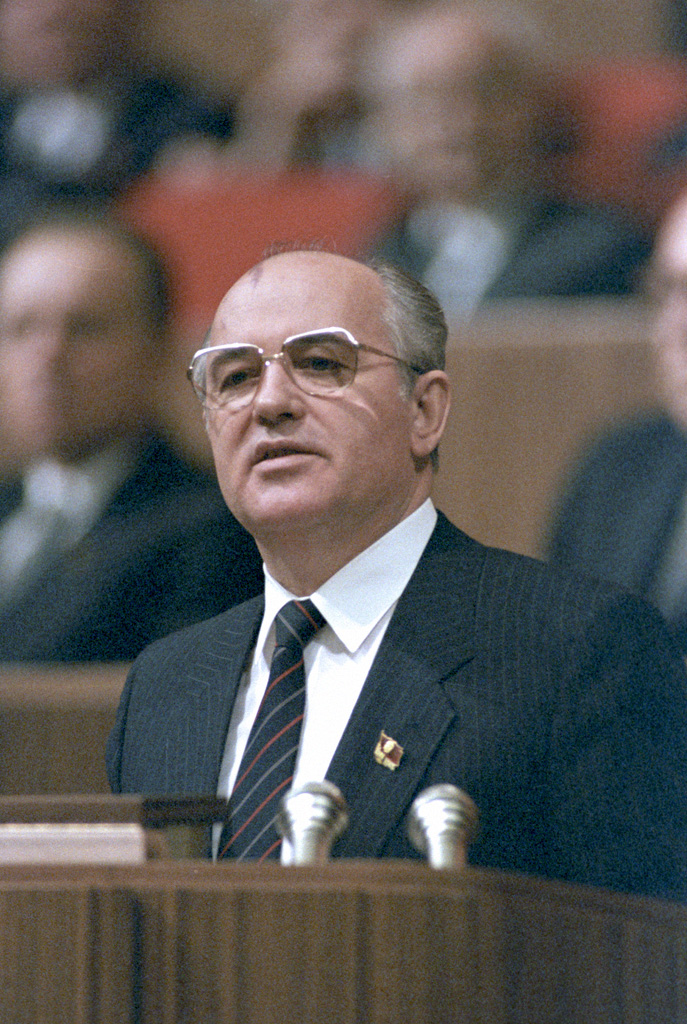
mikhail gorbachev delivering a speech as general secretary of the cpsu central committee, whose authority he would later reform. source: wikimedia commons

When the System Let Go
On this day in 1990 — the Soviet Union agreed to give up its monopoly on political power. Systems can be redesigned.
2 min read
On February 7, 1990, the Central Committee of the Communist Party of the Soviet Union voted to give up its constitutional monopoly on political power. For 72 years, Article 6 of the Soviet Constitution had guaranteed the Party's role as "the leading and guiding force of Soviet society." In a three-day plenum, Mikhail Gorbachev persuaded the Committee to recommend its removal. The formal vote to amend the constitution came on March 15, passing 1,771 to 164.
This was not a revolution. It was a managed surrender. Gorbachev had been loosening the Party's grip since 1985 through glasnost and perestroika, but this was the structural break. Without Article 6, other political parties could legally form and compete for power. The one-party state, the defining feature of Soviet governance since 1917, was officially over.
The decision didn't come from strength. The Soviet economy was in crisis. The Eastern Bloc was disintegrating. The Berlin Wall had fallen three months earlier. Gorbachev calculated that controlled reform was better than uncontrolled collapse. He was half right. The reforms he introduced did prevent a violent crackdown, but they also accelerated the forces that dissolved the Soviet Union entirely by December 1991.

mikhail gorbachev and east german leader erich honecker during gorbachev's visit to berlin in december 1987, two years before the berlin wall fell. source: wikimedia commons

What makes February 7, 1990, remarkable is its quietness. One of the largest political transformations in modern history was voted on in a committee room. No barricades, no gunfire, no dramatic speeches from balconies. Just a procedural vote to delete a constitutional article. The Soviet system didn't explode. It was disassembled by the people who ran it, one clause at a time.
Gorbachev believed the Party could survive competition. It couldn't. Within two years, the Soviet Union itself was gone. The lesson is simple and brutal: systems that depend on monopoly rarely survive the introduction of choice.