on-this-day · march 21

portrait of johann sebastian bach by elias gottlob haussmann, 1748. source: wikimedia commons

Music as Architecture
On this day in 1685 — Johann Sebastian Bach was born. He composed music like an architect builds cathedrals.
2 min read
Johann Sebastian Bach was born on March 21, 1685, in Eisenach, Germany, into a family of musicians. Music was the trade, passed down like carpentry. By his twenties, he was writing fugues, cantatas, and preludes with structural complexity that felt less like composition and more like engineering. A fugue begins with a single melodic line, then is imitated by voices entering at different times and pitches, creating interlocking lines that remain distinct yet unified. Counterpoint as design problem.
Bach wrote hundreds of fugues. His "Well-Tempered Clavier," preludes and fugues in all 24 keys, demonstrates equal temperament tuning. The "Goldberg Variations" build on a single bass line repeated 30 times. The "Art of Fugue" systematically explores every contrapuntal transformation of one theme. Music as investigation. The fugues are mathematically rigorous and emotionally resonant.
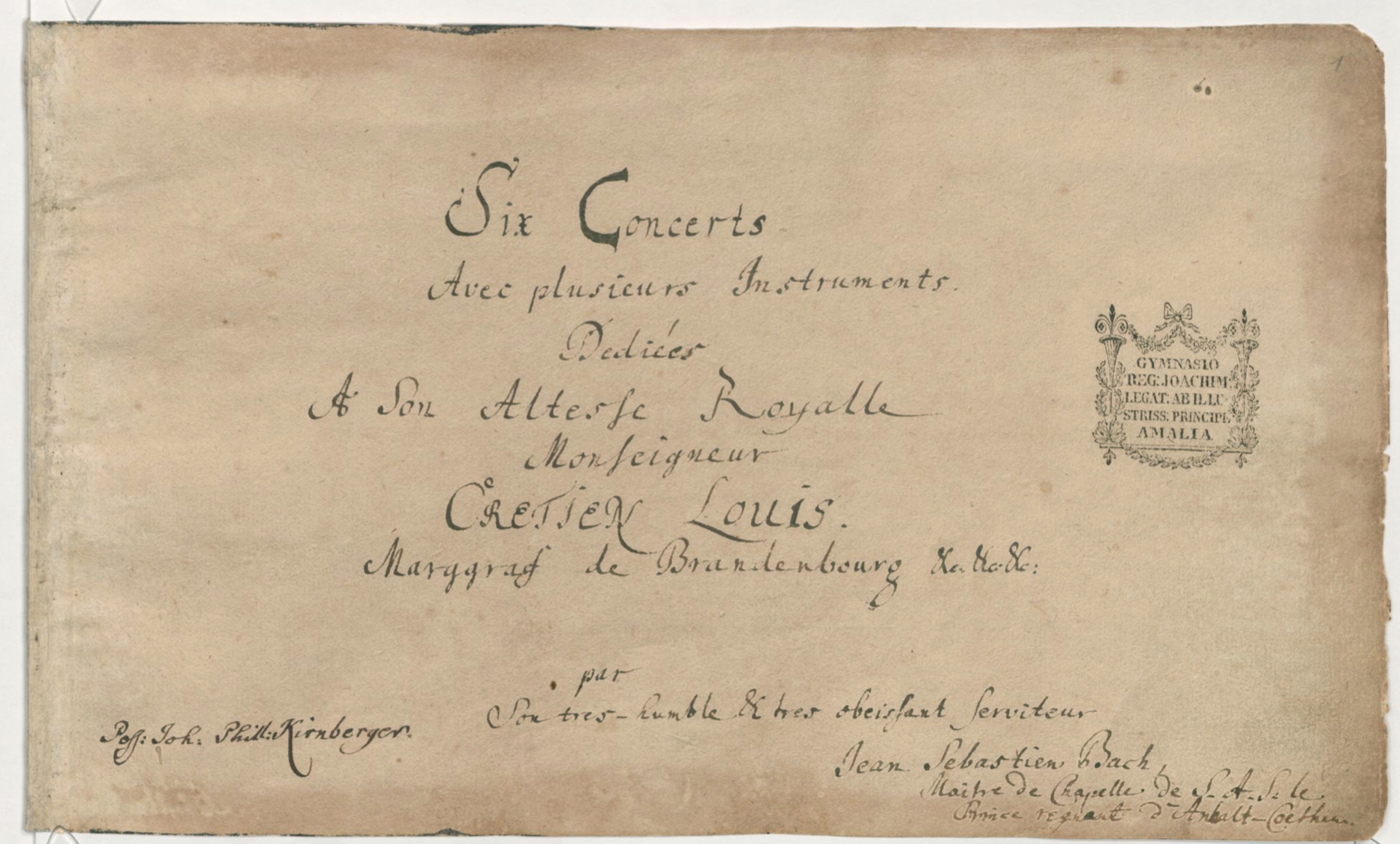
title page of the brandenburg concertos, dedicated to margrave christian ludwig of brandenburg, 1721. source: wikimedia commons

Bach was a court musician and church music director, composing for weekly services, weddings, funerals. He wrote over 1,000 works, many now lost. During his lifetime, his music was considered old-fashioned as the Baroque gave way to the Classical style. By his death in 1750, he was largely forgotten. Mendelssohn revived the "St. Matthew Passion" in the 19th century.
Musicians admire the craft. Mathematicians see group theory. Computer scientists hear recursive structures anticipating algorithmic composition. Both Bach's fugues and modern systems thinking involve finding constraints, establishing rules, and exploring what becomes possible within limits. A well-designed system, like a well-crafted fugue, reveals complexity through simplicity. Structure does not constrain creativity. It enables it.