on-this-day · march 9

early barbie dolls, circa 1960s. source: wikimedia commons

Plastic, Posture, and Identity
On this day in 1959 — The Barbie doll debuted at the American Toy Fair. Industrial design meets cultural identity.
2 min read
On March 9, 1959, Ruth Handler introduced Barbie at the American International Toy Fair in New York. The doll was 11.5 inches tall, molded plastic, with an adult body. This was radical. Nearly all dolls were baby dolls designed to teach caregiving. Barbie had a career wardrobe and articulated joints. She was not a baby to be cared for. She was an aspirational figure built for role-play beyond motherhood.
Handler got the idea watching her daughter Barbara prefer adult-shaped paper dolls with jobs and independence. She pitched the concept to Mattel, which she co-founded. Male executives were skeptical. Handler went ahead. The design was inspired by Bild Lilli, a German doll originally marketed as an adult novelty. Handler's team modified proportions and redesigned the face, transforming gag gift into childhood toy.
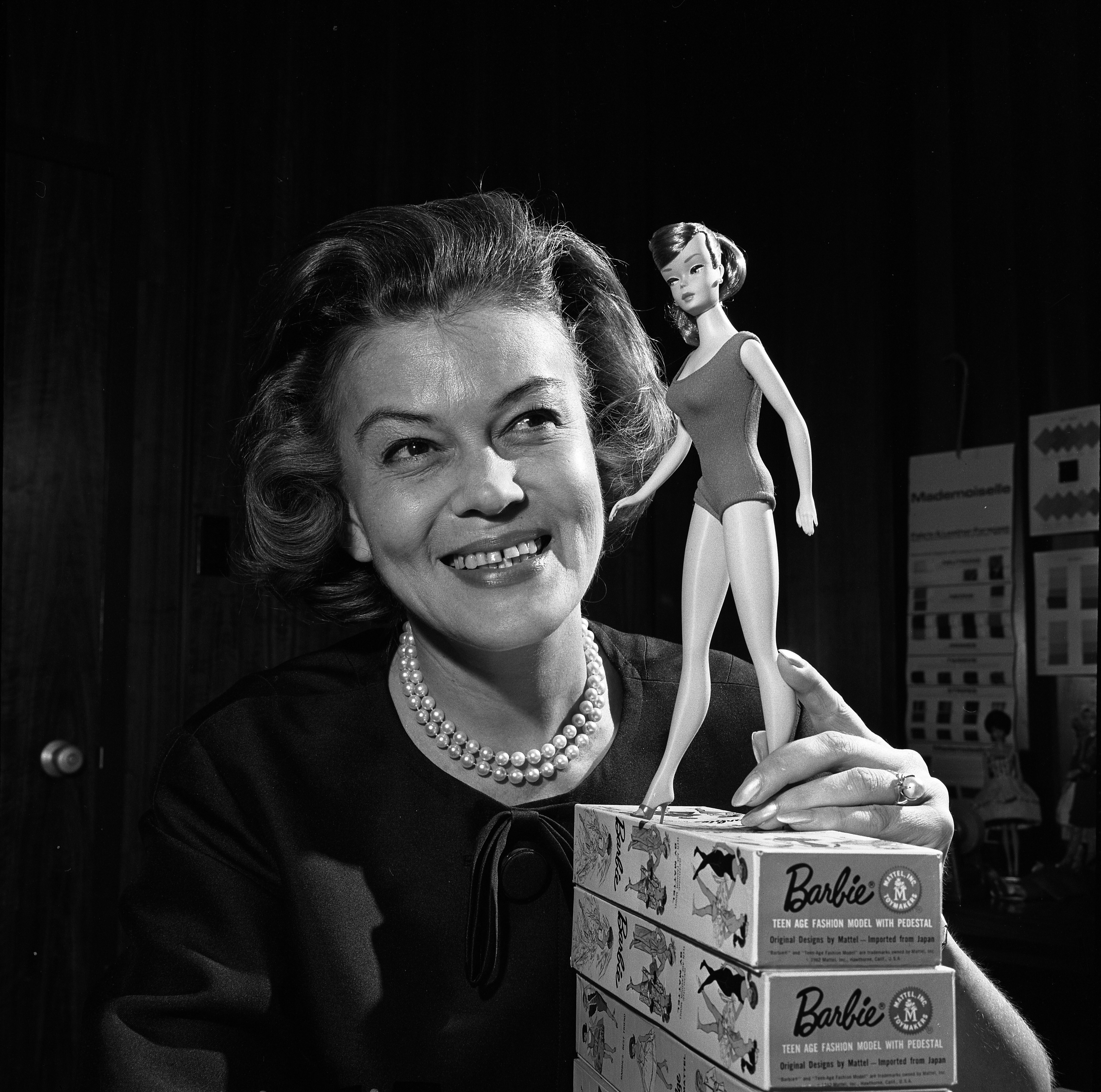
charlotte johnson, barbie's fashion designer, with a 1965 barbie doll. source: wikimedia commons

Barbie's body was anatomically impossible. Critics have argued the doll promotes unrealistic beauty standards. Defenders say she is a fashion doll designed to display clothing at small scale. What made Barbie a commercial success was the system. Mattel sold her as a platform. New outfits, accessories, and playsets arrived constantly. Barbie had careers: astronaut, doctor, teacher. The business model was continuous engagement.
Over a billion dolls have been sold since 1959. As attitudes shifted, Mattel introduced different ethnicities, body types, and professions. She has been criticized for reinforcing stereotypes and praised for expanding representation. The core concept endures: a figure of transformation, a tool for imagining different selves. That flexibility, more than any specific design choice, has kept her relevant for over six decades.