on-this-day · april 11
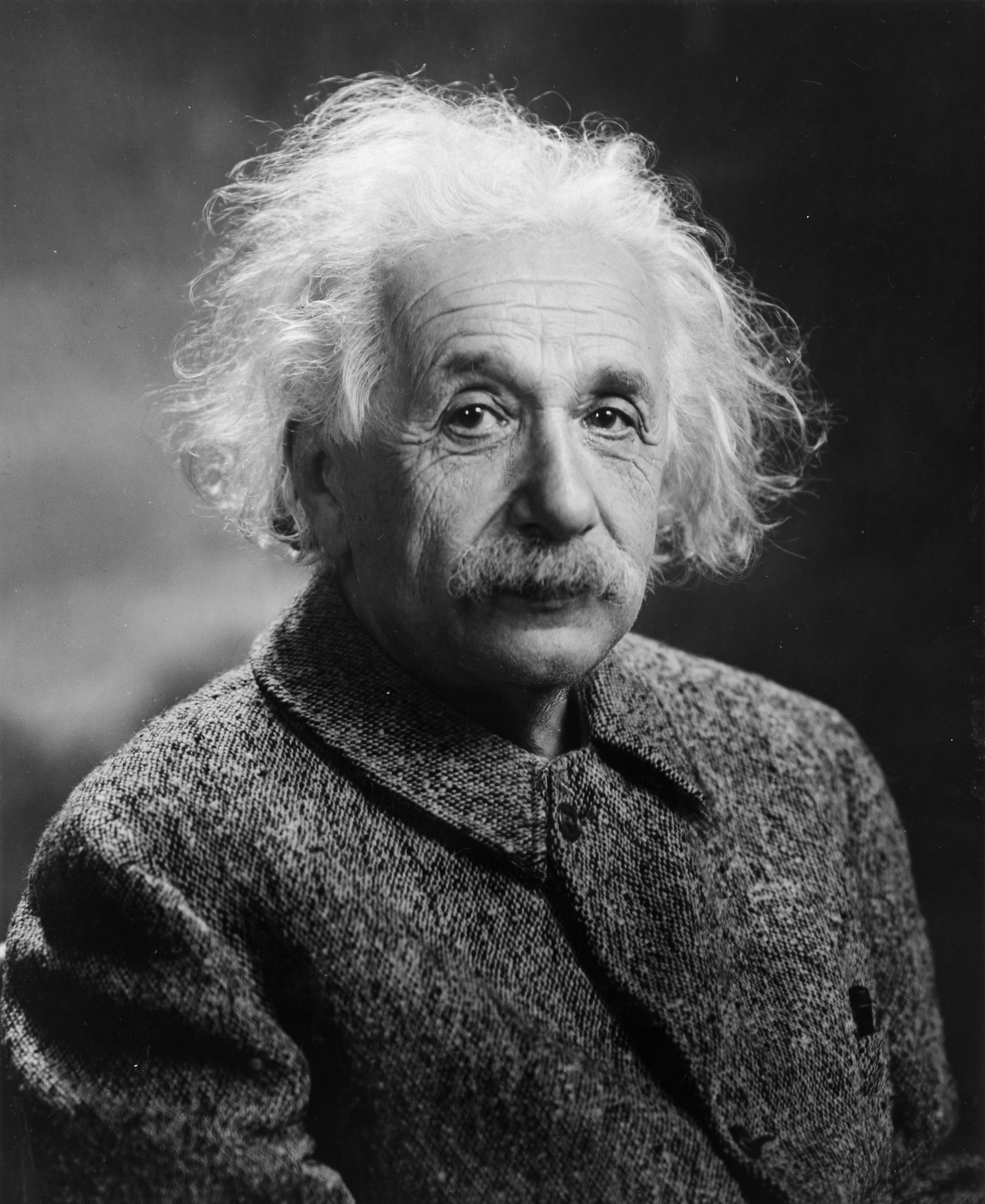
albert einstein, photographed in 1947. he published his special theory of relativity in 1905 while working as a patent clerk, rewriting the universe's rules in under 30 pages. source: wikimedia commons

The Equation That Fit on a Napkin
On this day in 1905 — Einstein published his special theory of relativity. E=mc² fit on a napkin and rewrote physics.
2 min read
In 1905, Albert Einstein was a 26-year-old patent clerk in Bern, Switzerland, working on a paper that would dismantle centuries of assumptions about space and time. "On the Electrodynamics of Moving Bodies" showed that time is not absolute. Neither is space. They're interconnected, relative, dependent on the observer's motion. The faster you move, the slower your clock ticks. Light is the only constant. Einstein built it from thought experiments — imagining riding alongside a beam of light, asking what two observers in different reference frames would see.
Later that year, he derived E=mc² in just three pages. Energy equals mass times the speed of light squared. The equation is compact, elegant, and terrifying. It says mass and energy are the same thing in different forms. A tiny amount of mass contains enormous energy. The atomic bomb was a proof of concept.

albert einstein at a blackboard in pasadena, 1931. his ideas began not with experiments but with thought experiments — imagining what it would feel like to ride alongside a beam of light. source: wikimedia commons
.jpg)
His papers didn't make an immediate splash. He was still at the patent office. It took years before experiments confirmed his predictions. In 1919, Arthur Eddington observed starlight bending around the sun during a solar eclipse, exactly as Einstein's general theory of relativity predicted. That made him a celebrity.
Special relativity is counterintuitive because we move too slowly to notice. At highway speeds, time dilation is billionths of a second. At speeds approaching light, effects become dramatic. GPS satellites account for time dilation or their positioning would drift by miles. Relativity isn't theoretical anymore — it's infrastructure. Einstein didn't need a lab. He needed a pencil and the willingness to follow the math wherever it led, even when it contradicted common sense. That's what makes a revolution — not new data, but the audacity to take old data seriously.