on-this-day · april 30
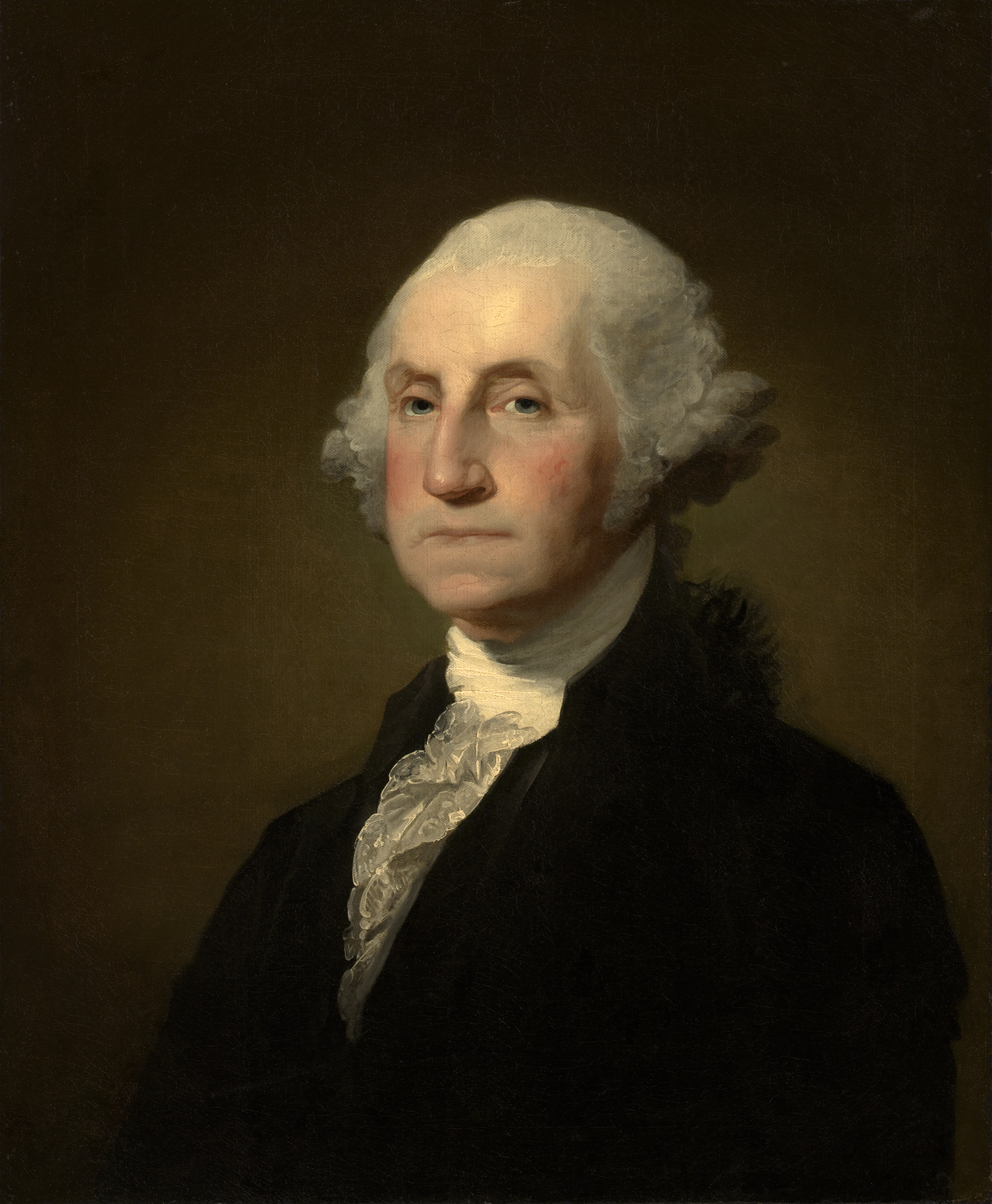
the williamstown portrait of george washington by gilbert stuart, 1796. washington set the template for the american presidency through his decisions about protocol, conduct, and the voluntary surrender of power — none of which was mandated by the constitution. source: wikimedia commons

Designed and Shipped
On this day in 1789 — George Washington was inaugurated. A system of government, designed and shipped.
2 min read
On April 30, 1789, George Washington took the oath of office as the first president of the United States on the balcony of Federal Hall in New York. The Constitution had been ratified the previous year. Congress convened in March. Now the system was live, and no one was entirely sure it would work.
The Constitution was a design document — four pages, about 4,500 words, written by 55 men in Philadelphia over four months. They argued about representation, slavery, taxation, and executive power. The result was a specification, not a manifesto.
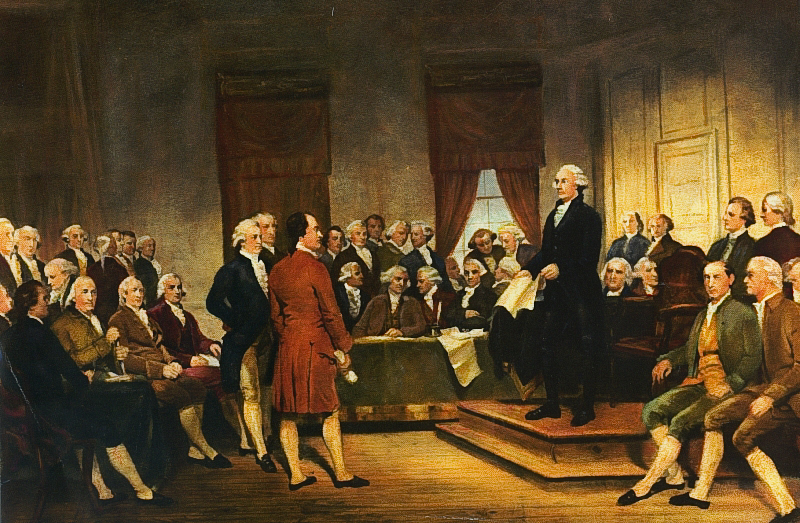
george washington presiding at the constitutional convention of 1787, painted by junius brutus stearns in 1856. the convention lasted four months and produced the four-page specification for american government that washington would be the first to execute. source: wikimedia commons

What they designed was checks and balances. The legislative writes laws, the executive enforces, the judiciary interprets. No branch has absolute power. The president vetoes, Congress overrides, the Court strikes down. Adversarial by design — ambition counteracting ambition, conflict producing stability. Engineering, not idealism.
They built in updates. Amendments require two-thirds of Congress and three-fourths of states. Since 1789, 27 amendments — abolishing slavery, extending voting rights, adjusting elections. The system wasn't perfect. It was versioned.
Washington's role was to instantiate the design. The Constitution framed the structure, but details were undefined. He chose restraint — avoided pomp, rejected grandiose titles, set a two-term precedent. His cabinet of Hamilton and Jefferson built operating procedures from scratch. Every decision became a template for future administrations.
What makes the Constitution unusual is longevity. France has had 16 since 1789. The U.S. version has survived over 230 years — not because it's perfect, but because it's modular. The amendment process allows adaptation without replacement. On April 30, 1789, the system went live. It has been in production ever since.