on-this-day · may 9
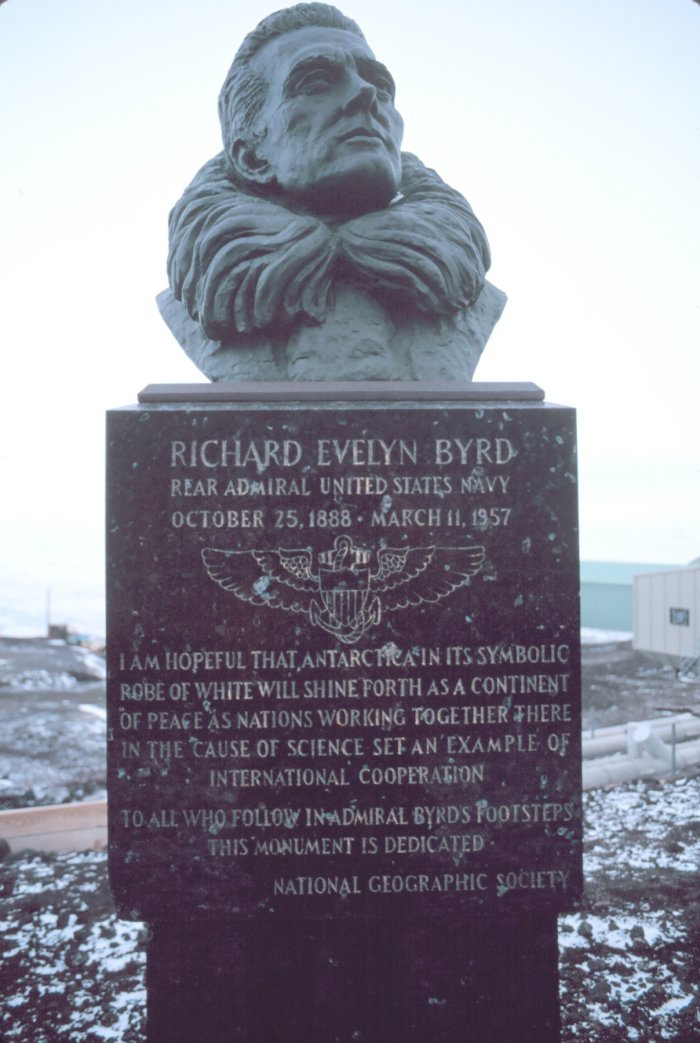
rear admiral richard evelyn byrd, american arctic and antarctic explorer. source: wikimedia commons

Over the Pole
On this day in 1926 — Richard Byrd and Floyd Bennett made the first flight over the North Pole.
2 min read
On May 9, 1926, U.S. Navy Commander Richard E. Byrd and pilot Floyd Bennett took off from Spitsbergen, Norway, in a Fokker F.VII tri-motor aircraft. About sixteen hours later, they returned, claiming to have flown over the North Pole. If true, it was the first time humans had reached the pole by air. Byrd and Bennett were celebrated as heroes. Congress awarded them the Medal of Honor.
The problem is that they probably did not make it. Analysis of Byrd's flight diary, kept secret until after his death, shows discrepancies in speed, fuel consumption, and navigation. Modern researchers estimate they fell short by roughly 80 to 150 miles, likely turning back due to an engine oil leak. The achievement was either a navigational error or a deliberate fabrication.

the fokker f.vii trimotor "josephine ford," used by byrd and bennett in their 1926 north pole flight attempt. source: wikimedia commons

This does not diminish the difficulty. Flying over the Arctic in 1926 was extraordinarily dangerous -- no pressurized cabin, no radar, minimal navigation instruments. The fact that they returned at all was an achievement. Byrd understood that 20th-century exploration was as much about publicity as discovery. He was a skilled self-promoter who leveraged media attention to build his brand. The North Pole flight, real or not, established it.
The real first flight over the pole is now generally credited to Roald Amundsen's airship Norge, which crossed it on May 12, 1926, three days later. Amundsen never achieved the same celebrity as Byrd -- less interested in spectacle, and he paid the price in obscurity. What the Byrd flight demonstrates is that the line between achievement and claim can be thin, especially when verification is impossible. The technology to fly there existed. The technology to verify the flight did not. In that gap, ambition and ambiguity thrived.