on-this-day · june 12
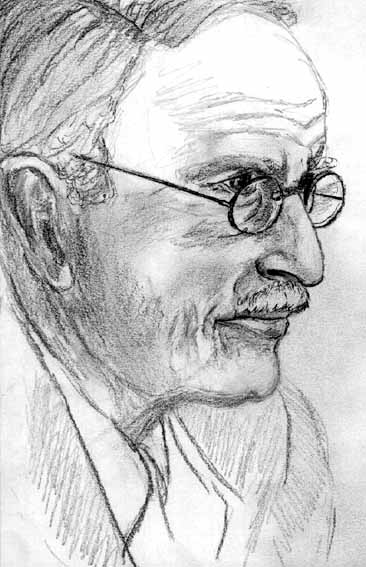
carl gustav jung, swiss psychiatrist and founder of analytical psychology. source: wikimedia commons

Patterns of the Unconscious
On this day in 1875 — Carl Gustav Jung was born. He mapped archetypes, the design patterns of the human unconscious.
2 min read
Carl Gustav Jung was born on July 26, 1875, in Kesswil, Switzerland, son of a rural pastor. He grew up in a house of unspoken tension -- a mother prone to strange moods, a father doubting his faith. Jung spent childhood alone, building miniature villages and inventing private rituals. What he learned early: the inner world was as real as the outer one.
He studied medicine at Basel and specialized in psychiatry. At the Burgholzli hospital in Zurich, he used word association tests to reveal hidden complexes -- clusters of emotionally charged thoughts the conscious mind suppresses. In 1907, he met Freud, forming an intense partnership. But Jung rejected Freud's insistence that sexuality was the primary driver. By 1913, they had stopped speaking.

carl jung in later life -- his concepts of the collective unconscious, archetypes, and psychological types shaped 20th century psychology. source: wikimedia commons

What emerged was Jung's theory of archetypes. Beneath the personal unconscious lies a collective unconscious shared by all humans, containing universal patterns: the hero, the mother, the trickster, the shadow. These are inherited, not learned. Myths and dreams repeat the same archetypes because the mind is built to recognize them. Joseph Campbell used Jungian archetypes to identify the monomyth. Branding and marketing use archetypal images for emotional resonance. Jung also developed introversion and extraversion, and explored synchronicity and alchemy as symbolic systems.
Jung died in 1961. Some dismiss his ideas as mystical. Others find them indispensable, especially in creative fields where symbolic meaning matters more than measurement. What Jung did was map the architecture of the unconscious -- recurring elements that could be identified and understood. Archetypes are the templates we use to make sense of experience. Jung just gave them a name.