on-this-day · july 22

john dillinger mugshot, 1933. source: wikimedia commons

The End of Public Enemy Number One
On this day in 1934 — FBI agents shot John Dillinger outside the Biograph Theater. Crime as a systems problem.
2 min read
John Dillinger left the Biograph Theater in Chicago at 10:30 PM on July 22, 1934. He had just watched "Manhattan Melodrama." FBI agents waited outside, tipped off by Ana Cumpanas, a Romanian immigrant facing deportation. She wore an orange dress so agents could spot her. Dillinger walked past without recognizing them. One called out. Dillinger reached for a pistol. Three agents opened fire. He died on the pavement, shot four times.
Dillinger had robbed at least two dozen banks in 14 months. He was famous not just for the robberies but for how he executed them -- studying bank layouts, timing police response, driving stolen cars prepared in advance. Each robbery was a design problem. He escaped jail twice, once using a carved wooden pistol to bluff past guards. The escapes made him a folk hero during the Depression. That narrative ignored the violence.
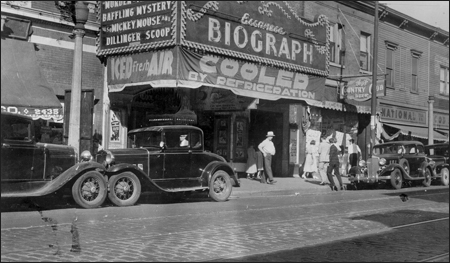
fbi agents outside the biograph theater, chicago, july 22, 1934. source: wikimedia commons

The FBI adapted through process. J. Edgar Hoover made Dillinger the face of a new kind of threat. He needed to demonstrate that federal law enforcement could operate across state lines. Dillinger was the test case. The bureau used fingerprint databases, wiretaps, informants -- approaching the manhunt like an engineering problem. They tracked his network and applied pressure until someone broke. Cumpanas broke. She took him to the movies. She wore orange. The system closed around him.
After Dillinger's death, Hoover used it to argue for expanded federal powers. The FBI grew in size and authority. One man's crime spree became the blueprint for a new kind of policing. The Biograph Theater still stands. People visit to stand where two systems collided: one designed to evade capture, the other to guarantee it. The second system won. It always does, eventually.