on-this-day · july 31
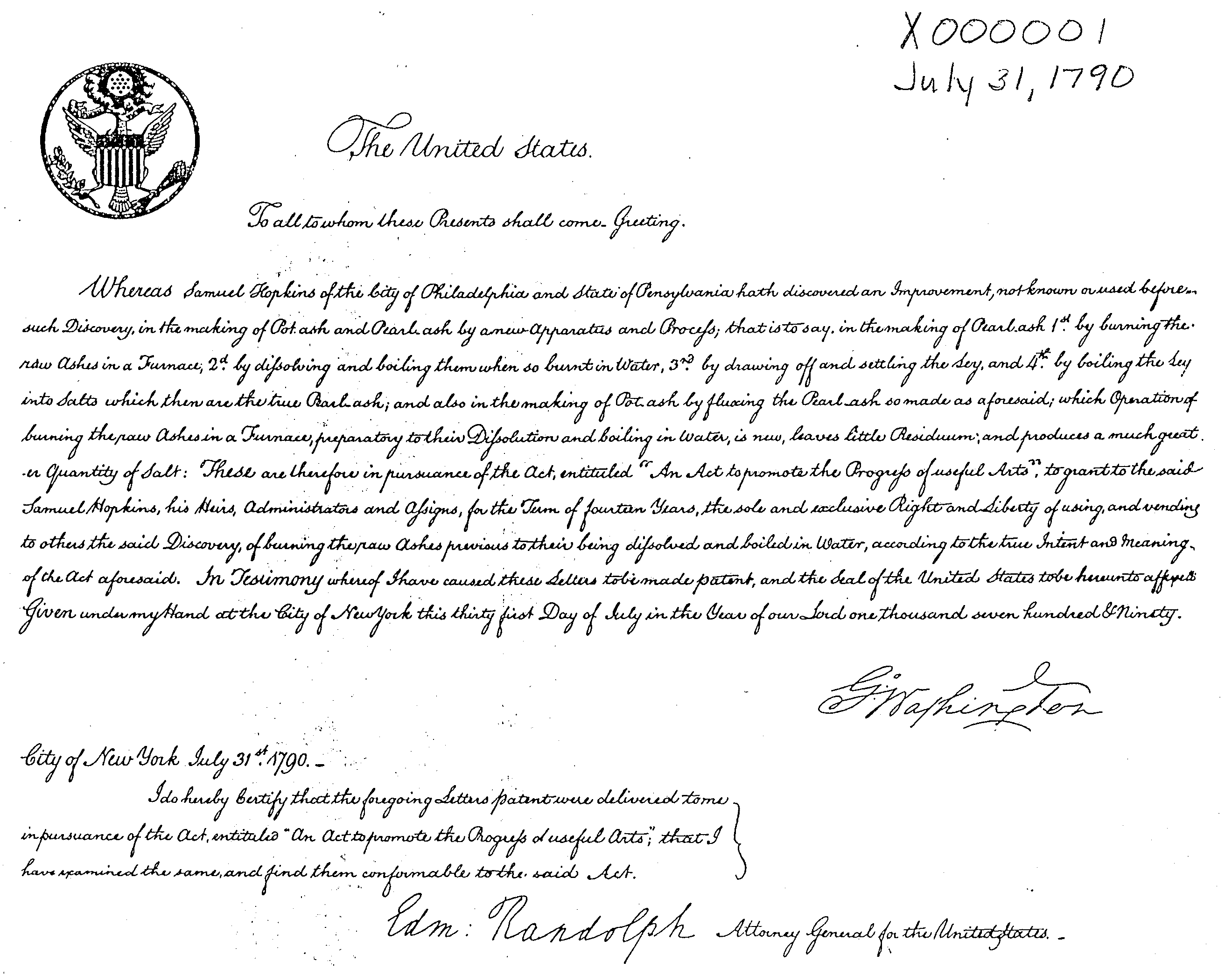
united states patent x1 — the first patent issued in the u.s., july 31, 1790. source: wikimedia commons

The First Patent
On this day in 1790 — The first U.S. patent was issued, for a method of making potash. Protecting invention by design.
2 min read
On July 31, 1790, Samuel Hopkins of Philadelphia received the first patent issued under the United States patent system. It was not for a machine. It was for a process: an improved method of making potash, used in soap and glass production. The invention was modest. What mattered was the system. For the first time, the federal government recognized that ideas could be property, and that protecting them would encourage more people to invent.
The patent system was written into the Constitution. Article I, Section 8 gave Congress the power to secure exclusive rights to inventors for limited times. You disclose your method in exchange for a temporary monopoly. After it expires, the knowledge enters the public domain. The first Patent Act, signed by Washington in April 1790, established a review board. Thomas Jefferson, as Secretary of State, examined applications personally.

thomas jefferson, portrait by rembrandt peale -- as secretary of state, jefferson personally reviewed early patent applications. source: wikimedia commons

Hopkins' potash method passed review. The patent gave him exclusive rights for 14 years. In the first year, only three patents were issued. By 1836, Congress created the Patent Office as a dedicated bureau. Patents became public records -- a library of ingenuity. Engineers read filings to learn what had been tried and what gaps remained. The system did not just protect ideas. It distributed them.
The system also created conflicts that persist. What counts as novel? How broad should a patent be? Software patents, biotech patents, AI inventions -- the system designed in 1790 now handles things its framers could not have imagined. Hopkins is mostly forgotten. What persists is the loop: ideas became property, property created markets, markets created incentives, incentives created more ideas. Still running.