on-this-day · august 20
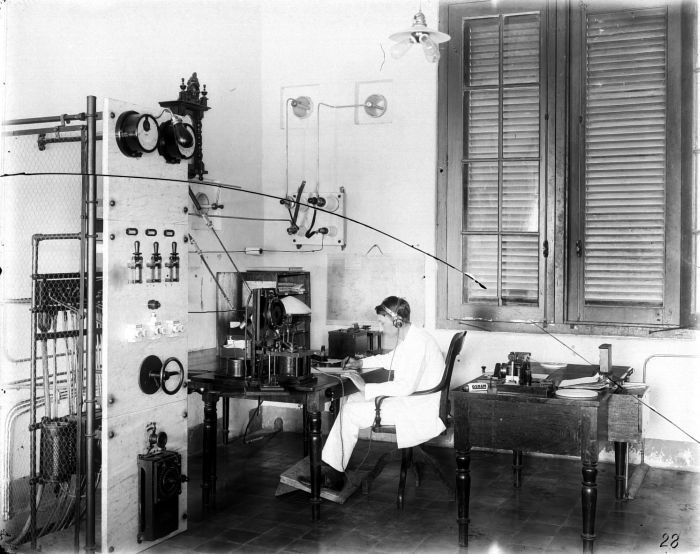
a telegraph operator receiving telegrams at a relay station in sabang — by 1911, global telegraph networks connected continents through thousands of operators like this one. source: wikimedia commons

The Message That Circled the Earth
On this day in 1911 — A telegram sent around the world was received in 16.5 minutes. Communication was shrinking the planet.
2 min read
On August 20, 1911, the New York Times conducted an experiment. They sent a telegram eastward from New York, instructed it to circle the entire globe, and measured how long it took to arrive back. The message traveled through undersea cables and land lines, crossing oceans and continents, passing through relay stations in England, India, the Philippines, and San Francisco. It took 16 minutes and 30 seconds. Less time than it takes to cook pasta.
The telegram itself was simple: a short test message designed to verify the system worked. What mattered was the infrastructure. By 1911, the world had been wired. Undersea telegraph cables connected continents. Messages that would have taken weeks now moved at the speed of electricity. The planet was still the same size, but distances had collapsed.
The first transatlantic telegraph cable had been completed in 1866. By 1911, cables stretched across the Pacific, the Indian Ocean, and the Mediterranean, connecting trading hubs, colonial outposts, and financial centers into a single networked system.
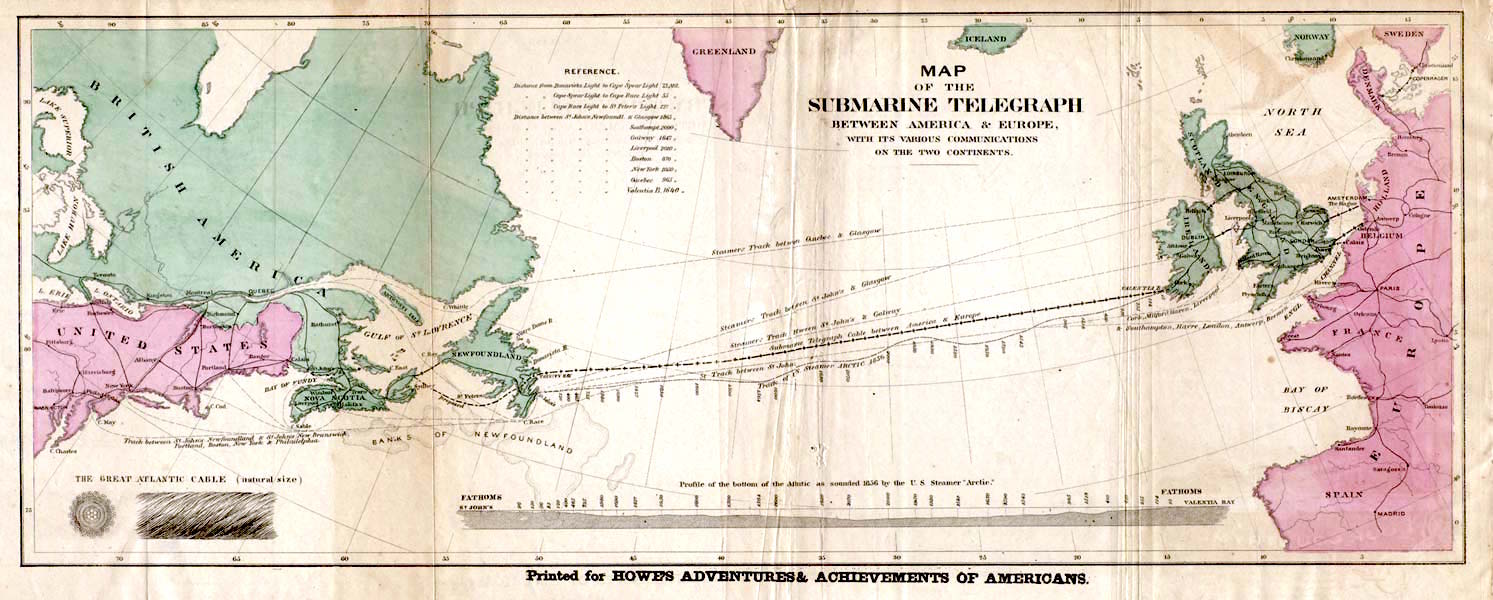
map of the transatlantic telegraph cable route -- by 1911, when a telegram circled the globe in 16.5 minutes, cables like this one had already connected continents for decades. source: wikimedia commons

The economic consequences were immediate. Markets responded faster. Businesses coordinated across time zones. Information asymmetry, which had always favored those closest to events, started to erode. What mattered was access to the network. The telegram also transmitted the concept of simultaneity -- the idea that distant places could experience the same information at roughly the same time.
The experiment feels quaint now. We send messages around the world in milliseconds. But the principle remains foundational. Infrastructure shapes possibility. Once you build a network capable of global reach, distance stops being a barrier and starts being a number. The earth doesn't shrink, but the time to cross it does. That changes everything.