on-this-day · september 10
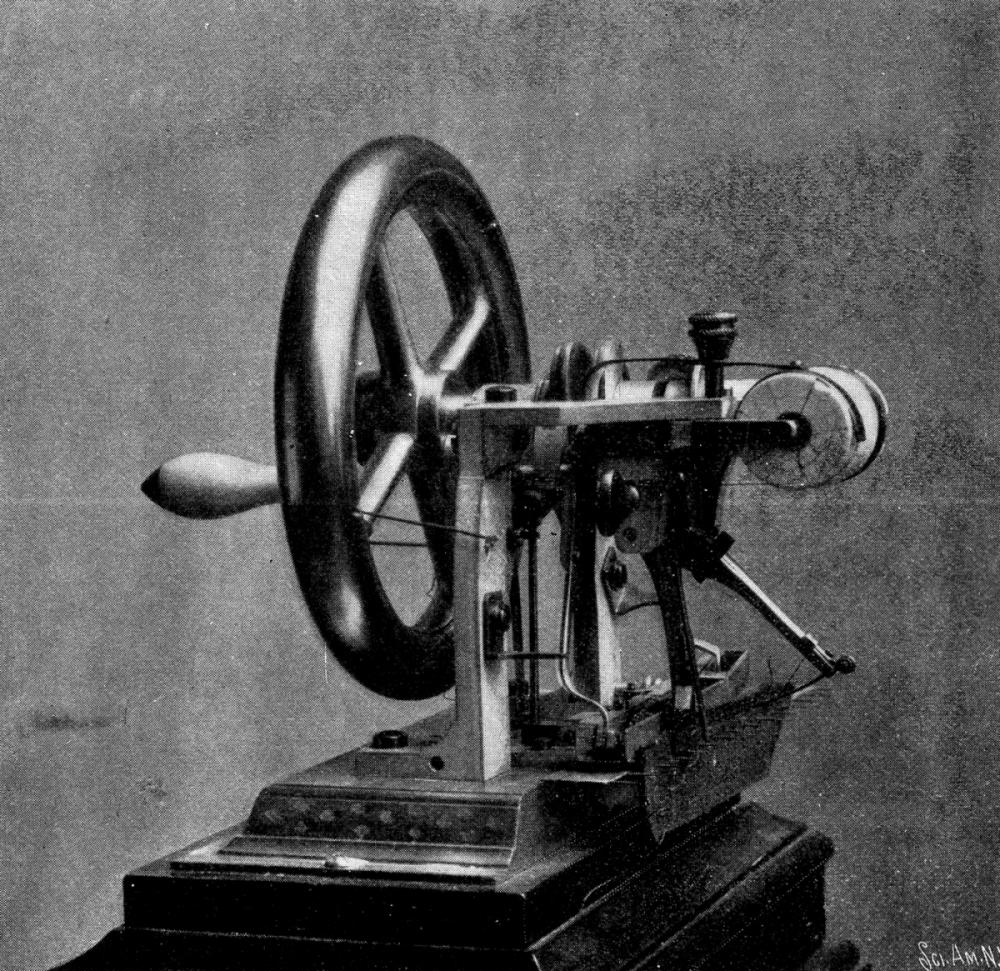
elias howe's sewing machine patent drawing, 1846. source: wikimedia commons

The Machine That Stitched the Modern World
On this day in 1846 — Elias Howe patented the sewing machine. Fabric construction was industrialized.
2 min read
On September 10, 1846, Elias Howe Jr. received U.S. Patent No. 4,750 for a sewing machine using a lockstitch mechanism. It was not the first sewing machine ever built, but it was the first that worked reliably at scale. Within decades, it had transformed the textile industry, redefined domestic labor, and made ready-made clothing affordable for the first time in history.
Howe's design was elegant. A needle with the eye at the point passed through fabric, creating a loop on the underside. A shuttle carrying a second thread passed through that loop, locking the stitch. At 250 stitches per minute versus 50 by hand, this was not just a productivity gain -- it was a fundamental shift. Mass production of clothing became possible. Operators no longer needed years of apprenticeship. They needed to learn a machine.
Howe struggled to commercialize it. Tailors saw it as a threat. Manufacturers ignored him. Other inventors copied his design. He spent years in court and won, earning royalties on nearly every sewing machine sold in America.

singer's original sewing machine — the design that turned howe's invention into a consumer product. source: wikimedia commons

The real boom came during the Civil War. The Union Army needed uniforms at unprecedented scale. Factories employing rows of machines became essential wartime technology. After the war, they shifted to civilian production. Isaac Singer turned it into a consumer product through aggressive marketing and early installment payments -- one of the first uses of consumer credit for durable goods.
Howe died in 1867, wealthy but largely forgotten. The sewing machine became so ubiquitous that people stopped thinking about who invented it. That is the fate of successful design: to be taken for granted. The machine stitched together the modern world, one lockstitch at a time, and no one notices anymore.