on-this-day · september 19
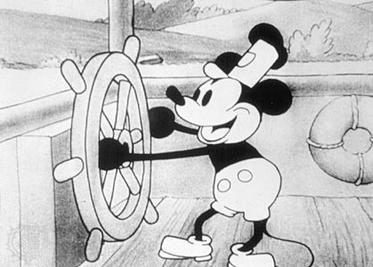
mickey mouse in steamboat willie, 1928. source: wikimedia commons

When Animation Found Its Voice
On this day in 1928 — the first animated cartoon with synchronized sound, Steamboat Willie, premiered.
2 min read
On November 18, 1928, a seven-minute animated short called Steamboat Willie premiered at Universal's Colony Theatre in New York City. A mouse piloting a steamboat, whistling along to "Steamboat Bill," using animals as musical instruments. The animation was crude, the character design simple. But audiences had never seen anything like it. Sound was synchronized frame by frame with the action. Image and sound locked in perfect time.
This was not the first cartoon with sound. Earlier experiments tried, but synchronization drifted. Steamboat Willie solved it with a click track -- animators planned every action to specific beats. The mouse was originally Mortimer; Walt Disney's wife convinced him to change it to Mickey. Disney provided the voice.
The premiere succeeded. Within months, every studio raced to add synchronized sound. Animation was no longer drawings in motion -- it was a designed audiovisual system. Timing became everything. A joke could land on a musical beat. Sound effects could be exaggerated in ways live-action could not.

walt disney, 1935 — the man who proved that animation could do things live-action could not. source: wikimedia commons

Steamboat Willie did not invent synchronized sound in film -- The Jazz Singer came the year before. But animation required imagining the soundtrack in advance, planning every frame, then recording with frame-accurate precision. A different discipline entirely.
The cartoon entered the public domain in 2024. The animation feels quaint now. But every animated film, every motion graphic still relies on sound and image as a unified system, timed to the frame. Steamboat Willie was the first cartoon that sounded like what it looked like. That made all the difference.