on-this-day · september 3
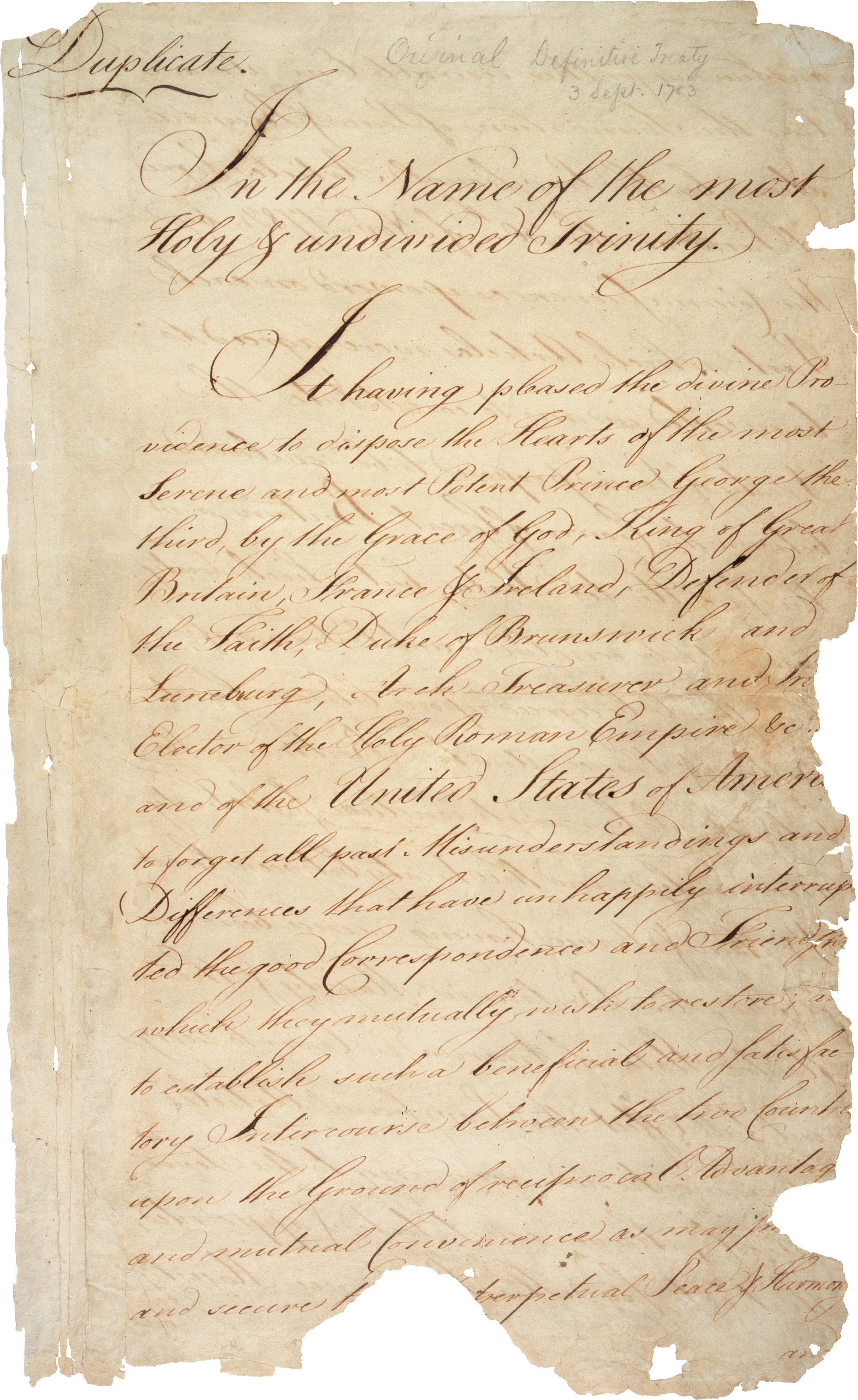
first page of the treaty of paris, 1783. source: wikimedia commons
The Document That Made a Nation
On this day in 1783 — The Treaty of Paris was signed, ending the American Revolution. A designed nation, now recognized.
2 min read
On September 3, 1783, in a rented room at the Hotel d'York in Paris, three American diplomats and a British envoy signed the Treaty of Paris, formally ending the Revolutionary War and recognizing the United States as an independent nation. Eight years of warfare and a radical political experiment had been distilled into ten articles. On paper, America existed.
The treaty was a masterclass in negotiation. Benjamin Franklin, John Adams, and John Jay had been instructed to coordinate with France, their key ally. They ignored that instruction, negotiating separately with Britain and leveraging European rivalries to extract better terms. The result was astonishingly favorable. Britain ceded all territory between the Appalachians and the Mississippi, doubling the new nation's size.
The boundaries were more aspirational than real. Much of the ceded territory was controlled by Native American nations who had not been consulted. The treaty mentioned them exactly once. It said nothing about slavery, nothing about women's rights, nothing about how this republic would actually govern itself -- a question unresolved until the Constitutional Convention four years later.
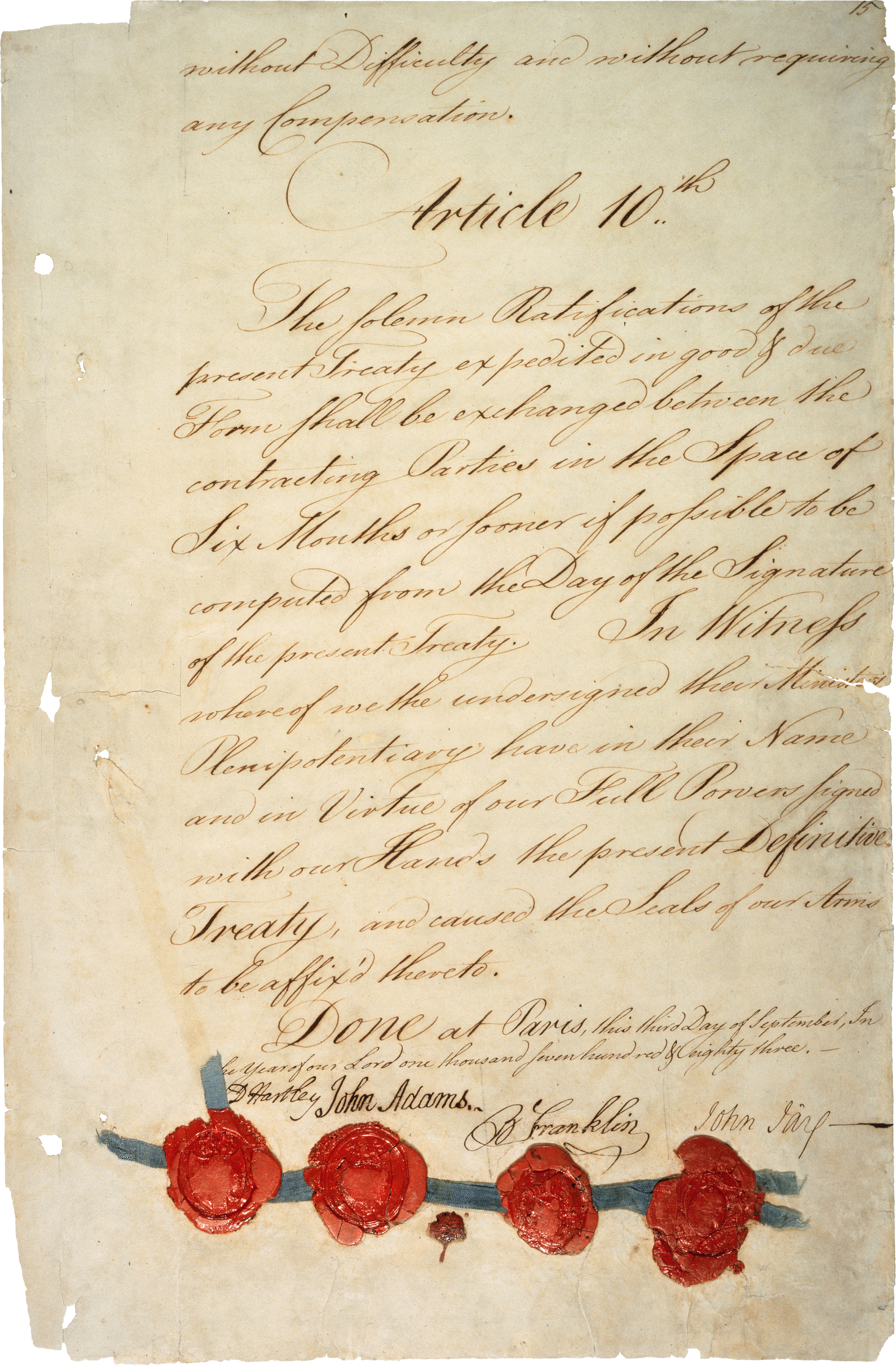
the last page of the treaty of paris, 1783, bearing the signatures of the american and british delegations. source: wikimedia commons
.jpg)
The signing was oddly anticlimactic. No grand ceremonies. Word took weeks to cross the Atlantic. The last British troops did not leave New York until late November. The war had officially ended in September, but reality took longer to catch up.
The Treaty of Paris was less a conclusion than a starting point. It created a legal entity called the United States. What that entity would actually mean -- the contradictions over borders, rights, and identity -- was left for future generations to define, and fight over, for the next two centuries.