on-this-day · january 28
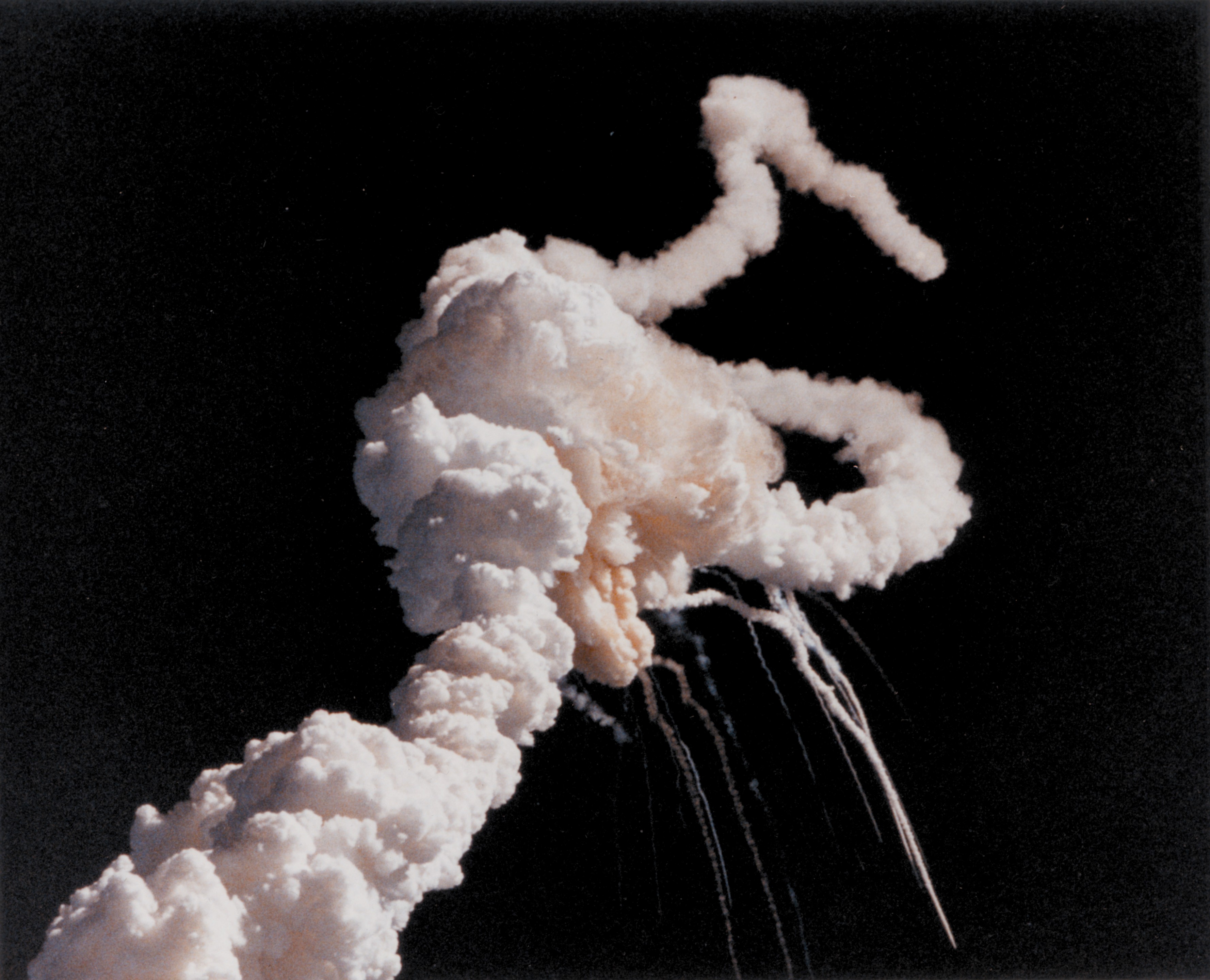
the space shuttle challenger breaking apart 73 seconds after launch on january 28, 1986 — a catastrophic failure caused by an o-ring seal in the right solid rocket booster. source: wikimedia commons

73 Seconds
On this day in 1986 — the Space Shuttle Challenger broke apart 73 seconds after launch. Design failures have the highest cost.
2 min read
On the morning of January 28, 1986, the temperature at Kennedy Space Center was 36 degrees -- well below the minimum recommended for shuttle launches. Engineers at Morton Thiokol recommended postponing. They were overruled. At 11:38 AM, Challenger lifted off with seven crew members, including schoolteacher Christa McAuliffe. Seventy-three seconds later, it disintegrated.
The cause was a failed O-ring seal in the right solid rocket booster. O-rings are rubber gaskets preventing hot gas from escaping. Cold rubber loses flexibility. The seal failed. Hot gas burned through the external fuel tank. The tank ruptured. The shuttle broke apart.
Engineers had documented O-ring erosion in previous flights. They'd warned cold weather increased risk. But warnings traveled through management layers, each filtering and rephrasing. By the time the concern reached decision-makers, "do not launch" had become "some risk exists but within acceptable parameters." This is how organizations fail. Information degrades as it moves through hierarchies.

space shuttle challenger on the crawler-transporter en route to launch pad 39b before the sts-51-l mission, january 1986. source: wikimedia commons

The Rogers Commission found NASA's process fundamentally broken. Twenty-four successful flights had normalized deviance -- small problems reclassified as acceptable anomalies. Richard Feynman demonstrated the O-ring problem on live television by dunking rubber in ice water. He wrote that for a successful technology, reality must take precedence over public relations, because nature cannot be fooled.
NASA implemented new safety protocols. The changes worked until they didn't. Seventeen years later, Columbia disintegrated during reentry -- different failure, similar organizational culture.
Every safety system assumes small failures will be caught before they cascade. But catching them requires listening to warnings, respecting constraints, and treating anomalies as signals. Design isn't just about making things work. It's about making failure visible and ensuring those closest to the problem can stop the machine. Challenger taught that at the highest possible cost.