on-this-day · february 1
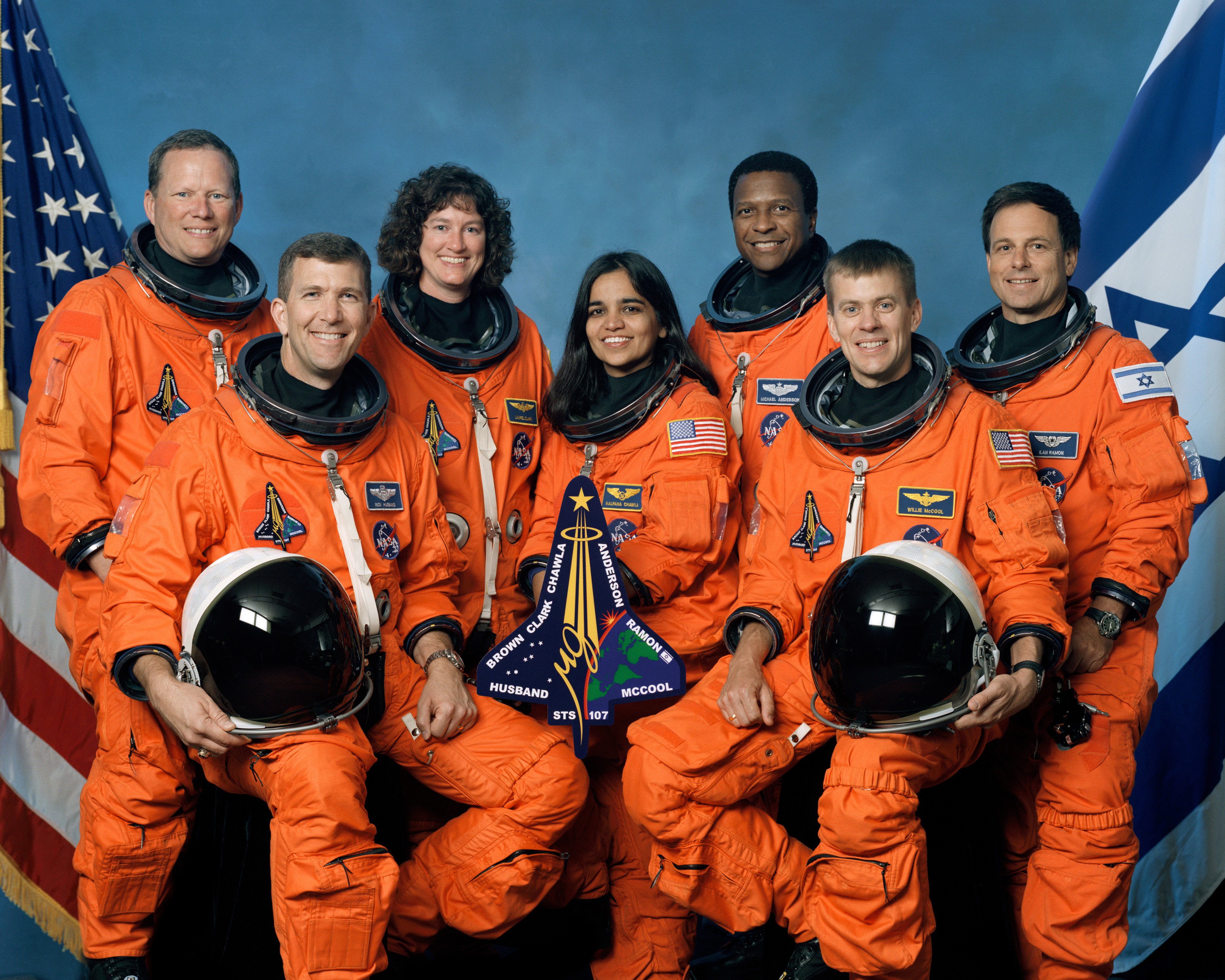
official crew portrait of sts-107: (front row, l-r) rick husband, kalpana chawla, william mccool; (back row, l-r) david brown, laurel clark, michael anderson, ilan ramon. source: wikimedia commons

Sixteen Days Too Late
On this day in 2003 — the space shuttle Columbia disintegrated during reentry. A foam strike during launch, undetected for 16 days.
2 min read
The foam struck 82 seconds after launch. A briefcase-sized chunk of insulation broke free from Columbia's external tank at 500 miles per hour and punched a hole in the left wing's reinforced carbon panel. Engineers reviewed video of the strike. They debated whether it mattered. They decided it probably didn't.
For sixteen days, Columbia orbited Earth while its seven crew members ran experiments in microgravity. Commander Rick Husband, pilot William McCool, Kalpana Chawla, Michael Anderson, Laurel Clark, David Brown, and payload specialist Ilan Ramon had no idea the wing was compromised. Mission Control had no way to inspect it and no plan to fix it.
On February 1, 2003, Columbia began reentry. At 8:54 AM Eastern, crossing into Texas airspace at 207,135 feet, sensor readings failed. Superheated plasma was pouring through the breach. At 8:59 AM, traveling at 12,500 miles per hour, Columbia broke apart. All seven astronauts died.

sts-107 crew members in the spacelab research module aboard columbia during the mission. source: wikimedia commons

The investigation traced the failure to decisions made decades earlier. Foam strikes had occurred on previous missions and been normalized as acceptable risk. The same pattern appeared in the Challenger disaster of 1986. Complex systems don't fail because one thing breaks. They fail because multiple safeguards all fail in sequence.
The Columbia Accident Investigation Board recommended sweeping changes to NASA's safety culture. The shuttle program continued eight more years before retiring in 2011. What happened on February 1 was not random. It was the inevitable outcome of a system that valued schedule over safety, where sixteen days of silence became sixteen minutes over Texas at Mach 18.