on-this-day · january 9

steve jobs presenting the original iphone at the macworld conference, january 9, 2007. source: wikimedia commons
.jpg)
The Rectangle That Ate the World
On this day in 2007 — Steve Jobs unveiled the iPhone. A glass rectangle that redefined how humans interact with machines.
2 min read
On January 9, 2007, Steve Jobs walked onto a stage in San Francisco and told the audience Apple was introducing three revolutionary products: a widescreen iPod, a revolutionary phone, and a breakthrough Internet communicator. He repeated the list. Then stopped. "These are not three separate devices. This is one device. And we are calling it iPhone."
The phone industry laughed. Steve Ballmer mocked the $499 price tag. BlackBerry said it wouldn't appeal to business customers. Nokia was selling over a million phones a day. They all thought they had time.
They were wrong. The iPhone didn't just replace phones. It replaced cameras, GPS devices, music players, alarm clocks, maps, notebooks, and a dozen other single-purpose objects. Within a decade, Nokia collapsed. BlackBerry became irrelevant.
The key insight wasn't hardware -- touchscreens and mobile Internet already existed. Apple eliminated the keyboard. Jobs bet that software could replace hardware, that a programmable interface would outweigh physical keys. The screen became the entire device.
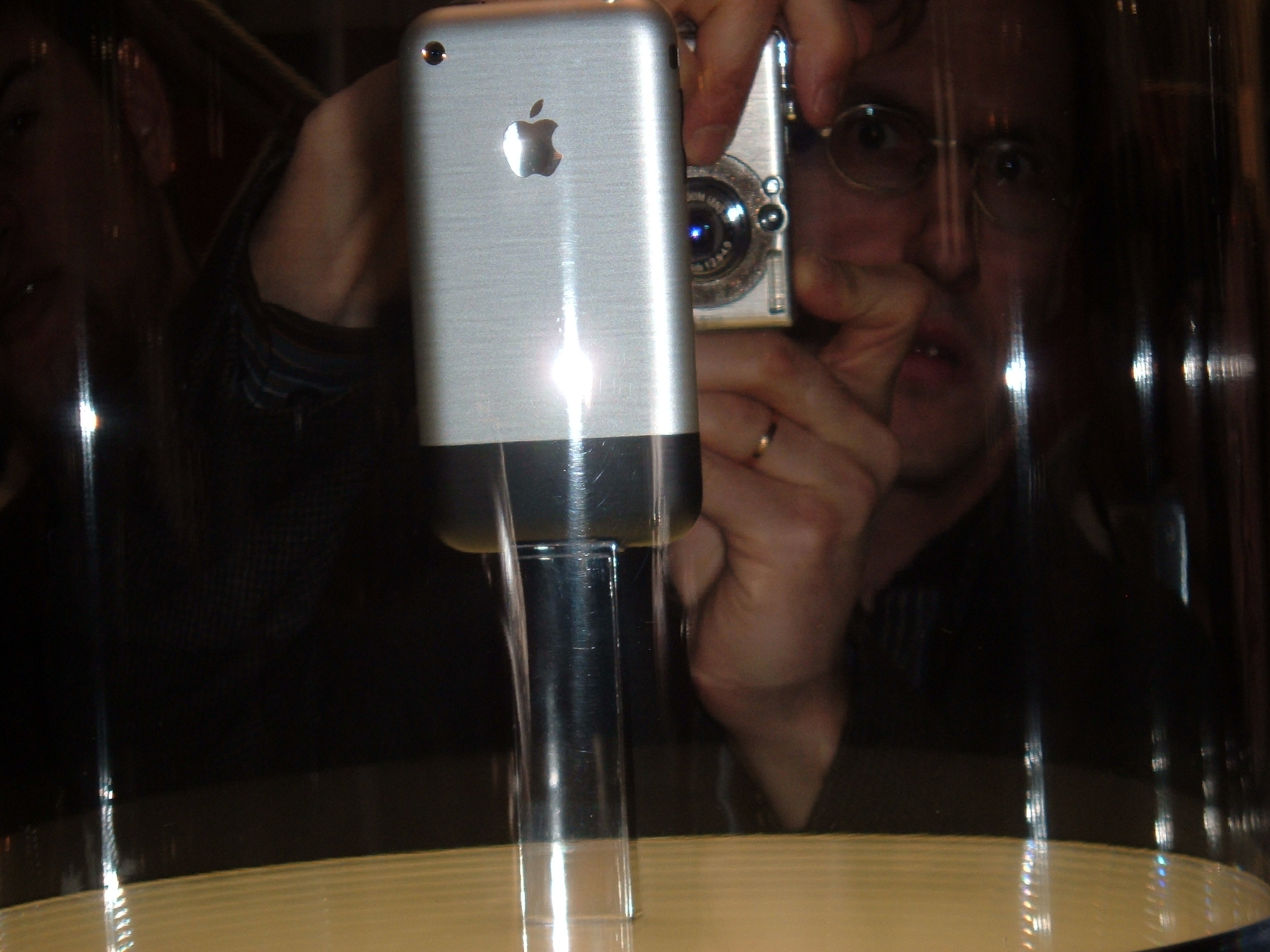
the original apple iphone on display at macworld 2007. source: wikimedia commons

The app ecosystem came in 2008. Once third-party developers could build for it, the device became a platform. Uber, Instagram, WhatsApp -- all built on the assumption everyone would carry a pocket computer with camera, GPS, and always-on Internet. The iPhone didn't just enable these services; it made them inevitable.
People stopped looking up. The phone became an extension of cognition, a prosthetic memory. Just as the electric watch replaced mechanical springs, the iPhone replaced physical buttons with software, making the device infinitely reconfigurable. The rectangle in your pocket is the interface to everything. It started when Jobs held up a glass slab and told the world to pay attention.