on-this-day · october 18
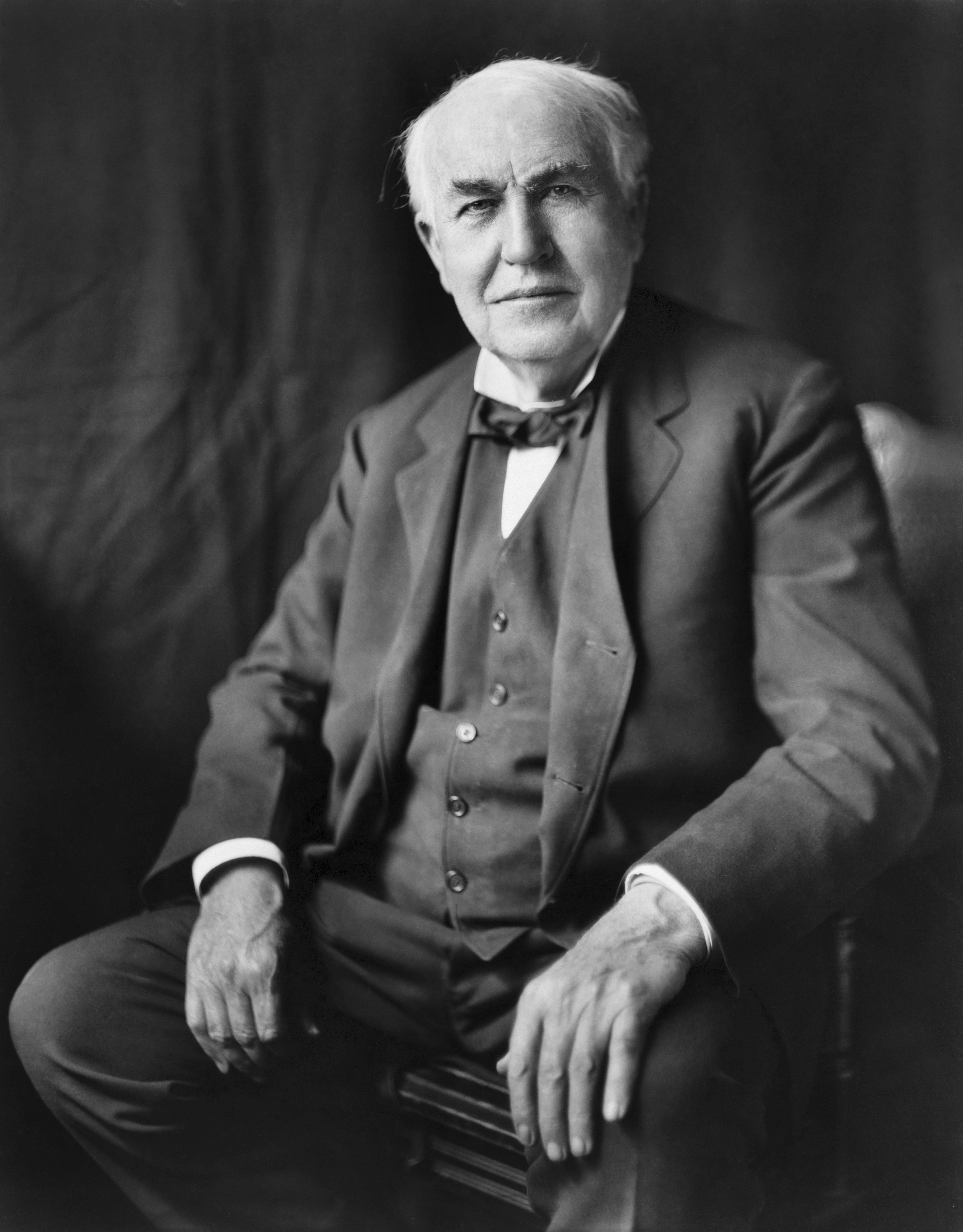
thomas edison in his laboratory. source: wikimedia commons

The Inventor Who Industrialized Invention
On this day in 1931 — Thomas Edison died. His last breath was reportedly captured in a bottle by Henry Ford.
2 min read
Thomas Alva Edison died on October 18, 1931, at his estate in West Orange, New Jersey. He was 84 years old. The lightbulb, the phonograph, the motion picture camera -- over 1,000 patents in his name. Henry Ford reportedly asked Edison's son to capture his last breath in a bottle. Whether the story is fully true or merely symbolic, it captures the mythology perfectly: even Edison's dying was treated as an event worth preserving.
Edison did not work alone. His greatest invention may have been the invention factory itself -- Menlo Park, where he assembled teams of engineers, machinists, and scientists who worked together to produce breakthroughs on demand. He called it an "invention factory," promising "a minor invention every ten days and a big thing every six months." This was industrialized creativity. Not a lone genius in a garret, but a system designed to generate innovation at scale.

thomas edison's menlo park laboratory, where many of his inventions were developed. source: wikimedia commons

Edison understood that invention without commercialization is just a demonstration. He built businesses around his inventions -- the Edison Electric Light Company became General Electric. He fought for market dominance, sometimes ruthlessly. The War of Currents against Westinghouse and Tesla saw him champion direct current even after alternating current proved superior. He was stubborn, controlling, and sometimes wrong.
But his model of organized research persisted. Bell Labs, Xerox PARC, Google X -- all descendants of Menlo Park. Edison showed that innovation could be managed, funded, and directed toward commercial goals. He turned invention from an individual act into an organizational process. October 18, 1931, marks the end of one man and the persistence of his most important idea: that you can design a system to produce breakthroughs, and that system can outlive its creator.