on-this-day · october 29

arpanet logical map, march 1977. source: wikimedia commons

Lo
On this day in 1969 — The first ARPANET message was sent from UCLA to Stanford. It crashed after two letters: lo.
2 min read
On October 29, 1969, at 10:30 p.m., a graduate student named Charley Kline sat at a computer terminal at UCLA and tried to log into a computer at Stanford Research Institute, 400 miles away. He typed "l." Got it. Typed "o." Got it. Typed "g." The system crashed. The first message ever sent over ARPANET, the precursor to the internet, was "lo." As in, lo and behold.
ARPANET was funded by the Defense Department's Advanced Research Projects Agency. The idea was to create a communications network that could survive a nuclear attack by routing messages through multiple paths rather than a single connection. If one node went down, the message would find another route. This was packet switching -- breaking data into small pieces, sending each piece independently, and reassembling them at the destination.
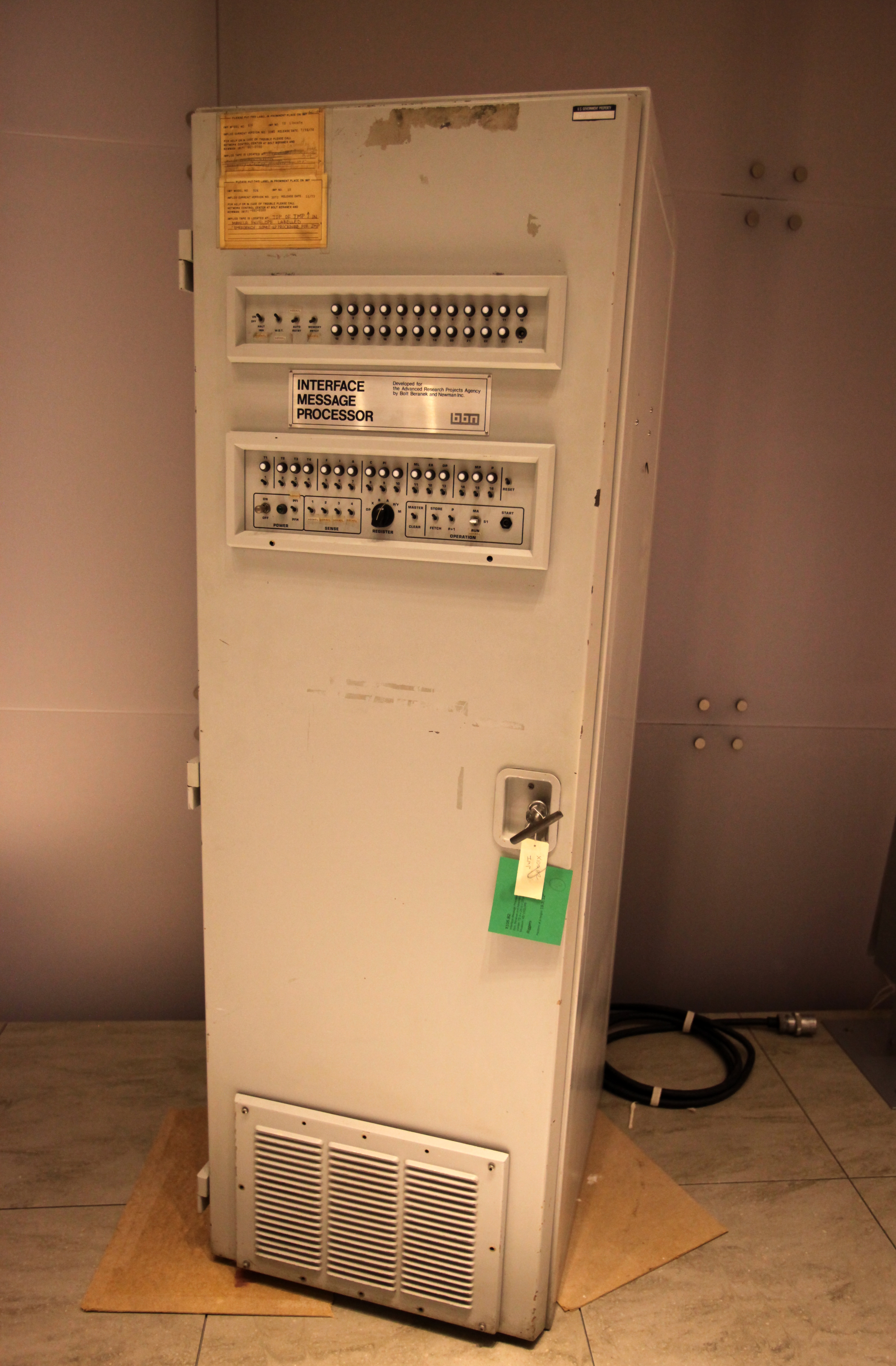
the arpanet interface message processor (imp) — the first packet-switching router used to send the initial arpanet message in 1969. source: wikimedia commons

About an hour after the crash, Kline successfully completed the login. By December, four nodes were connected: UCLA, Stanford, UC Santa Barbara, and the University of Utah. By 1971, there were 15. By 1981, 213. The network grew because it was designed to be open. Any computer that followed the protocols could join. This was infrastructure as invitation.
Nobody involved imagined what ARPANET would become. The researchers were thinking about sharing computing resources, not building a global communication network. Email was an afterthought. The World Wide Web would not exist for another 20 years. The internet emerged not from a grand vision but from a series of practical solutions to specific problems, each building on the last. October 29, 1969, is the day the internet spoke its first word. It crashed after two letters. Then it got back up and tried again. That pattern -- failure, recovery, expansion -- would define everything that followed.