on-this-day · november 15
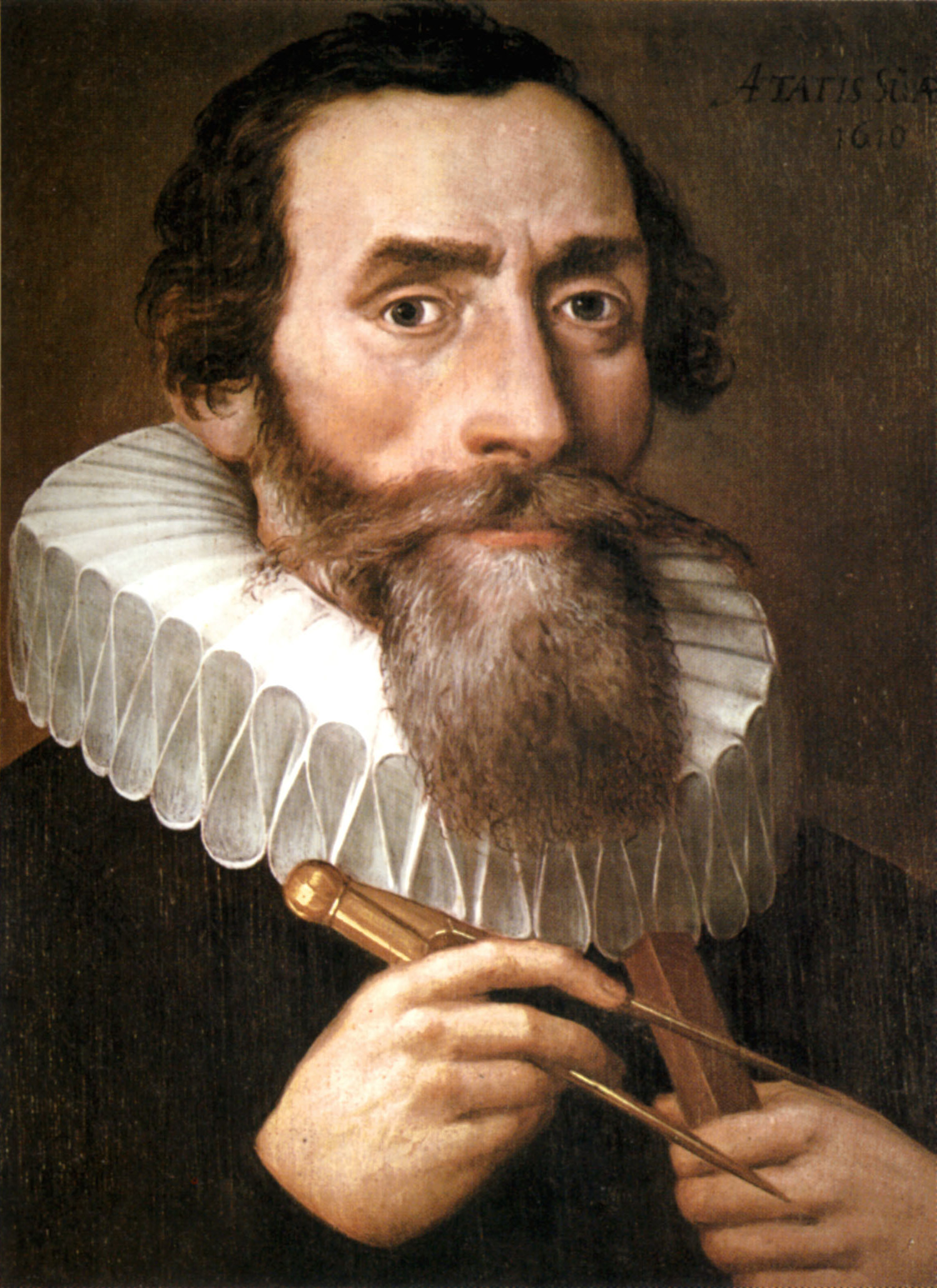
johannes kepler, 1610. source: wikimedia commons

The Laws That Steer Spacecraft
On this day in 1630 — johannes kepler died. His laws of planetary motion are still used to navigate spacecraft today.
2 min read
Johannes Kepler died on November 15, 1630, in Regensburg, Germany. He was fifty-eight, broke, and traveling to collect unpaid salary from the Holy Roman Emperor. He left behind three laws of planetary motion that redefined the solar system. Those laws are still in use. Every spacecraft trajectory, every satellite orbit runs on mathematics Kepler derived from another man's data.
Born in 1571, childhood smallpox left him with weakened vision and crippled hands. He studied theology but in 1600 became assistant to Tycho Brahe, the most precise observational astronomer of the pre-telescope era. When Tycho died in 1601, Kepler inherited decades of planetary measurements and spent years trying to fit them to circular orbits. Mars refused to cooperate.
After exhausting every circular variation, Kepler discovered Mars's orbit was an ellipse with the Sun at one focus -- his First Law. His Second Law: a planet sweeps equal areas in equal times, moving faster near the Sun. His Third Law: the square of a planet's orbital period is proportional to the cube of its average distance from the Sun. Newton later used Kepler's work as the foundation for universal gravitation.
Kepler lived through war and personal tragedy. His mother was accused of witchcraft. He cast horoscopes he considered nonsense to pay bills. He died collecting money he was owed. What survived was precision. He followed data wherever it led, even when it contradicted centuries of wisdom. Circles were divine. Ellipses were messy. He chose accuracy over aesthetics.

diagram of kepler's laws of planetary motion — equal areas in equal times, with the sun at one focus of the ellipse. source: wikimedia commons
