on-this-day · november 29
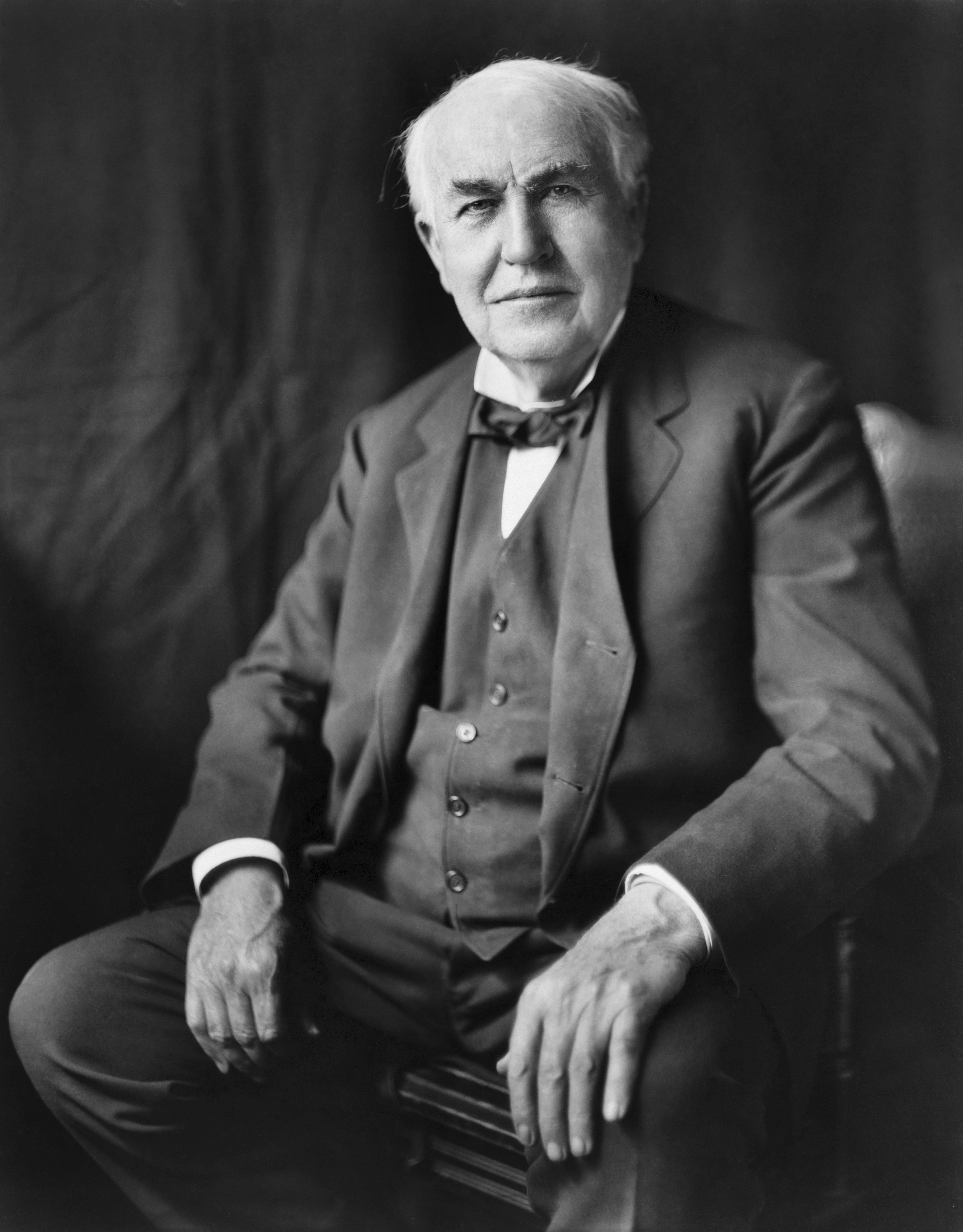
thomas edison, circa 1878. source: wikimedia commons

The First Playback
On this day in 1877 — Thomas Edison demonstrated the phonograph for the first time. Mary had a little lamb.
2 min read
On November 29, 1877, Thomas Edison demonstrated the phonograph for a small audience, cranking a tinfoil cylinder and playing back a recording of his own voice reciting "Mary had a little lamb." It was the first time anyone had heard a recorded human voice played back from a machine. The audience was astonished. Edison himself was astonished. "I was never so taken aback in my life," he later said.
This demonstration followed Edison's November 21 announcement of the device. The phonograph emerged from his work on telegraphy and telephony. He had been experimenting with a way to record telegraph messages on paper tape when he realized that a diaphragm vibrating from sound could leave physical impressions on a surface. If those impressions could be traced back, the original sound could be reproduced. The principle was mechanical and direct: vibration in, vibration out.
The tinfoil phonograph was crude. The foil tore easily, recordings could only be played a few times, and the sound quality was poor. Edison saw it primarily as a business tool for dictation. He underestimated the entertainment applications almost completely. It would take another decade before Edison and competitors like Alexander Graham Bell and Emile Berliner developed wax cylinders and flat discs that made recorded music commercially viable.
What mattered on November 29 wasn't the quality of the playback. It was the proof of concept. Sound, which had existed only in the moment of its creation since the beginning of human experience, could now be captured, stored, and reproduced. A voice could outlast the body that produced it. That's not an invention. That's a rupture in the nature of time. Everything that followed -- records, radio, streaming, podcasts -- was just refinement.

edison's tinfoil phonograph, 1878, at the national museum of american history — the device that first captured and played back the human voice. source: wikimedia commons
