on-this-day · november 30
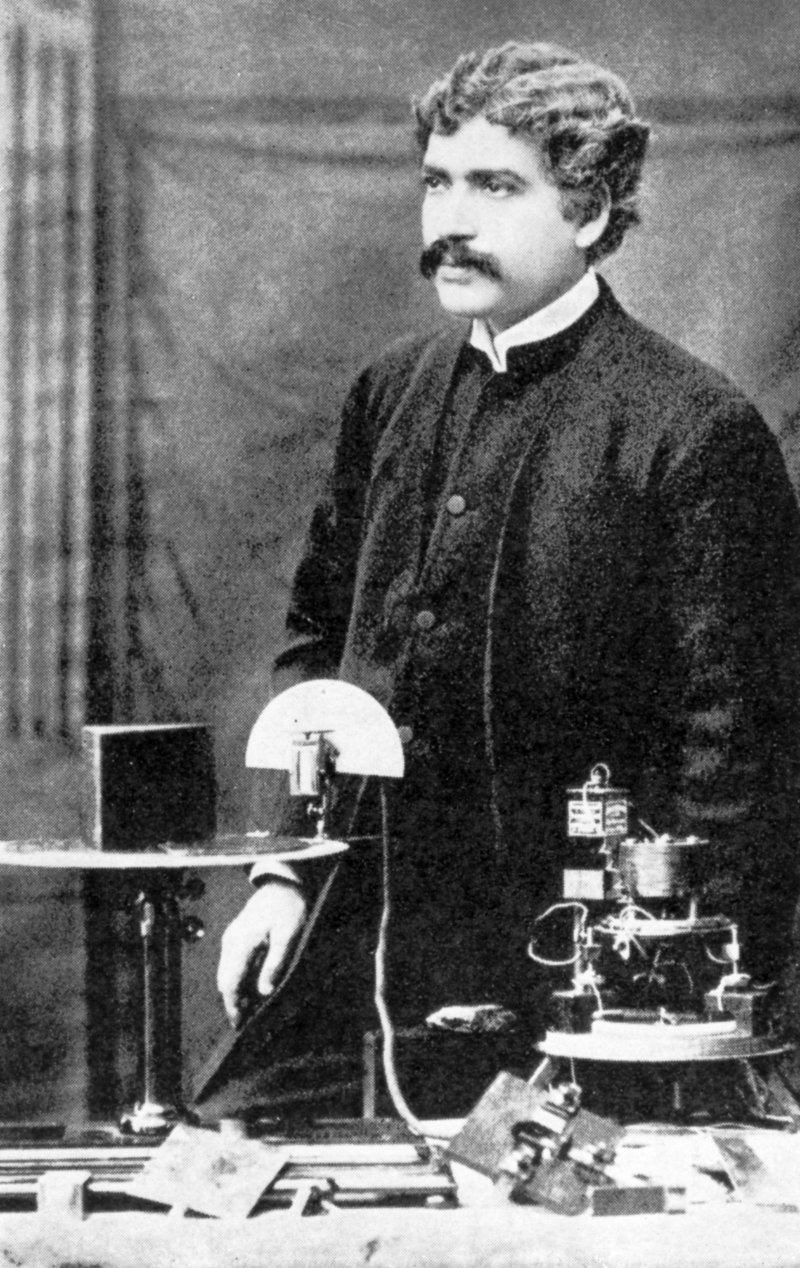
jagadish chandra bose, 1926. source: wikimedia commons

The Scientist Who Listened to Plants
On this day in 1858 — Jagadish Chandra Bose was born. He proved that plants respond to stimuli. Biology is wider than we thought.
2 min read
Jagadish Chandra Bose was born on November 30, 1858, in Mymensingh, Bengal. He became a physicist and biologist who made pioneering contributions to radio science and plant physiology. The IEEE recognizes him as a father of radio science. He demonstrated wireless transmission in 1895, before Marconi's famous experiments, using microwave-range waves to ring a bell remotely. His work was largely overlooked because he worked in colonial India.
Bose's most radical work was in biology. He invented the crescograph, magnifying plant movements up to 10,000 times, and demonstrated that plants respond to stimuli like animals do. He showed plants react to heat, cold, light, noise, and chemicals. He applied electric probes to plant tissue and recorded responses mirroring animal nervous systems. The establishment was skeptical. Plants weren't supposed to feel.
He published Response in the Living and Non-Living in 1902, arguing the boundary between living and non-living matter was not as sharp as assumed. He refused to patent his inventions, believing knowledge should be freely shared. He founded the Bose Institute in Kolkata in 1917, dedicated to unrestricted research.
Bose died in 1937, recognized in India but forgotten in the West until late in the twentieth century. Modern studies on plant signaling have confirmed many of his observations. He saw biology as a continuum, not a set of categories. He insisted the living world was wider than anyone admitted. He was right.

the crescograph, bose's invention for measuring plant responses — capable of magnifying plant movement 10,000 times, bose institute museum, kolkata. source: wikimedia commons
