on-this-day · november 8

wilhelm röntgen. source: wikimedia commons

Seeing Through Everything
On this day in 1895 — wilhelm röntgen discovered x-rays. He saw through solid matter for the first time.
2 min read
On November 8, 1895, Wilhelm Conrad Rontgen was experimenting with cathode rays in his lab at the University of Wurzburg when he noticed a fluorescent screen glowing across the room, even though the cathode tube was shielded with heavy black cardboard. Something was passing through. Rontgen spent the next six weeks in near-total seclusion, eating and sleeping in his lab, trying to understand what he had found.
He called them X-rays because he didn't know what they were. They passed through flesh but not bone, through paper but not lead. On December 22, he asked his wife Bertha to place her hand on a photographic plate, then exposed it for fifteen minutes. The image showed her bones and wedding ring floating against a ghostly outline of flesh. It became the most famous photograph in the history of science.
Rontgen published on December 28. Within weeks, doctors were using X-rays to locate bullets and fractures. Within a year, X-ray equipment was standard in hospitals across Europe. No discovery had ever moved from lab to clinical use so fast. He received the first Nobel Prize in Physics in 1901, donated the prize money, and refused to patent, believing the discovery belonged to humanity.
X-rays proved that solid matter wasn't solid, that reality had layers most people couldn't see, and that the right instrument could strip them away. Every airport scanner, every dental X-ray, every CT machine descends from six weeks of obsessive work in a darkened lab in Bavaria.
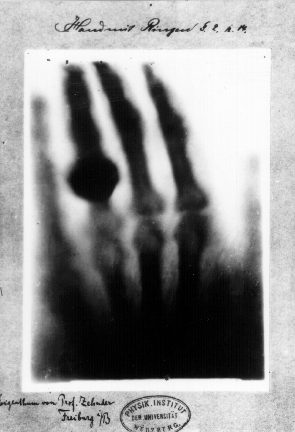
the first medical x-ray, röntgen's wife's hand, december 22, 1895. source: wikimedia commons
