on-this-day · november 9

people on the berlin wall, november 9, 1989. source: wikimedia commons

The Wall Came Down
On this day in 1989 — the berlin wall fell. A concrete system designed to divide, dismantled by people with hammers.
2 min read
On November 9, 1989, the Berlin Wall fell. It wasn't planned. East German spokesman Gunter Schabowski, reading a hasty policy change at a press conference, announced that citizens could cross the border "immediately, without delay." He was supposed to say the new regulations would take effect the next day. West German TV broadcast it live. Thousands of East Berliners walked to the checkpoints and demanded to pass.
The Wall had stood since August 1961, designed to stop East Germans fleeing to the West. In twenty-eight years, at least 140 people died trying to cross it. Concrete, barbed wire, guard towers, a death strip patrolled by soldiers authorized to shoot on sight. It was the most visible symbol of the Cold War: a line through a city to keep people inside a system they hadn't chosen.
By 1989, the system was collapsing. Hungary had opened its Austrian border in September. Half a million people had gathered in Alexanderplatz five days earlier. Schabowski's confused announcement was the catalyst, not the cause. At the Bornholmer Strasse checkpoint, the guards, with no orders to shoot, opened the gates at 10:45 PM. Within hours, people were dancing on the Wall, chipping concrete with hammers.
The Wall fell because a bureaucrat misspoke and no one was willing to shoot. That's how systems end: not with a grand plan but with a small error that exposes how hollow the structure has become. Within a year, Germany reunified. Within two, the Soviet Union dissolved.
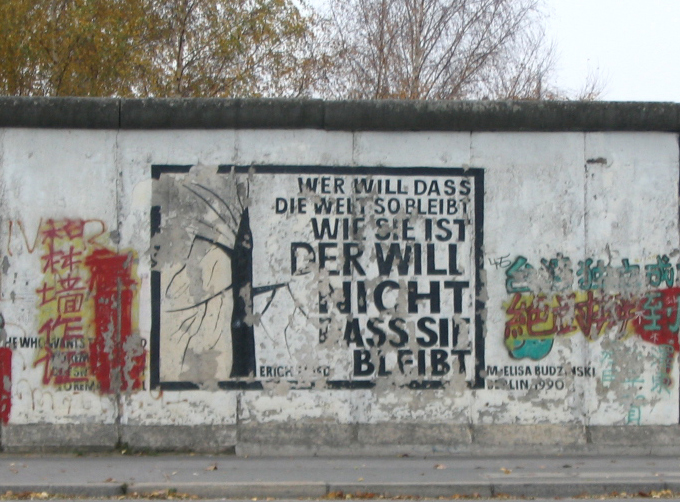
the berlin wall, viewed from the west. the death strip is visible on the eastern side. source: wikimedia commons
