on-this-day · december 16
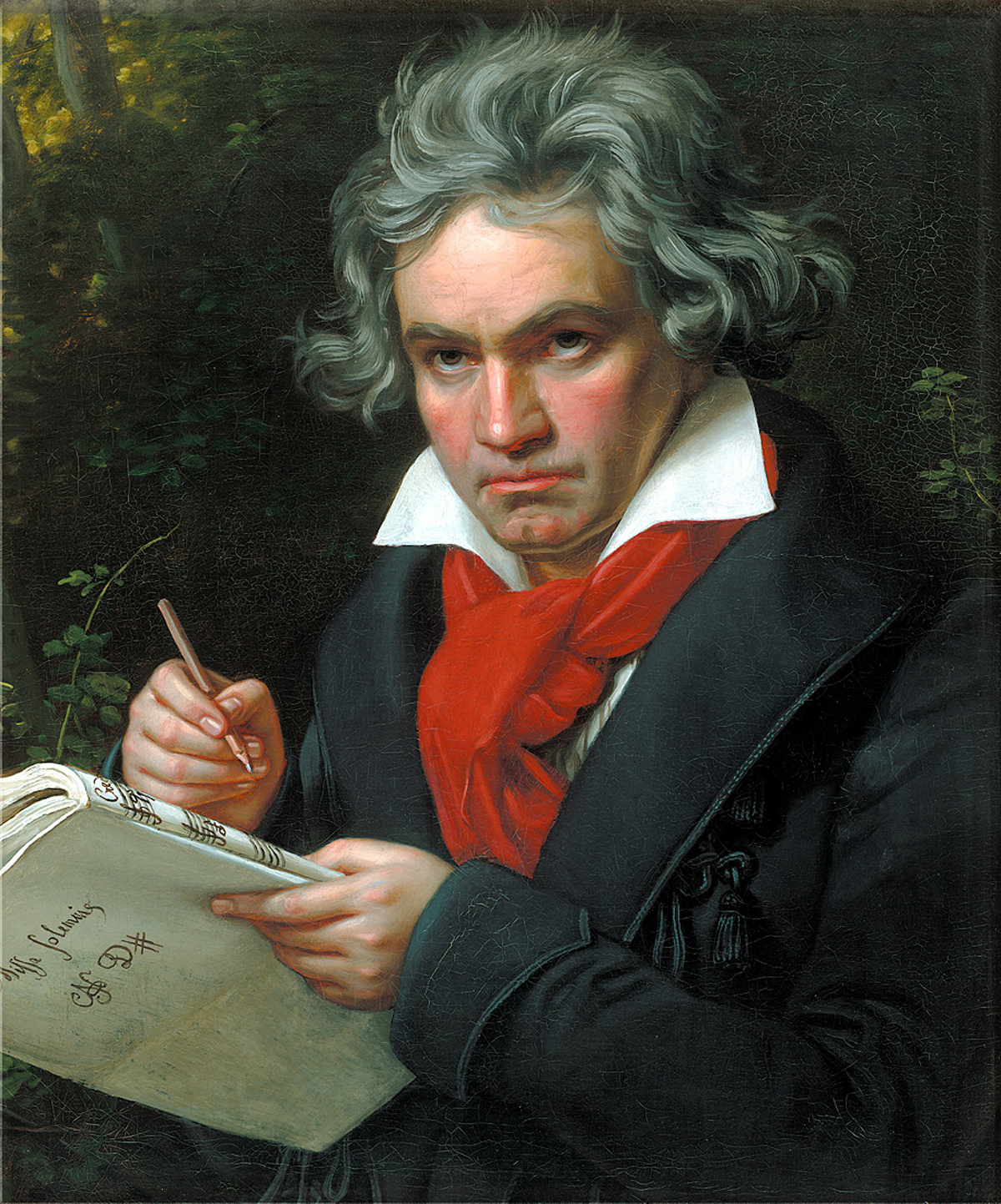
ludwig van beethoven, joseph karl stieler, 1820. source: wikimedia commons

Composing in Silence
On this day in 1770 — Ludwig van Beethoven was born. He composed his greatest works after going deaf. Constraint as design.
2 min read
Ludwig van Beethoven was born in Bonn on December 16, 1770. His father, a court musician, recognized Ludwig's talent early and drove him relentlessly. By his mid-twenties, Beethoven had moved to Vienna and established himself as one of Europe's finest pianists and most ambitious composers. Then, around 1798, he began losing his hearing.
By 1802, the deterioration was severe enough that he wrote the Heiligenstadt Testament, a letter to his brothers describing his despair. He considered suicide. He didn't follow through. Instead, he composed. The music that followed his hearing loss -- the "Eroica" Symphony, the "Appassionata" Sonata, the late string quartets, the Ninth Symphony -- represents some of the most profound work in Western music.
The deafness forced a shift. Beethoven couldn't hear orchestras perform his work. He composed increasingly from internal models, hearing the music in his mind. His late works became structurally adventurous, emotionally extreme, and decades ahead of their time. Constraint didn't limit him. It redirected his creative process inward, where convention held less power.

manuscript page from beethoven's ninth symphony. source: wikimedia commons

The Ninth Symphony, completed in 1824, was premiered with Beethoven on stage, unable to hear the orchestra or the audience's thunderous ovation. A soloist had to turn him around to see the applause. That image -- the deaf composer facing an audience he cannot hear, having just delivered one of humanity's greatest artistic achievements -- captures something essential. Leonardo da Vinci's notebooks show what a restless mind produces when given freedom. Beethoven shows what a restless mind produces when given walls. Both are extraordinary.