on-this-day · december 18

sir joseph wilson swan, 1880s. source: wikimedia commons

Light Before Edison
On this day in 1878 — Joseph Swan demonstrated the first practical electric light in Newcastle. Edison wasn't the only one.
2 min read
On December 18, 1878, Joseph Swan demonstrated the first practical incandescent electric light to the Newcastle upon Tyne Chemical Society. The carbonized thread filament glowed brightly in a vacuum glass bulb. The initial demonstration had issues -- the lamp broke down after some minutes due to excessive current. But by January 1879, Swan had solved the problem and repeated the demonstration successfully.
Swan had been working on electric lighting since the 1850s. The core challenge was finding a filament that could glow white-hot without burning up. Earlier experimenters had tried platinum, which was expensive and fragile. Swan used carbonized materials in a vacuum. The vacuum was critical -- without oxygen, the filament couldn't combust. Better vacuum pumps, available by the 1870s, made the breakthrough possible.
Thomas Edison was working on the same problem simultaneously in New Jersey. Edison gets most of the credit, but Swan demonstrated his lamp earlier. Thomas Edison would later adapt and commercialize the technology with superior business instincts and a complete electrical distribution system. Rather than fight, the two eventually merged their companies into Edison and Swan United Electric Light Company.
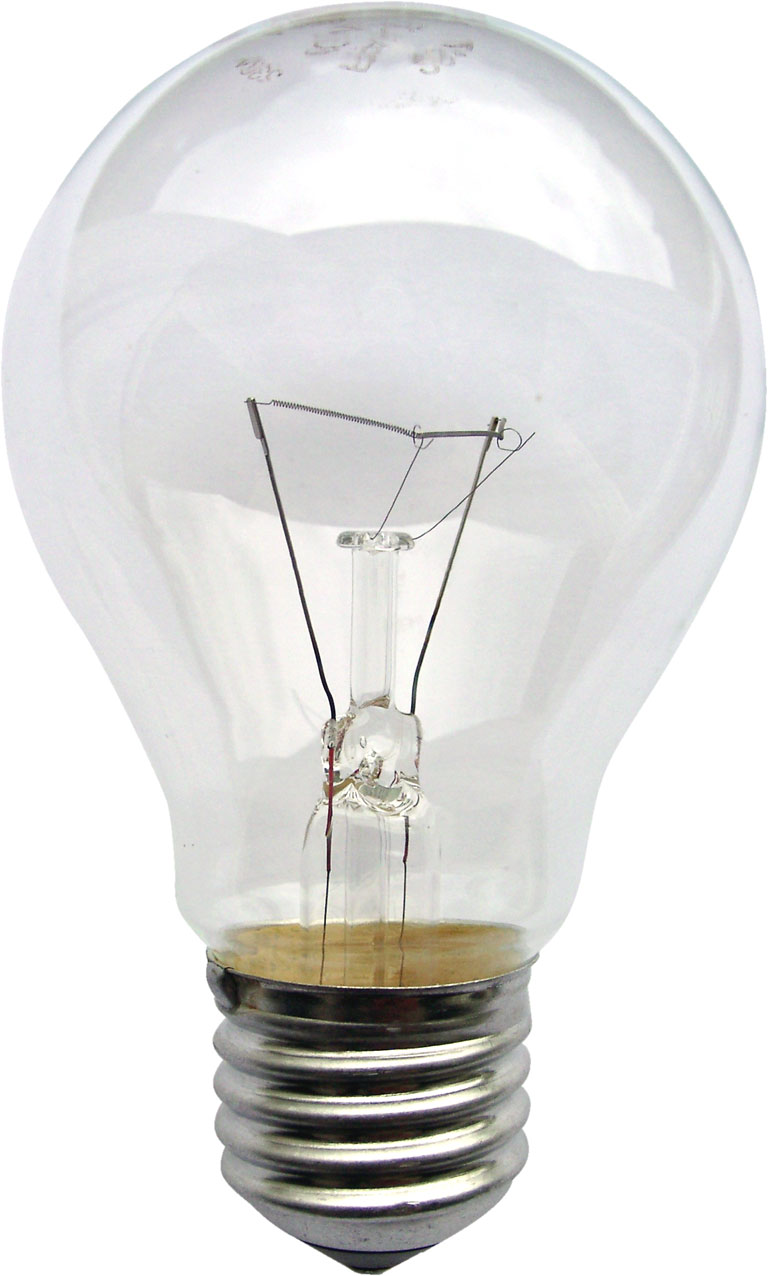
early incandescent light bulb. source: wikimedia commons

Swan's house was the first in the world to be lit by incandescent bulbs. The Lit and Phil Library in Newcastle was the first public room so illuminated. Swan didn't just invent a bulb. He imagined domestic electric lighting as a system -- wiring houses, generating power, replacing gas.
Invention is rarely a single moment by a single person. Swan and Edison solved the same problem independently, at nearly the same time. The light bulb wasn't born. It converged.