on-this-day · february 10

ibm's deep blue chess computer, the custom parallel processing machine that defeated world chess champion garry kasparov in 1996 and again in 1997. source: wikimedia commons

When the Machine Won
On this day in 1996 — IBM's Deep Blue defeated Garry Kasparov in a chess game for the first time. Machines began to think.
2 min read
On February 10, 1996, IBM's Deep Blue defeated world chess champion Garry Kasparov in the first game of a six-game match in Philadelphia. It was the first time a computer had beaten a reigning world champion under standard tournament conditions. Kasparov stared at the board, stood up, and walked away. The machine didn't notice.
Deep Blue was a brute-force calculator. It could evaluate 200 million positions per second, running on a custom IBM RS/6000 supercomputer that weighed 700 kilograms. It had no understanding of chess. It had no intuition. It simply searched deeper into the game tree than any human could, evaluating each position with a hand-tuned scoring function built by a team of engineers and grandmasters.
Kasparov was rattled by the first game but recovered, winning the 1996 match 4-2. He called the experience unsettling, noting that Deep Blue's resilience in the late game "would intimidate many players into making a mistake or two, but not this one." The rematch came in 1997, and this time Deep Blue won 3.5-2.5. Kasparov accused IBM of cheating, demanded access to the machine's logs, and never got them. IBM dismantled Deep Blue shortly after.
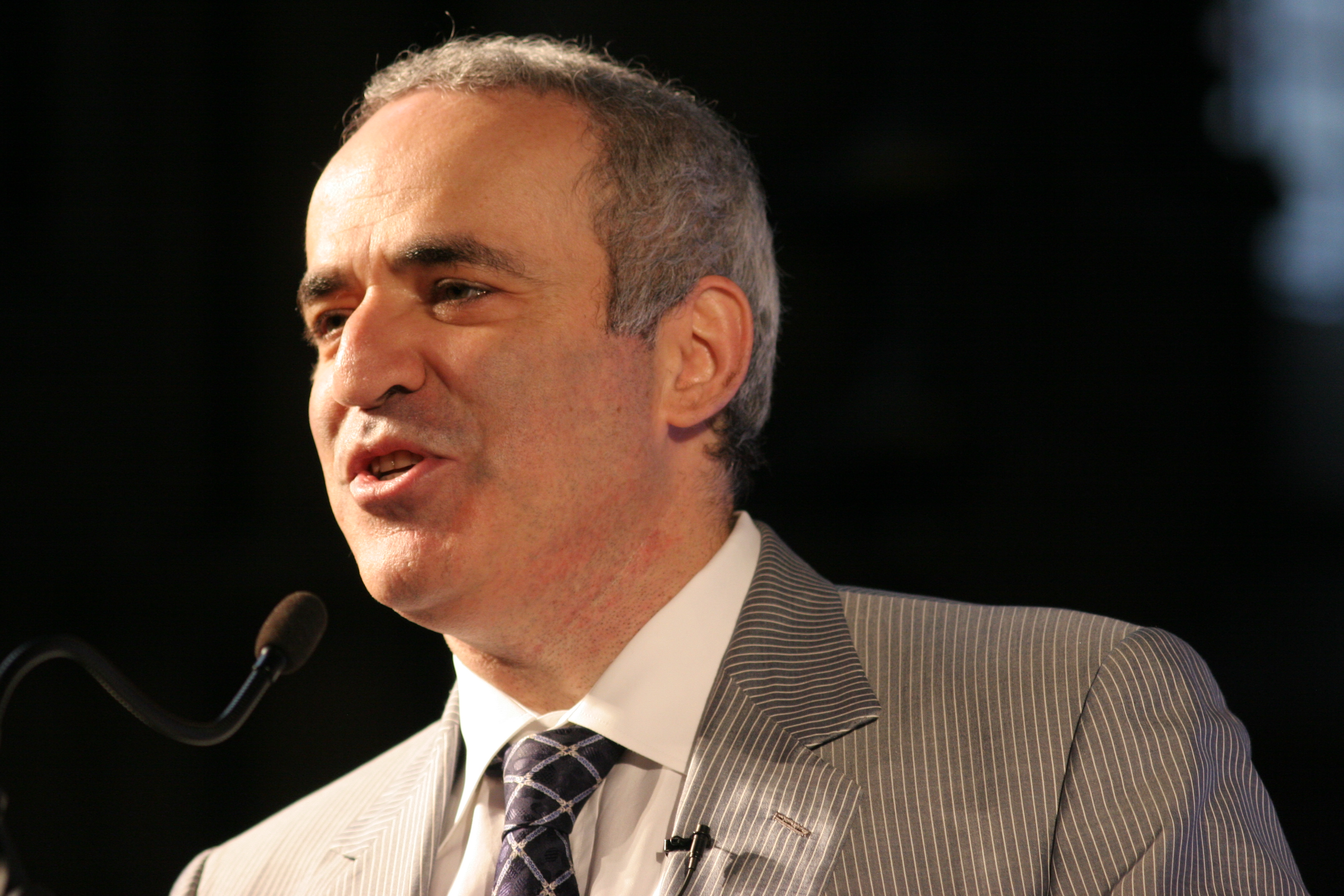
garry kasparov, world chess champion from 1985, who faced ibm's deep blue in the landmark 1996 and 1997 matches that changed how humanity understood machine intelligence. source: wikimedia commons

The matches were framed as man versus machine, but that was marketing. Deep Blue was the product of human intelligence: programmers, hardware engineers, and chess experts who encoded their knowledge into silicon. The machine didn't outsmart Kasparov. A team of people, using a machine, outperformed one person without one.
What February 10, 1996, actually demonstrated was not that machines are smarter than humans. It was that computation, given enough speed and the right evaluation function, can overwhelm expertise in a domain with perfect information and fixed rules. Chess was the proving ground. Everything that followed, from search engines to self-driving cars, learned from it.