on-this-day · february 11
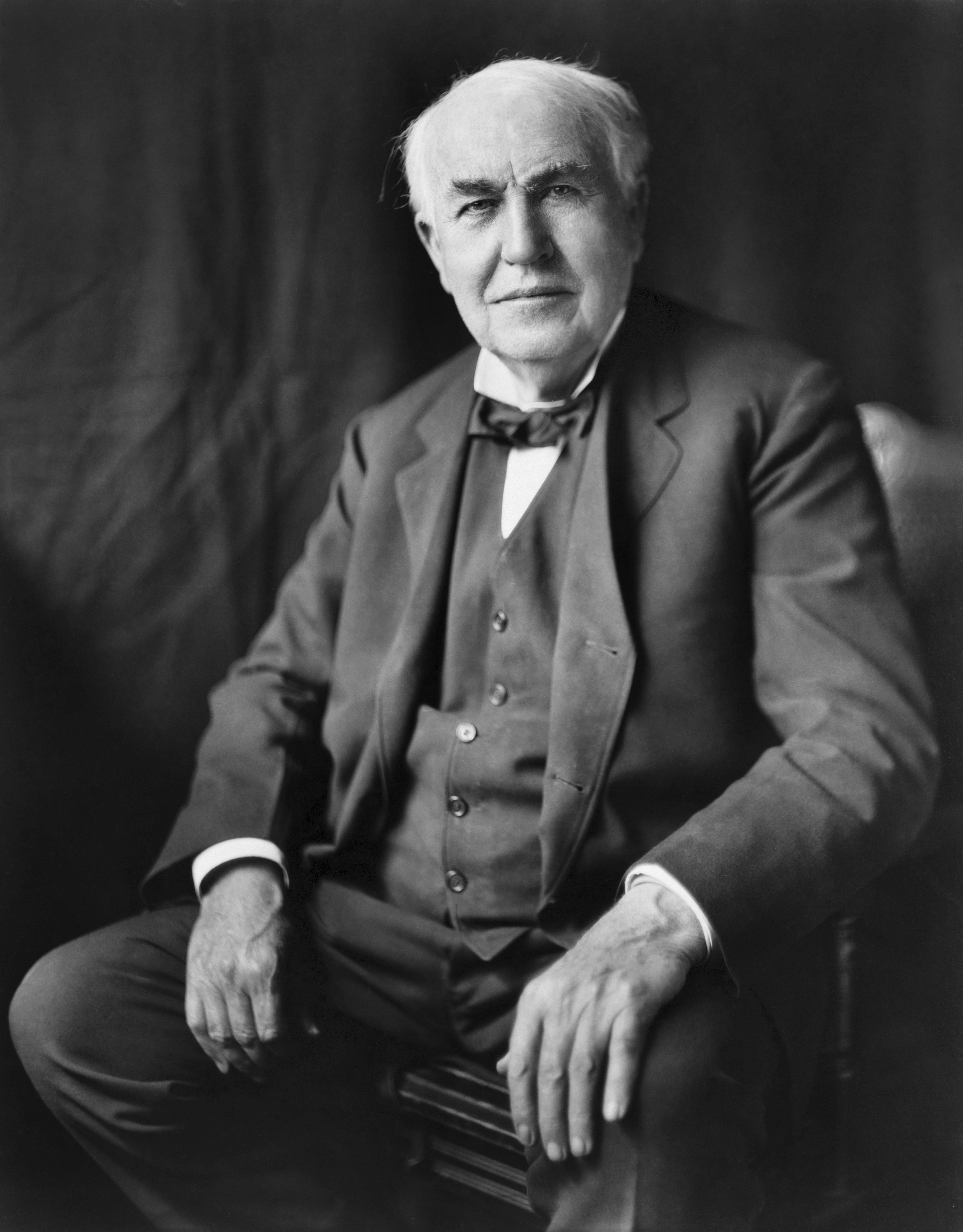
portrait of thomas edison, the inventor who held 1,093 u.s. patents and industrialized the process of invention itself. photograph by bachrach studios. source: wikimedia commons

The Factory of Ideas
On this day in 1847 — Thomas Edison was born. The lightbulb, the phonograph, the motion picture. He industrialized invention itself.
2 min read
Thomas Alva Edison was born on February 11, 1847, in Milan, Ohio. His formal schooling lasted about three months before a teacher called him "addled," and his mother pulled him out to teach him at home. He started working at twelve, selling newspapers on the Grand Trunk Railway. By twenty-one, he had filed his first patent.
Edison's method was volume. He built a laboratory in Menlo Park, New Jersey, in 1876 and staffed it with machinists, engineers, and experimenters. It was the world's first industrial research lab. The team produced a major innovation roughly every six months. The phonograph came in 1877. The practical incandescent light bulb in 1879. The electrical power distribution system in 1882. Edison didn't just invent devices. He invented the system for inventing them.
He held 1,093 patents, more than any individual inventor in American history. Not all were breakthroughs. Many were incremental improvements or defensive filings to block competitors. Edison was as much a businessman as an inventor, understanding that controlling intellectual property mattered as much as creating it.

thomas edison as a young man, depicted on a cigar card from the 1870s, around the time he was establishing his menlo park research laboratory. source: wikimedia commons

His greatest failure was backing direct current over alternating current against George Westinghouse and Nikola Tesla. Edison launched a campaign that included electrocuting animals to demonstrate AC's dangers. He lost. AC won because it transmitted more efficiently over distance. Edison's stubbornness cost him the electrical grid.
He died on October 18, 1931, at 84. His legacy is not any single invention but the model: assemble a team, iterate relentlessly, patent everything, and ship. Silicon Valley didn't invent that playbook. Edison did.