on-this-day · march 12

tim berners-lee, inventor of the world wide web. source: wikimedia commons
.jpg)
A Memo That Became a Universe
On this day in 1989 — Tim Berners-Lee proposed the World Wide Web. A memo that became a universe.
2 min read
On March 12, 1989, Tim Berners-Lee submitted a document titled "Information Management: A Proposal" to his supervisors at CERN. It described a system for managing information across distributed computers using hypertext links. His boss wrote "vague but exciting" on the cover. That idea became the World Wide Web.
Berners-Lee was solving a specific problem. CERN had thousands of researchers on incompatible systems. He proposed a networked hypertext system where documents could reference each other regardless of location. Three core components: HTML for documents with links, URI for addressing resources, HTTP for delivering them. None was entirely original. What Berners-Lee did was combine them into a coherent, open system anyone could implement without permission.
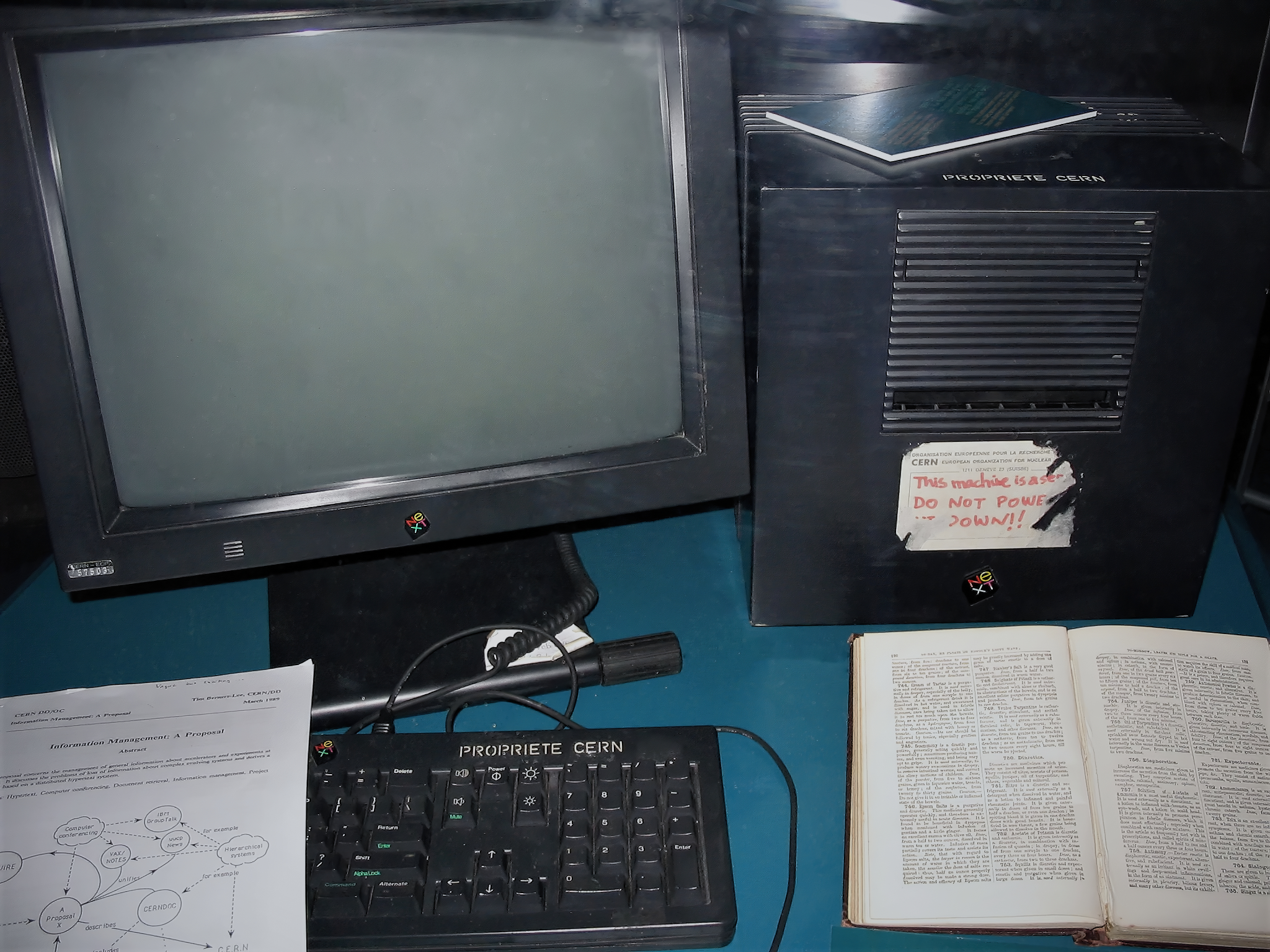
the first web server at cern, a next computer with a handwritten label reading "this machine is a server, do not power it down." source: wikimedia commons

By 1990, he had built the first browser and server. The first website went live on a NeXT computer at CERN. In 1993, he convinced CERN to release the technology into the public domain. Anyone could build a browser or host a server without paying royalties. Other hypertext systems were proprietary. The web succeeded because it was free.
Then Mosaic added inline images, and the web became visual. Commercial websites appeared. Growth was exponential. What Berners-Lee designed was not a finished product but a platform. HTML was learnable in an afternoon. HTTP was stateless, making scaling easier. URIs were human-readable. The simplicity allowed growth without breaking. The web is now layered with technologies he never anticipated, but the underlying structure remains: a URL points to a resource, a click retrieves it, links connect documents into a network.