on-this-day · march 5
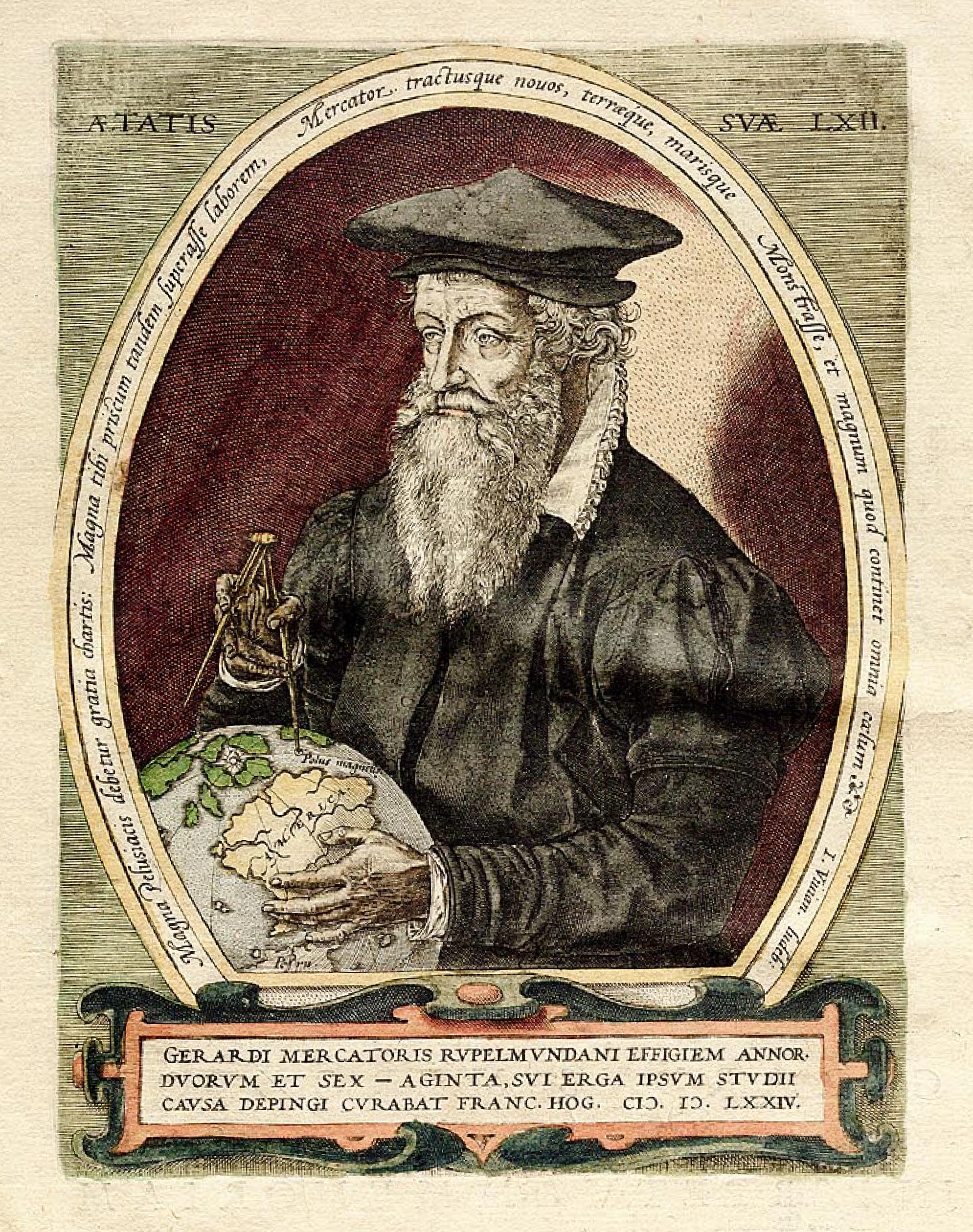
gerardus mercator, engraved portrait, 1572. source: wikimedia commons

The Map That Broke the World to Save It
On this day in 1512 — Gerardus Mercator was born. His map projection distorted the world but made navigation possible.
2 min read
Gerardus Mercator was born on March 5, 1512, in Rupelmonde, Flanders. He became a cartographer at a time when mapmaking was part art, part mathematics, and part guesswork. The problem he inherited was ancient: how do you represent a sphere on a flat surface? Every attempt required compromise. You could preserve shape or area, but not both. The world, being round, resisted being flattened.
Mercator's solution, published in 1569, prioritized navigation over geographic accuracy. Lines of longitude and latitude intersected at right angles, forming a perfect grid. A sailor could draw a straight line between two points and follow it at a constant compass bearing. The trade-off was that landmasses far from the equator became distorted. Greenland appeared larger than Africa, though Africa is 14 times bigger. The distortion was not a flaw. It was a feature. Sailors did not care if Greenland looked enormous. They cared about holding a steady course.
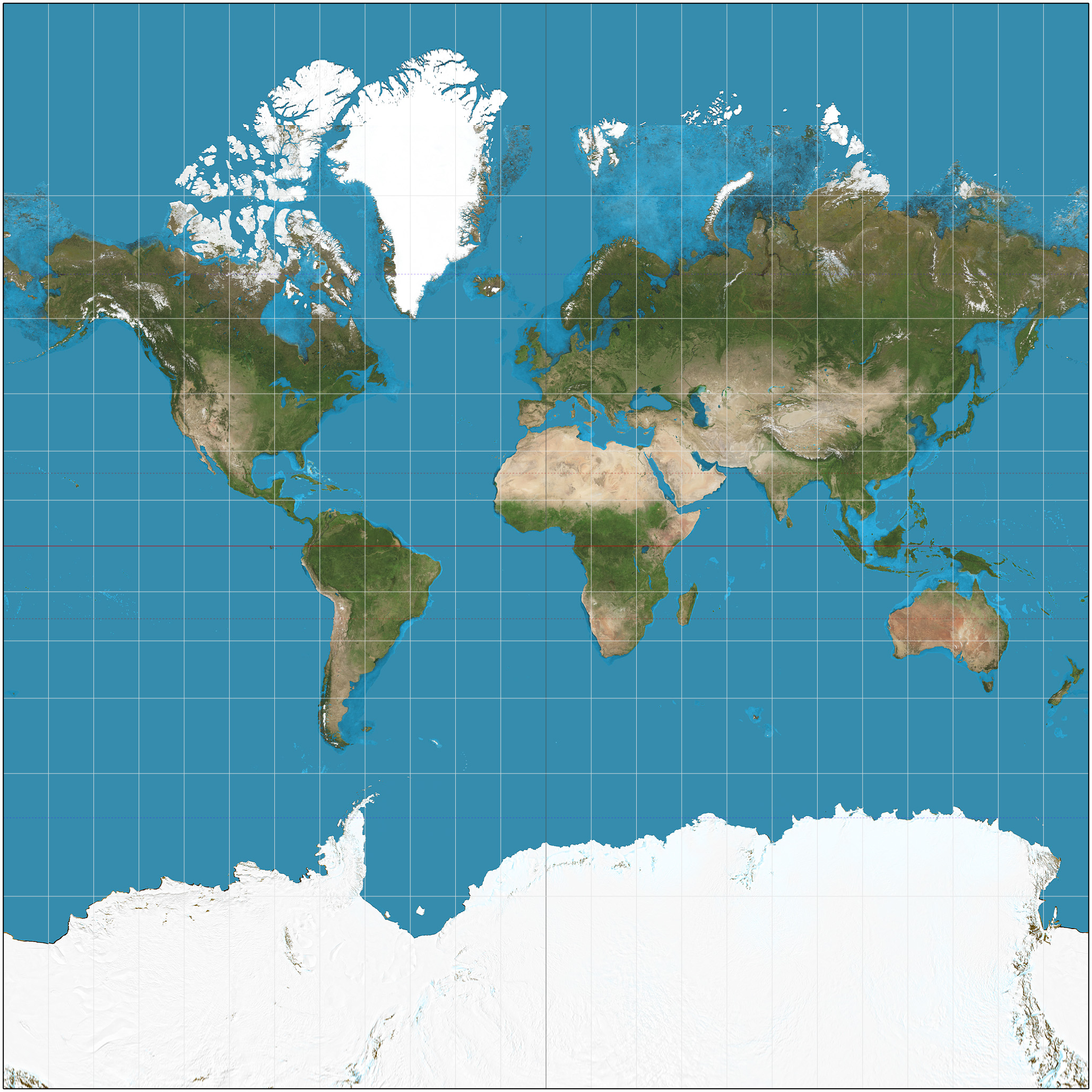
the mercator projection world map — accurate for navigation but distorting the relative sizes of landmasses, particularly near the poles. source: wikimedia commons

Mercator's map became the standard for maritime navigation and shaped how Europeans understood global geography, often problematically. The projection made Europe and North America appear disproportionately large, reinforcing colonial attitudes. Mercator himself was more than a mapmaker. He coined the term "atlas," created globes, devised typefaces for cartography, and was briefly imprisoned for heresy during the Reformation. Ideas about the shape of the world were never purely technical.
The Mercator projection is still used today. GPS systems and flight paths rely on it because the mathematics remain sound. Modern digital maps default to Web Mercator, a variant that works well for interactive tile-based systems. What Mercator understood is that representation is always distortion. There is no neutral view. Every map emphasizes some features and minimizes others. His map distorted the world deliberately, in service of a goal. That is not a failure of design. It is design itself.