on-this-day · april 21
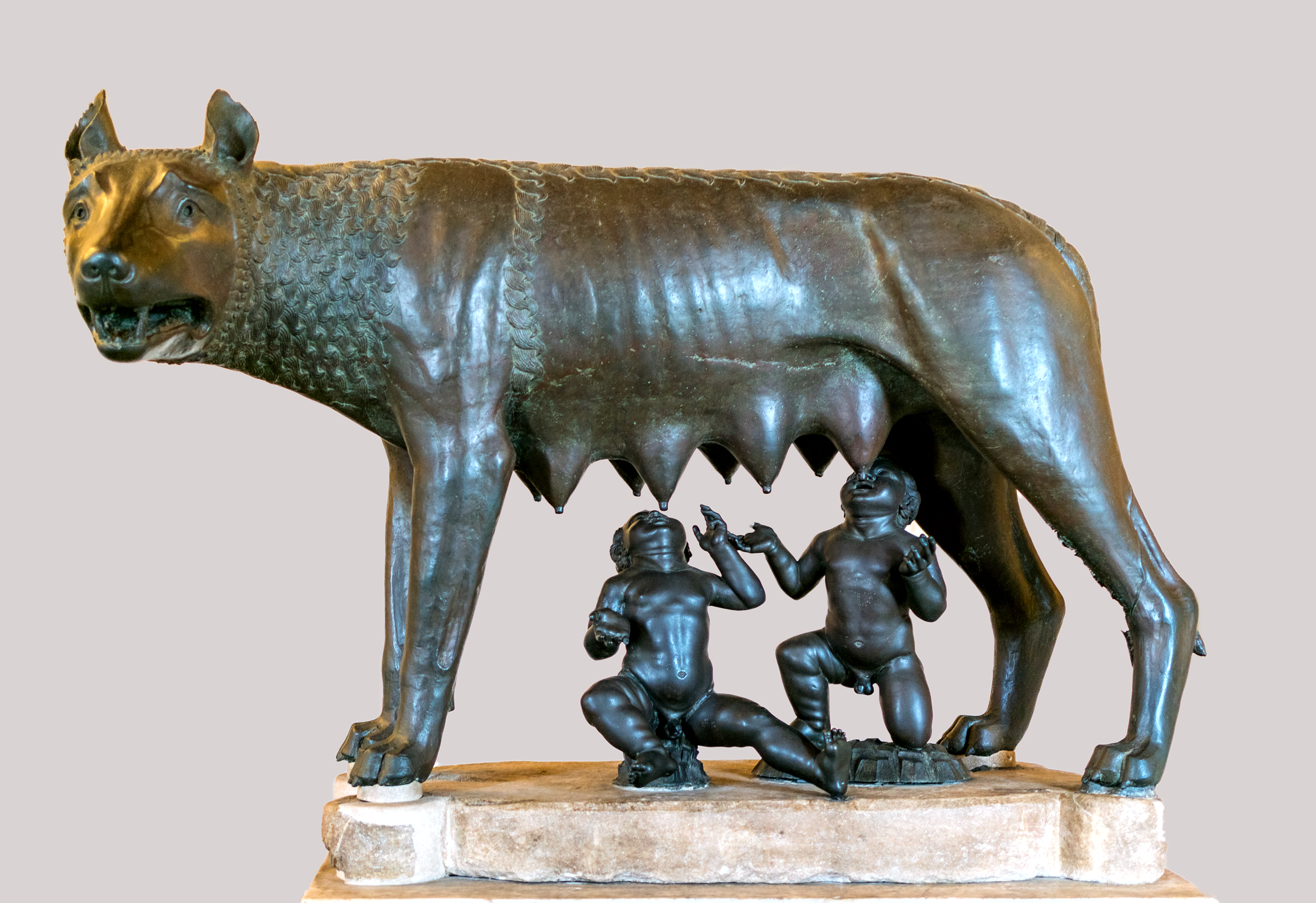
the capitoline wolf — the iconic bronze sculpture of the she-wolf nursing romulus and remus, the mythological founders of rome. the sculpture is now in the capitoline museums in rome. source: wikimedia commons

Systems Begin With Stories
On this day in 753 BC — According to legend, Rome was founded. Every great system starts with a story.
2 min read
According to Roman tradition, Rome was founded on April 21, 753 BC, by Romulus, who killed his twin brother Remus in a dispute over where to build the city. Romulus chose the Palatine Hill. They consulted the gods through augury, reading the flight of birds. Romulus saw twelve vultures. Remus saw six. When Remus mocked the boundary by jumping over it, Romulus killed him on the spot. The city was named after the survivor.
None of this happened. Not literally. Archaeological evidence shows scattered villages on the site centuries earlier. But the Romans needed an origin story — one encoding divine favor, ruthless ambition, and the sanctity of boundaries. The myth was a design document for an entire civilization.
What the story encodes is a set of operating principles. Legitimacy comes from the gods. Boundaries are sacred. Strength means enforcing rules, even against family. These weren't narrative accidents. They were the operating system of Roman identity.

aeneas fleeing from troy (pompeo batoni, 1750) — rome's founding myth traced its origins even further back to aeneas, a trojan hero, giving the city divine lineage and a claim to legitimacy stretching back centuries. source: wikimedia commons

Every major system has a founding myth. The United States has the Declaration and philosopher-king founders. The internet has ARPANET and decentralized communication. Apple has the garage. These stories aren't lies — they're compressions that communicate values faster than history ever can. A founding myth's function isn't accuracy. It's alignment, giving everyone a shared reference point.
Modern organizations work this way. Startups tell stories about the moment founders realized the problem. Companies write mission statements. Open source projects have origin stories about the first commit. These are myths in the technical sense — formative stories that encode values and set expectations. What Rome teaches is that stories are infrastructure. The myth of Romulus outlasted the Republic, the Empire, the Renaissance. A story told well enough becomes the thing itself. Every system starts with a story, and the story decides who stays and who leaves.