on-this-day · may 12
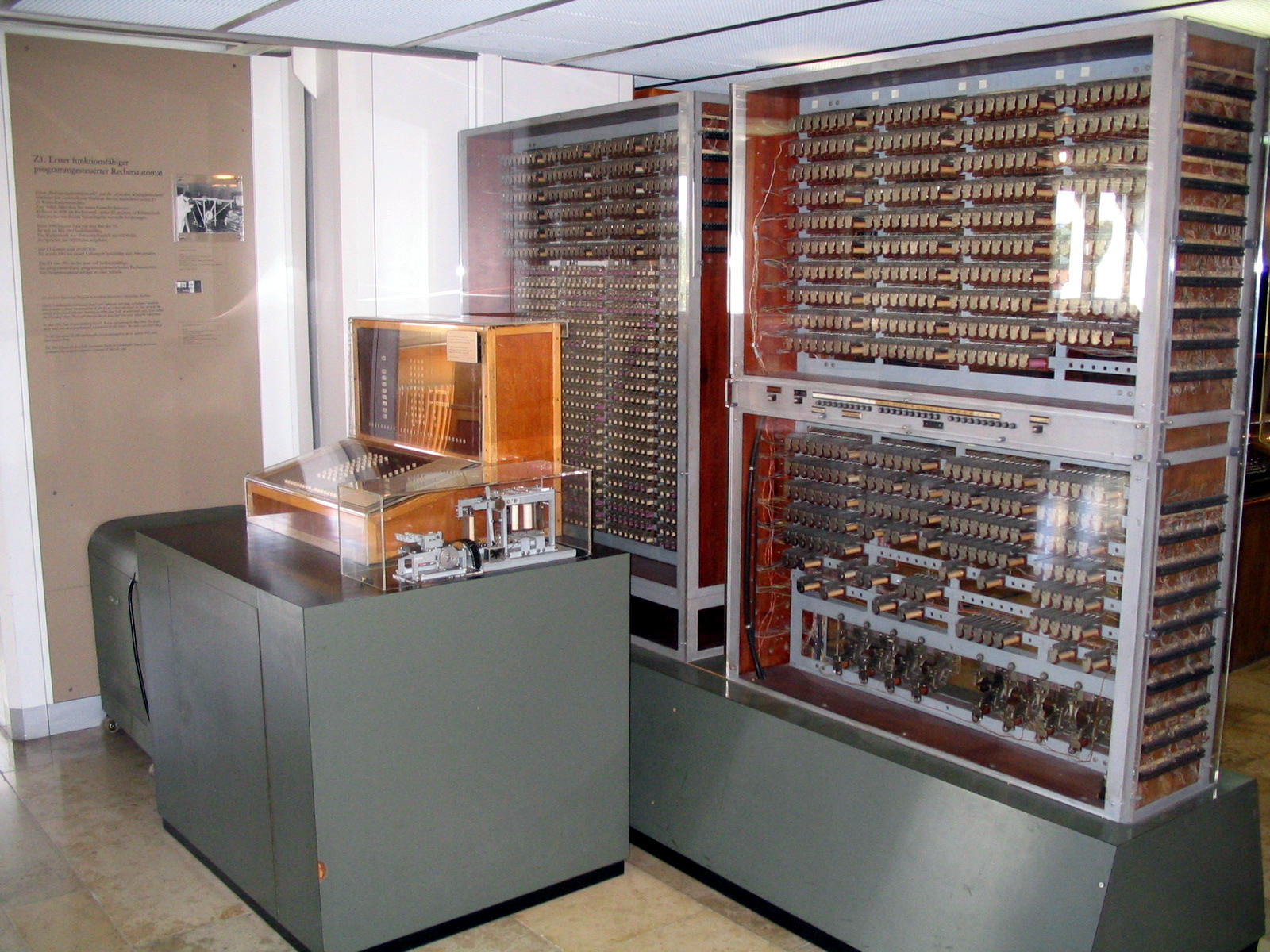
replica of konrad zuse's z3 computer, 1941, on display at the deutsches museum, munich. source: wikimedia commons

The First Program
On this day in 1941 — Konrad Zuse presented the Z3, the world's first programmable computer. It used recycled film for memory.
2 min read
On May 12, 1941, in Berlin, Konrad Zuse demonstrated the Z3, a machine that could execute programs stored on punched film. It was the world's first fully functional, programmable digital computer. It used 2,400 electromechanical relays, operated on a binary floating-point number system, and could perform addition in 0.8 seconds and multiplication in about 3 seconds. It was, by any reasonable definition, a computer. Almost nobody noticed.
Zuse was a civil engineer who hated repetitive calculations. He built the Z3 in his parents' apartment in Berlin, largely with his own money and a small grant from the German Aeronautical Research Institute. The machine read programs from punched film -- recycled 35mm movie stock. It had no conditional branching, which limited its theoretical power, but in practice it could solve the engineering equations Zuse needed. He proposed building an electronic version, but the Nazi government denied funding because the war effort did not require it.

konrad zuse, inventor of the z3, photographed in 1992. source: wikimedia commons
.jpg)
The original Z3 was destroyed in a 1943 Allied bombing raid on Berlin. After the war, Zuse rebuilt a version and founded one of the earliest computer companies. But by then, the British had built Colossus, the Americans had built ENIAC, and the narrative of computing had moved to the Allies. Zuse's work, done in isolation during wartime, received little attention until decades later.
What Zuse proved was that computation did not require a massive institutional effort. One engineer, working alone, could build a programmable machine from relays and recycled film. The Z3 was not the most powerful early computer. But it was arguably the most inventive -- a personal project that anticipated the entire digital age. Sometimes the future arrives quietly, in a Berlin apartment, and nobody bothers to write it down.