on-this-day · may 21
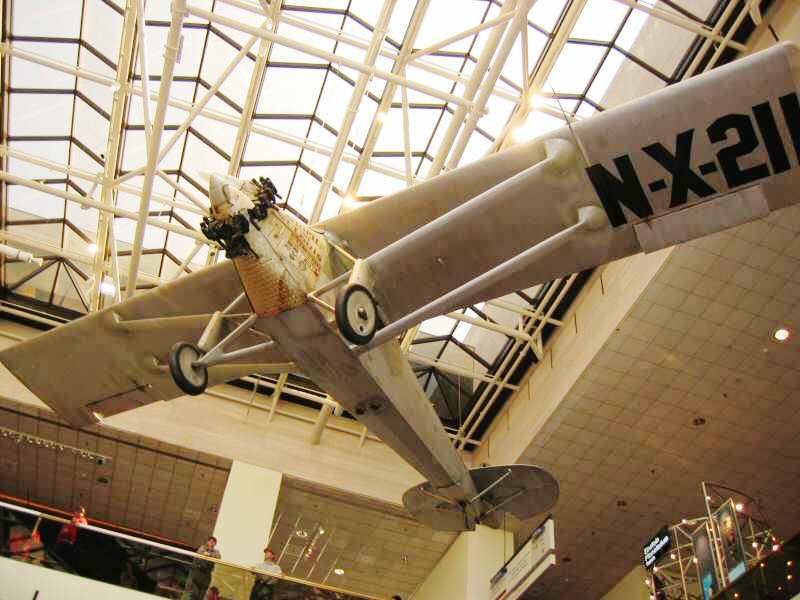
the spirit of st. louis on display at the smithsonian national air and space museum, washington d.c. source: wikimedia commons

Alone Across the Atlantic
On this day in 1927 — Charles Lindbergh landed in Paris after the first solo transatlantic flight. 33.5 hours alone with design.
2 min read
Charles Lindbergh took off from Roosevelt Field on Long Island at 7:52 a.m. on May 20, 1927, in a single-engine plane called the Spirit of St. Louis. The plane was so loaded with fuel that it barely cleared the telephone wires at the end of the runway. Thirty-three and a half hours later, he landed at Le Bourget Aerodrome near Paris. He had flown 3,600 miles across the Atlantic, alone, without stopping. He was 25 years old.
The flight was a response to the Orteig Prize, a $25,000 reward offered for the first nonstop flight between New York and Paris. Several teams had tried and failed, some fatally. Lindbergh's approach was radically minimal. He chose a single-engine plane when others used multi-engine aircraft. He flew solo to save weight. He carried no radio, no parachute, and no sextant -- navigating by dead reckoning and a simple earth-inductor compass. Every decision optimized for range over safety.

charles lindbergh photographed in 1925, two years before his historic solo transatlantic flight. source: wikimedia commons

The hardest part was staying awake. He had not slept the night before takeoff. By the middle of the Atlantic, he was hallucinating. He flew low over the water to feel the spray on his face. He opened the side window to let in freezing air. The plane had no forward windshield -- a fuel tank sat where it would have been. He navigated by looking out the side.
When he arrived at Le Bourget, 100,000 people were waiting. He became the most famous person on earth overnight. The flight triggered an aviation boom -- airline stocks surged, pilot training programs expanded, and public perception of flight shifted from daredevil stunt to viable transportation. Lindbergh did not just cross the Atlantic. He proved that one person, one machine, and one obsessive calculation could redesign what was considered possible.