on-this-day · june 5
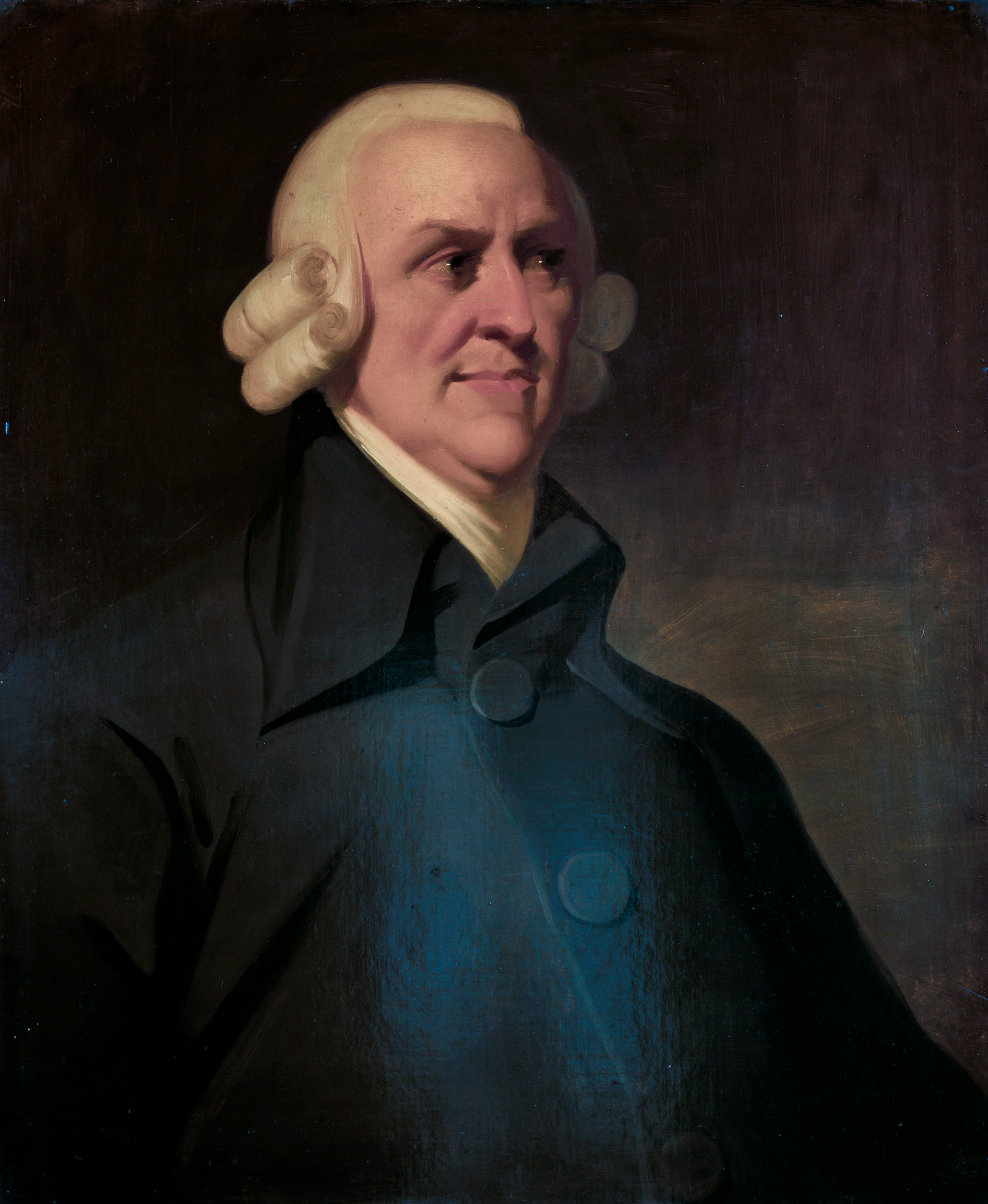
portrait of adam smith, economist and author of the wealth of nations. source: wikimedia commons

The Invisible Hand
On this day in 1723 — Adam Smith was born. He described the invisible hand, a system that designs itself.
2 min read
Adam Smith was baptized on June 5, 1723, in Kirkcaldy, Scotland. His father died before he was born. At fourteen, he entered the University of Glasgow. At seventeen, Oxford on a scholarship. He spent six years there mostly reading unassigned books. What he took with him was a method: observe the world, identify patterns, explain them without appealing to tradition.
In 1776, Smith published The Wealth of Nations. His central insight: markets organize themselves without central planning. Individuals pursuing self-interest, within competition, collectively produce outcomes that benefit society. He called this the invisible hand -- emergent order from countless individual decisions. A baker bakes not from charity but to sell, producing something others need. The invisible hand was not a moral argument. It was a description of a feedback loop.

bronze bust of adam smith at the adam smith theatre, kirkcaldy, scotland, his birthplace. source: wikimedia commons

The book was over 900 pages, covering taxation to fisheries. But its lasting contribution was conceptual. Smith demonstrated that complex systems emerge from simple rules. He identified division of labor as the engine of productivity. He explained how prices convey information. He also wrote The Theory of Moral Sentiments, a study of sympathy and ethics. The two books were part of the same project: how do individuals, each pursuing their own goals, create systems that function collectively?
Smith died in 1790. Economics traces its lineage to him. The invisible hand was recognition that order can emerge without orchestration, that systems self-organize when conditions are right. That insight extends beyond economics -- ecosystems, neural networks, the internet. Systems theory, articulated two centuries before it had a name.