on-this-day · july 11
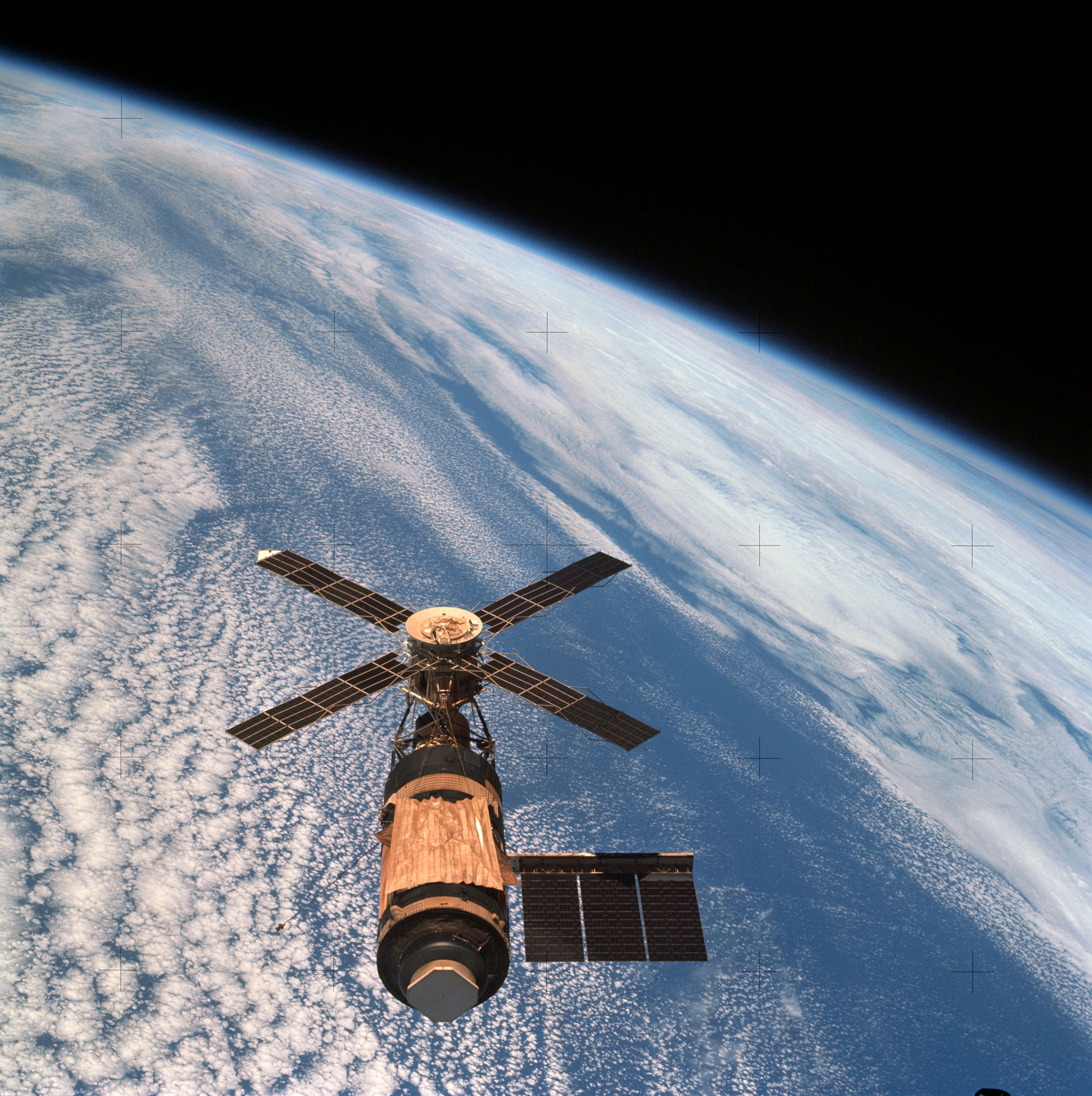
skylab space station in earth orbit. source: wikimedia commons

The Station That Fell
On this day in 1979 — Skylab fell back to Earth. America's first space station scattered across Western Australia.
2 min read
Skylab reentered Earth's atmosphere on July 11, 1979, breaking apart over the Indian Ocean and scattering debris across Western Australia. Pieces of America's first space station, some weighing several tons, crashed into the Outback. The town of Esperance sent NASA a $400 invoice for littering. NASA never paid it.
Skylab launched on May 14, 1973, aboard the last Saturn V ever to fly. Built from leftover Apollo hardware, it was 100 feet long, weighed 77 tons, and had more interior space than a small house. Three crews of astronauts lived aboard it, conducting experiments in solar physics, Earth observation, and long-duration spaceflight. They proved people could live and work in orbit for months.

skylab photographed by the skylab 4 crew upon arrival, 1973. source: wikimedia commons

Skylab was never meant to last forever. Its orbit was decaying, pulled down by atmospheric drag. NASA had planned to use the Space Shuttle to boost it higher, but the Shuttle was not ready until 1981 -- two years too late. The media frenzy was enormous. Newspapers ran reentry maps. People threw Skylab parties. In the final hours, NASA fired attitude control thrusters to steer debris away from populated areas. No one was hurt.
Skylab's uncontrolled reentry changed how we think about orbital debris. Every satellite and station launched since has an end-of-life plan. Skylab was improvised, underfunded, and abandoned before its time. But the work it enabled continued. Every space station since owes something to its messy, unplanned success.