on-this-day · september 24
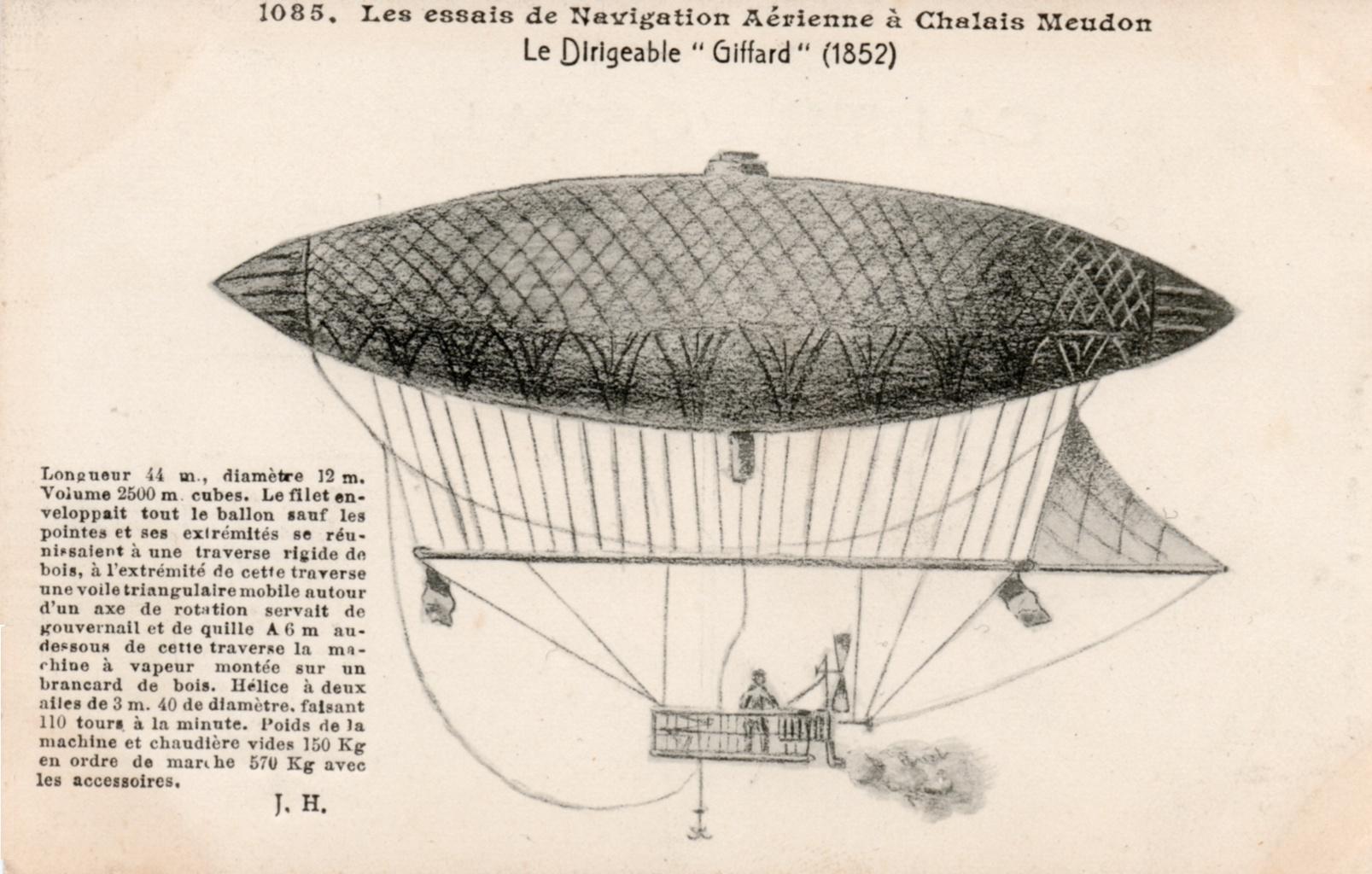
henri giffard's hydrogen-powered dirigible, 1852. source: wikimedia commons

The Simplest Element, Rising
On this day in 1852 — the first hydrogen airship flew. Lighter-than-air travel using the simplest element in the universe.
2 min read
On September 24, 1852, Henri Giffard climbed aboard a platform beneath a 144-foot-long hydrogen envelope and fired up a small steam engine. The airship lifted off from the Paris Hippodrome and traveled seventeen miles to Elancourt at six miles per hour. It was the first powered, controlled flight in human history. Not the first balloon -- those had been happening for decades. But the first time a human could choose where to go rather than drift with the wind.
Giffard was 27, a railway engineer who understood that balloons had a fundamental limitation. What flight needed was thrust and steering. So he built an elongated envelope filled with hydrogen, hung a three-horsepower steam engine beneath it driving a propeller, and added a triangular rudder for directional control. Elegant, minimal, functional.
Hydrogen was the obvious choice -- lightest element, maximum lift. Giffard knew the risks: an open-flame steam engine beneath a massive bag of flammable gas. His solution was simple engineering: keep the engine far enough below that rising heat would dissipate. It worked. The flight was uneventful and changed the conversation about what was possible in the air.

the hindenburg disaster, 1937 — the hydrogen that made airships possible also made them catastrophically dangerous. source: wikimedia commons

Giffard's work anticipated the great Zeppelins of the early twentieth century -- same principle, more sophisticated engineering. By the 1930s, hydrogen airships were the fastest way to cross the Atlantic. Then the Hindenburg burned in 1937, and the age of the airship ended overnight. Helium would have been safer but was rare and expensive. The airplane won the design competition.
Giffard went blind later in life and took his own life in 1882. But on that September day in 1852, for seventeen miles between Paris and Elancourt, he proved humans could choose their path through the air. The simplest element in the universe carried him there.