on-this-day · september 7
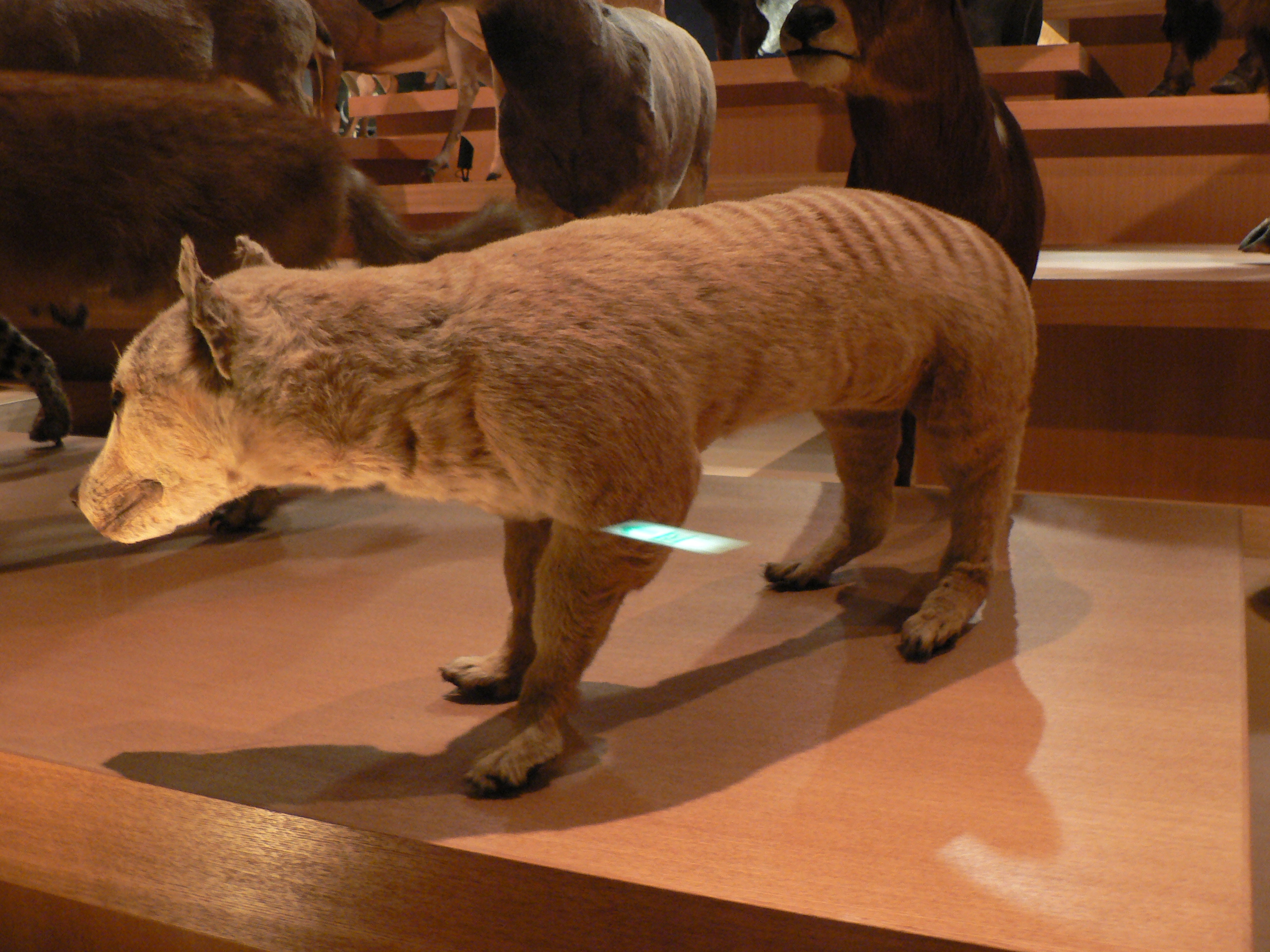
a thylacine at beaumaris zoo in hobart, 1936. source: wikimedia commons
The Last of Its Kind
On this day in 1936 — The last thylacine died in a Tasmanian zoo. Extinction is a permanent design failure.
2 min read
On the night of September 7, 1936, the last known thylacine died alone in Hobart Zoo. The animal had been locked out of its sleeping quarters during an unusually cold night. It died of exposure. No one recorded its name. By morning, an entire species had vanished.
The thylacine was not a tiger or a wolf. It was a marsupial carnivore, the largest of its kind to survive into modern times -- evolution solving predation using entirely different blueprints from placental mammals. It looked like a dog with dark stripes and jaws that opened to an almost impossible 120-degree angle.
When European settlers arrived, thylacines were common. Sheep farming expanded, and the government offered bounties starting in 1888. Thousands were killed. By 1910, sightings were rare. The last wild thylacine was shot in 1930. The bounty program continued even as the species disappeared.

a captive thylacine — millions of years of evolution, erased in a few decades of bounty hunting. source: wikimedia commons

Extinction is irreversible. Unlike most design failures, you cannot iterate or rebuild. Once a species is gone, it takes its genetic information and millions of years of adaptation with it. Scientists have explored de-extinction using genetic engineering, but the result would be an approximation -- a reconstruction of something we destroyed.
September 7 is now National Threatened Species Day in Australia. The thylacine did not die because it was unfit. It died because human systems were designed without accounting for its existence. There is no undo button.