on-this-day · september 8

william shatner in the first episode of star trek, 1966. source: wikimedia commons
The Future We Designed for Ourselves
On this day in 1966 — Star Trek premiered. Gene Roddenberry designed a future where humanity had solved its worst problems.
2 min read
On September 8, 1966, NBC aired the first episode of Star Trek. The show followed the crew of the USS Enterprise exploring the galaxy in the 23rd century. It lasted three seasons, struggled in the ratings, and was canceled in 1969. It should have been forgotten. Instead, it became one of the most influential pieces of speculative design in television history.
Gene Roddenberry was not primarily interested in aliens or spaceships. He used science fiction to explore social issues network television would not normally touch. In 1960s America, you could not easily put a racially integrated crew on a prime-time drama. But you could in space. The Enterprise had a Black woman as communications officer, an Asian man at the helm, and a Russian navigator during the Cold War. The message was radical: by the 23rd century, these divisions would no longer matter.
The technology was speculative design that became prophetic. Communicators resembled flip phones. Computers responded to voice commands. Martin Cooper, inventor of the mobile phone, cited the Star Trek communicator as inspiration. The show's future was optimistic -- no dystopia, no totalitarian regimes. The Federation was post-scarcity, with money abolished and humanity united in exploration.
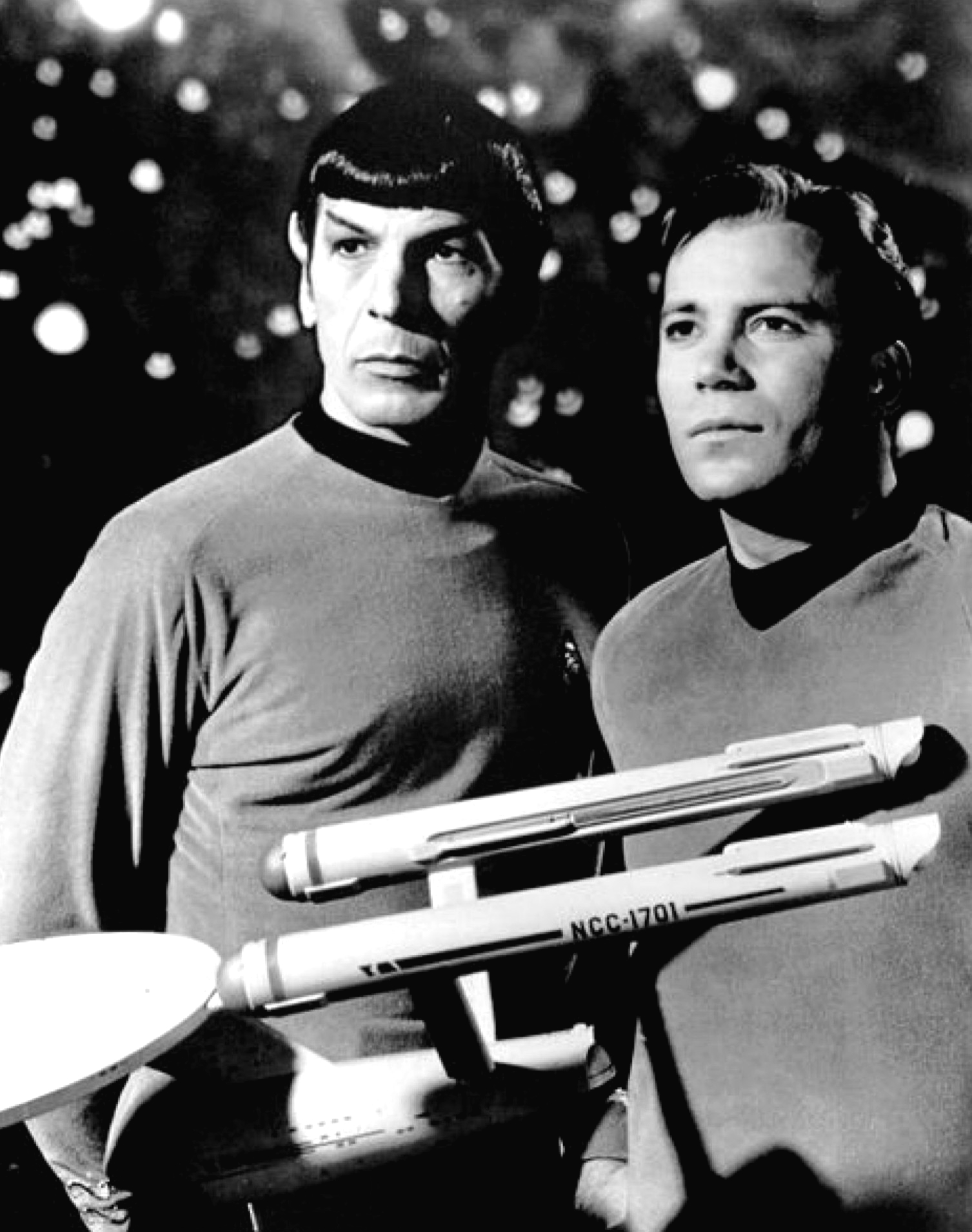
leonard nimoy as mr. spock and william shatner as captain kirk in star trek: the original series, 1968. source: wikimedia commons

The original was canceled, but syndication introduced it to new audiences. Fan conventions grew massive. The franchise spawned films, sequels, reboots, and a multi-billion-dollar property. Tablet computers, voice assistants, video calls -- these were Star Trek ideas before they were products.
In 1966, America was tearing itself apart over civil rights and Vietnam. Roddenberry decided to design something different: a future where humanity had survived, grown up, and turned its energy outward. Speculative design at its most ambitious. Fifty-plus years later, we are still trying to catch up.