on-this-day · november 10
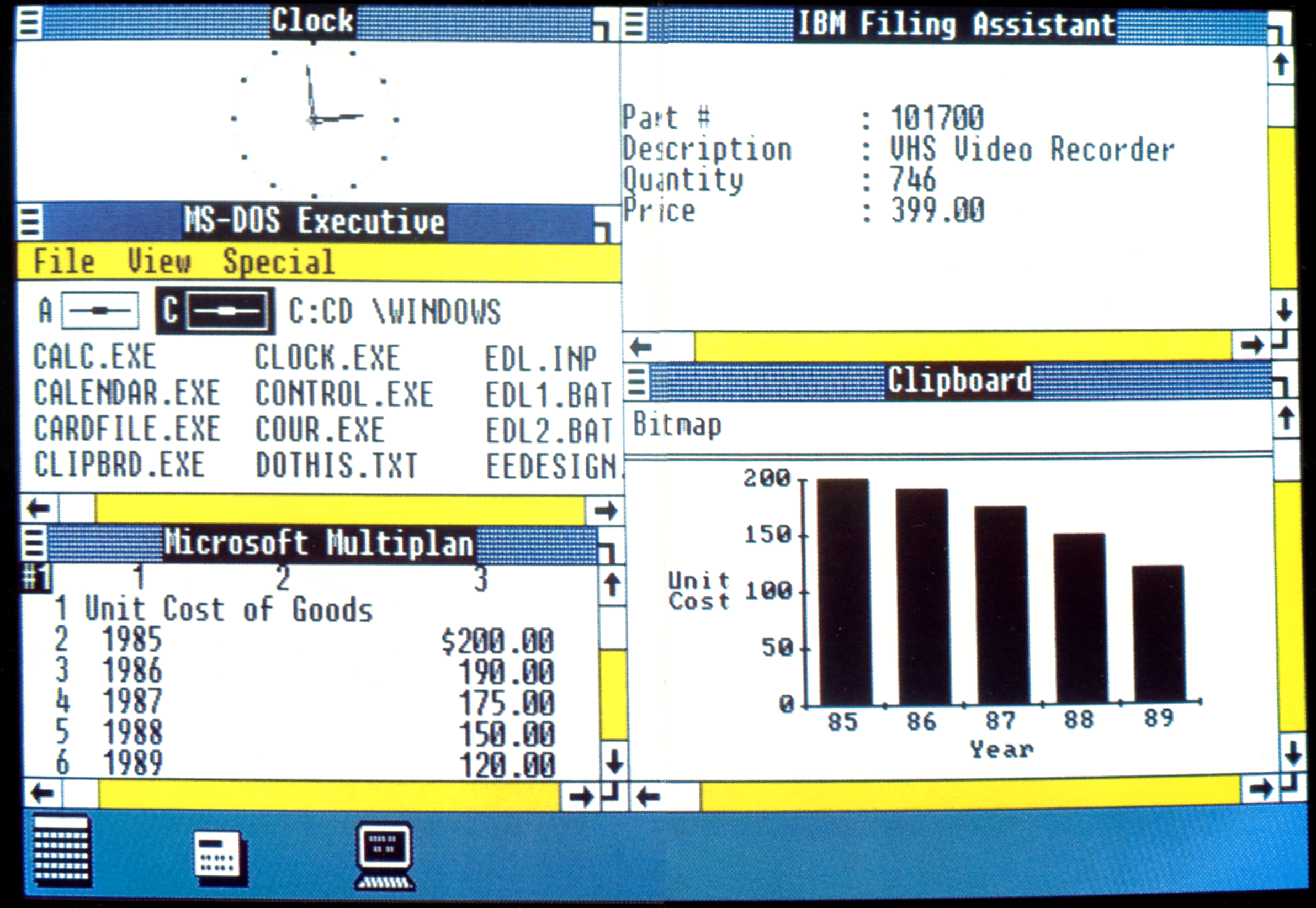
windows 1.0 interface, 1985. source: wikimedia commons

The Windows That Opened Everything
On this day in 1983 — bill gates introduced windows 1.0. The graphical interface that brought computing to everyone.
2 min read
On November 10, 1983, Bill Gates introduced Windows at the Helmsley Palace Hotel in New York. He showed tiled windows, pull-down menus, and a mouse pointer. He said it would ship in April 1984. It didn't. Windows 1.0 arrived in November 1985, two years late, widely mocked, and limited. It sold 500,000 copies in its first two years -- a flop.
Windows 1.0 couldn't overlap its windows. It ran on top of MS-DOS, not as a replacement. Apple had already shipped the Lisa and was about to launch the Macintosh. Xerox PARC had prototyped the graphical interface years earlier. Microsoft was late and arrived with the worst product in the room.
But Microsoft understood something competitors didn't: platforms win through ubiquity, not elegance. Gates licensed MS-DOS to every PC manufacturer willing to pay. Windows rode the same strategy. It didn't need to be the best interface. It needed to come pre-installed on the most machines. By Windows 3.0 in 1990, it was working. By Windows 95, it was dominant.
The 1983 announcement was premature, the 1985 product was embarrassing, and the long game was brilliant. Gates introduced software that didn't exist yet, shipped it late, shipped it badly, then iterated until it owned the market. That's not design. It's strategy. And it worked better than design almost every time.

bill gates, co-founder of microsoft. source: wikimedia commons
