on-this-day · december 1
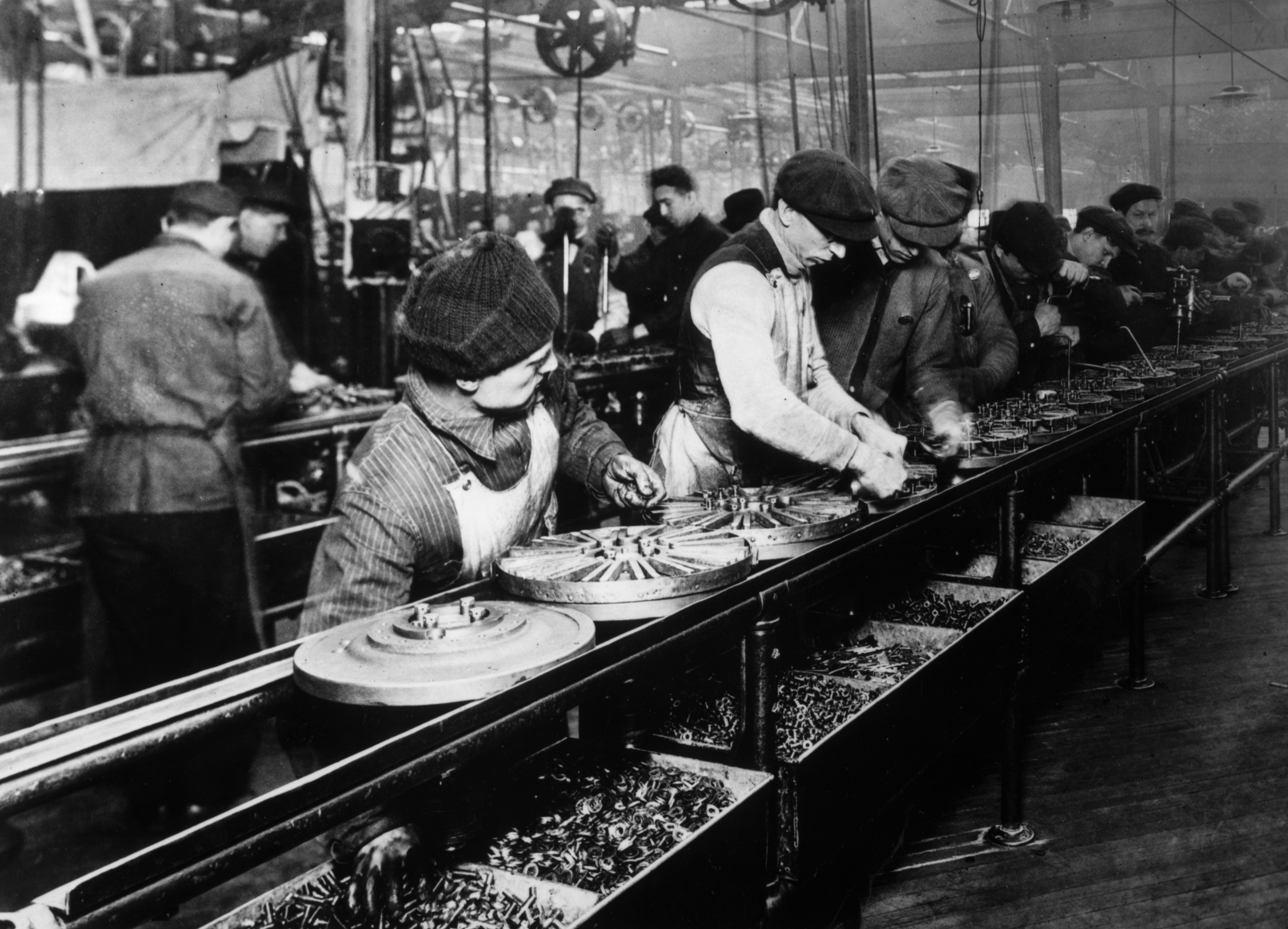
ford assembly line, 1913. source: wikimedia commons

The Line That Changed Everything
On this day in 1913 — Ford introduced the moving assembly line. The Model T now took 93 minutes instead of 12 hours.
2 min read
On December 1, 1913, Henry Ford's Highland Park factory in Michigan installed the first moving assembly line for complete automobile production. Building a Model T, which had previously required over 12 hours of labor, now took just 93 minutes. The car hadn't changed. The workers hadn't changed. Only the system had changed.
Ford didn't invent the assembly line. Ransom Olds used a stationary version. Meatpacking plants in Chicago moved carcasses past workers performing sequential cuts. What Ford innovated was integrating the moving line with standardized, interchangeable parts at industrial scale. Work moved to the workers, not the other way around. Each station performed a single task in a precise interval. Chassis moved on rails at six feet per minute. It was choreography disguised as engineering.
The economic impact was immediate. By 1914, Ford could build over a thousand cars per day. The Model T's price dropped from $850 in 1908 to $260 by 1925. The automobile became accessible to ordinary workers. But the line had costs. Turnover hit 370% annually. In 1914, Ford responded with the famous $5 workday, more than doubling wages. It wasn't generosity. Higher pay stabilized the workforce and created consumers who could afford the products they built. Mass production requires mass consumption.
The assembly line became a template for manufacturing everything from radios to bomber aircraft. Ford didn't make better cars or better workers. He designed a better system. The Model T was the product. The assembly line was the revolution.

a 1916 ford model t touring car. source: wikimedia commons
