on-this-day · april 27
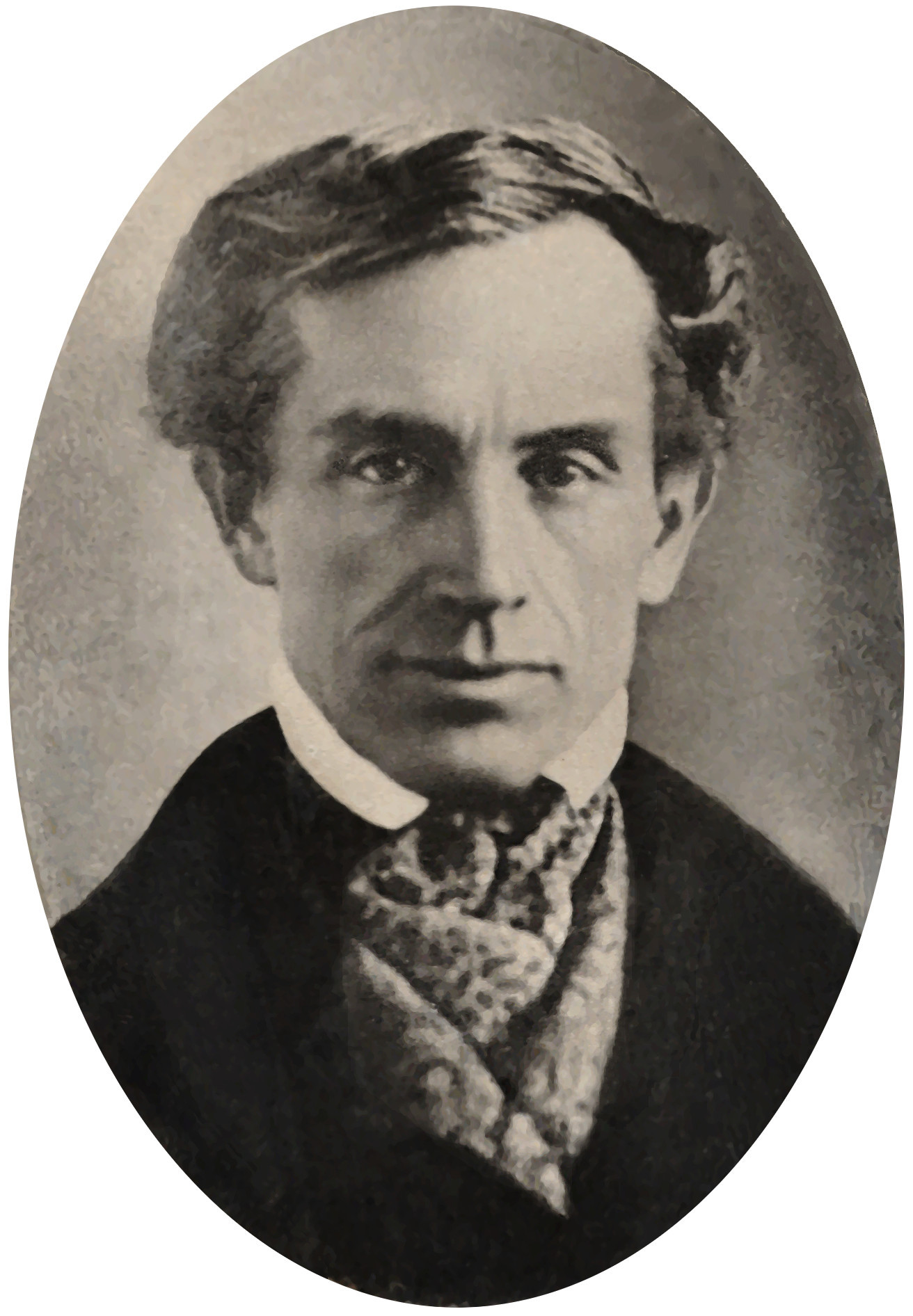
samuel morse, circa 1840, around the time he was developing the telegraph system. trained as a painter, he had no formal scientific education when he became obsessed with using electricity to send messages. source: wikimedia commons

Dots and Dashes
On this day in 1791 — Samuel Morse was born. Dots and dashes. The first digital communication system.
2 min read
Samuel Morse was born on April 27, 1791, in Charlestown, Massachusetts. He trained as a painter and spent years on portraits. In 1832, on a ship from Europe, he overheard a conversation about electromagnetism — that current could travel instantly over any length of wire. With no formal science training, Morse became obsessed with using electricity to send messages. He spent a decade building the telegraph.
The insight wasn't the technology — others had built working telegraphs. The insight was the code. To send information over a wire, you needed two states: current on and current off. Morse designed short and long pulses — dots and dashes. Common letters like E and T got the simplest codes. Less common letters required longer sequences. Efficient, learnable, requiring no complex machinery.
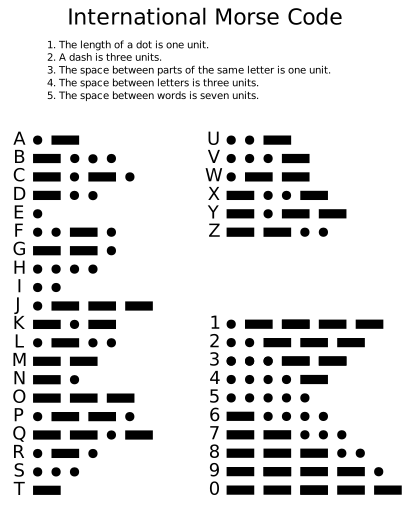
international morse code chart. the most frequent letters in english — e, t, a, i — are assigned the shortest codes. this variable-length encoding anticipates the same efficiency principles used in modern data compression. source: wikimedia commons

Morse code is binary. Every character built from two symbols. This is the same principle underlying every digital system — computers use ones and zeros, fiber optics use light pulses. The implementation changes, but the logic is the same: reduce information to simplest components, transmit, reassemble.
The first official message was sent May 24, 1844, from Washington to Baltimore: "What hath God wrought." Within a decade, telegraph lines connected every major American city. By the 1860s, a transatlantic cable linked continents. Messages that took weeks by ship now arrived in minutes.
What the telegraph changed wasn't just speed — it separated information from its physical medium. A message could move faster than any carrier. This created a new problem: verifying authenticity without seeing the sender. That tension is still fundamental to digital communication. The legacy isn't Morse code itself, mostly obsolete now. It's the idea that complex information can be reduced to binary and transmitted reliably. Every text, email, and video stream is built on that principle.