on-this-day · june 27
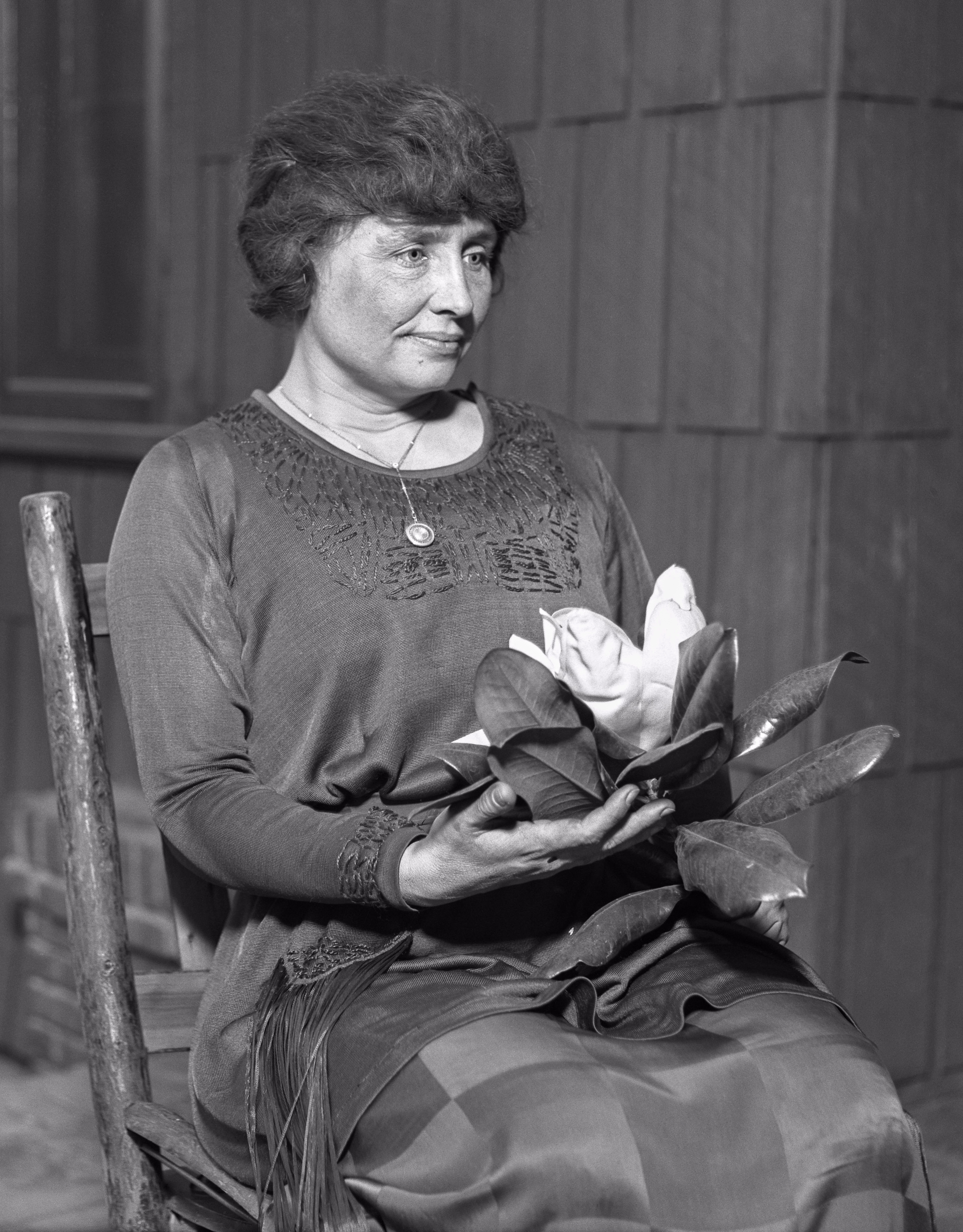
helen keller, author, activist, and lecturer, who became the first deaf-blind person to earn a bachelor of arts degree, photographed c. 1920. source: wikimedia commons

Communication Without Borders
On this day in 1880 — Helen Keller was born. She proved that language doesn't require sound or sight, just design.
2 min read
Helen Adams Keller was born on June 27, 1880, in Tuscumbia, Alabama. At 19 months, an illness -- likely scarlet fever or meningitis -- left her deaf and blind. She lost the two primary channels for learning language. For five years, she communicated only through basic gestures. Many would have institutionalized her. Her mother refused.
In 1887, her parents hired Anne Sullivan, a 20-year-old teacher who had herself been partially blind. Sullivan spelled words into Helen's hand using a manual alphabet. For weeks, Helen mimicked without understanding. The breakthrough came at a water pump on April 5, 1887. Sullivan spelled "W-A-T-E-R" while water ran over Helen's hand. Suddenly, Helen understood. Within hours, she learned 30 words.

helen keller with her teacher anne sullivan, july 1888 -- sullivan's method of spelling words into keller's hand unlocked language for her and transformed her life. source: wikimedia commons

She learned Braille in English and French, learned to type, learned to read lips by feeling vibrations. She attended Radcliffe, becoming the first deafblind person to earn a bachelor's degree -- Sullivan fingerspelling lectures beside her. She published 12 books, advocated for disability rights, suffrage, and labor rights. She traveled to 39 countries and met every president from Cleveland to Johnson.
The inspirational narrative oversimplifies. Keller's achievements were the product of designed systems. The manual alphabet was a technology. Braille was a standardized interface. The typewriter bridged her world to sighted readers. Each was a deliberate design solution to a problem of access. She died in 1968. The lesson is not that disability is overcome through willpower. It is that access is a design problem, and solutions exist if we build them. The water pump was not a miracle. It was the right interface meeting the right mind.