on-this-day · july 16
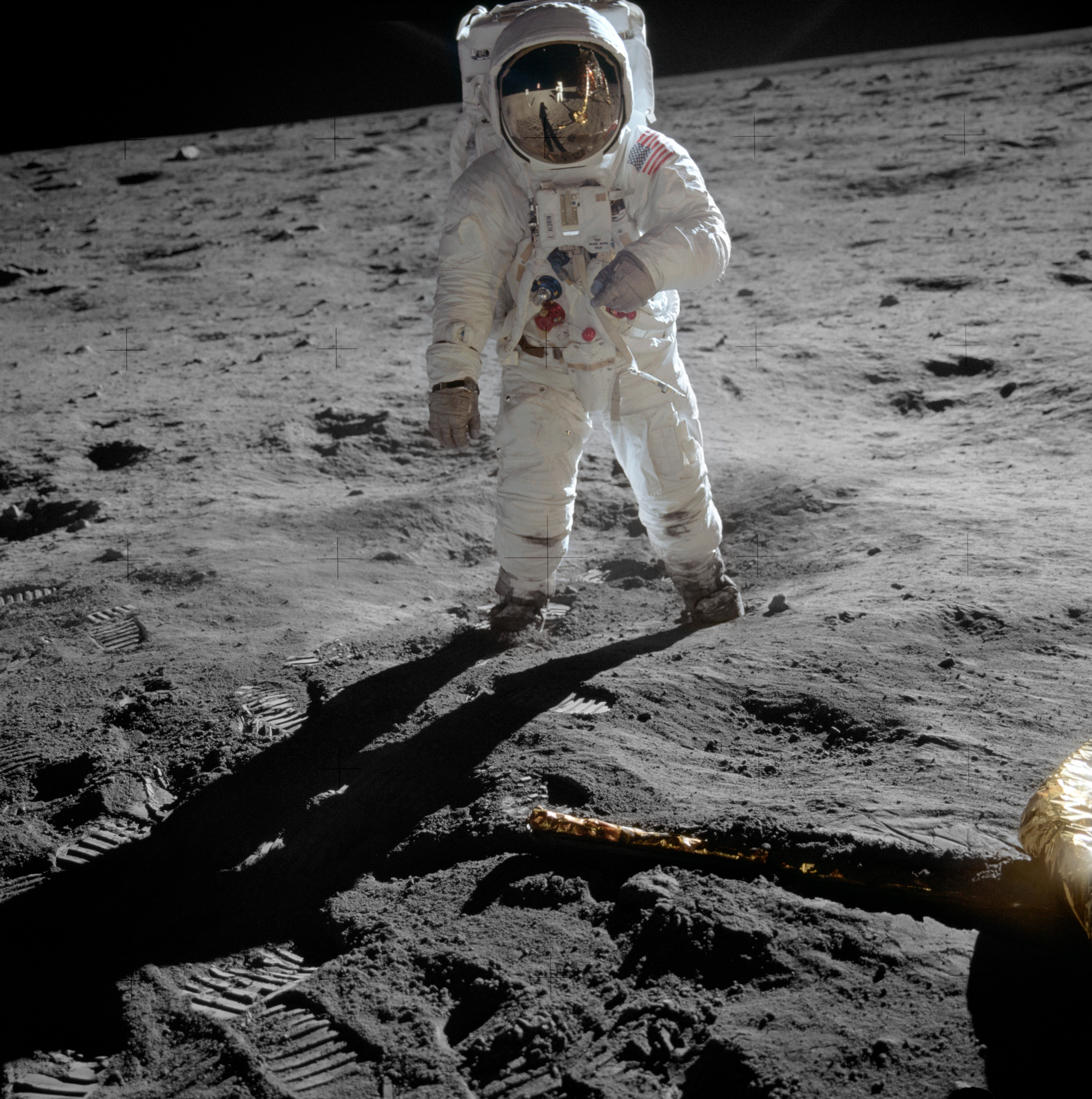
buzz aldrin in his apollo 11 spacesuit. source: wikimedia commons

Leaving the Cradle
On this day in 1969 — Apollo 11 launched for the moon. Three men in a tin can, aimed at a rock 240,000 miles away.
2 min read
The countdown at Cape Kennedy reached zero at 9:32 in the morning on July 16, 1969. Five F-1 engines ignited beneath the Saturn V, producing seven and a half million pounds of thrust. The structure, taller than a football field is long, lifted into the Florida sky. Inside the command module, three men felt the world fall away. Neil Armstrong, Buzz Aldrin, Michael Collins. The cabin was smaller than a van. They would live in it for eight days.
Apollo 11 was not the first spacecraft to leave Earth orbit. But it carried landing gear, a descent engine, and a ladder. The design challenges were extraordinary. The lunar module was so fragile you could punch through its skin with a screwdriver. It had to be that light. Every ounce on the Moon required exponentially more fuel on Earth.

apollo 11 launches from kennedy space center, july 16, 1969. source: wikimedia commons

The mission plan was nested optimizations. Each stage was designed for a single purpose and then discarded, like Jacquard's punch cards executing one instruction at a time. Launching required the massive Saturn V. Landing required the smaller lunar module. Returning from the surface required only its upper half.
Four days later, Armstrong and Aldrin descended to the Sea of Tranquility while Collins orbited alone -- the loneliest human in existence during radio blackouts. On July 20, Armstrong stepped onto the surface with seconds of fuel remaining. Apollo 11 returned safely on July 24. We built tools to escape the gravity well. The cradle is optional.