on-this-day · august 15
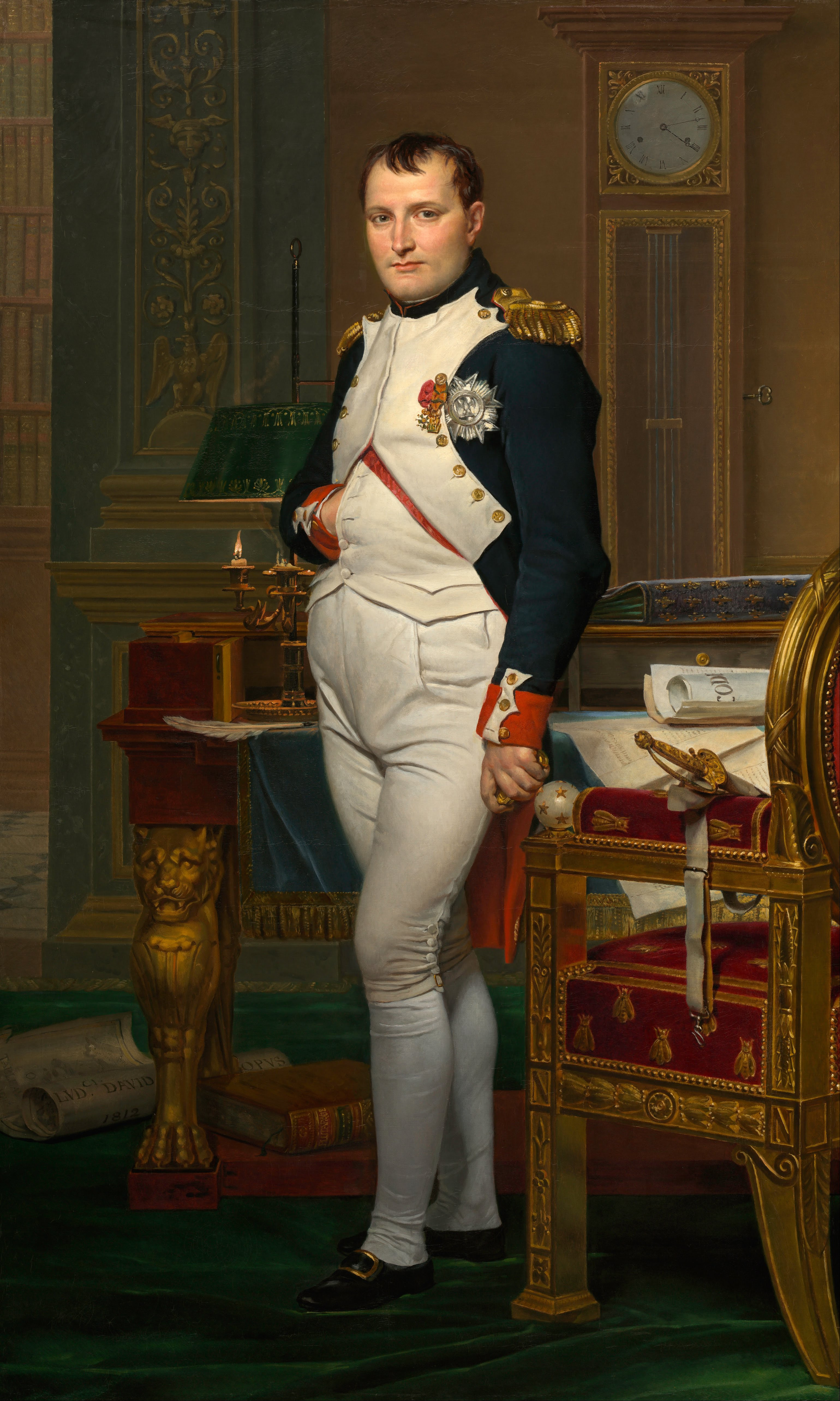
napoleon bonaparte in his study at the tuileries, jacques-louis david, 1812. source: wikimedia commons

The Emperor Who Redesigned Europe
On this day in 1769 — Napoleon Bonaparte was born. He redesigned Europe's borders and its legal systems.
2 min read
Napoleon Bonaparte was born on August 15, 1769, in Ajaccio, Corsica -- an island that had only become French the year before. An outsider with an accent he never lost. He rose through military ranks during the Revolution, became a general at 24, seized France in a coup at 30, crowned himself Emperor by 35. His life was systems thinking applied to conquest, governance, and control.
Napoleon was a military genius, but his real innovation was logistics. He reorganized the French army into self-sufficient corps that moved independently and converged from multiple directions. This let him concentrate force at decisive points faster than enemies could respond. He didn't just win battles. He designed systems that made winning inevitable.
His most lasting contribution was legal. In 1804, the Napoleonic Code replaced the patchwork of feudal laws governing France. Rational, secular, universal -- codifying equality before law, protecting property rights, eliminating hereditary privilege. As he conquered Europe, he imposed the Code. Long after his empire collapsed, the principles remained. Over 70 countries still base their civil law on it.

a copy of the code civil des francais, napoleon's legal code of 1804, which replaced the patchwork of feudal laws across france and remains the basis for civil law in over 70 countries. source: wikimedia commons

He also standardized measurements, reformed education, established the Bank of France. He appointed based on merit, not birth. An autocrat, but an efficient one who treated governance as engineering.
His ambition outran his capacity. Russia in 1812 was catastrophic. Waterloo in 1815, final. He died on Saint Helena in 1821 at 51. Napoleon's legacy is contradictory -- Enlightenment ideals spread through authoritarian conquest, serfdom abolished but slavery reinstated in colonies. Systems outlive their designers. Borders change. Governments fall. But a well-designed legal code persists. That is the difference between conquest and design.